


Patterns of human social contact and contact with animals in Shanghai, China
- PMID: 31641189
- PMCID: PMC6805924
- DOI: 10.1038/s41598-019-51609-8
Patterns of human social contact and contact with animals in Shanghai, China
Abstract
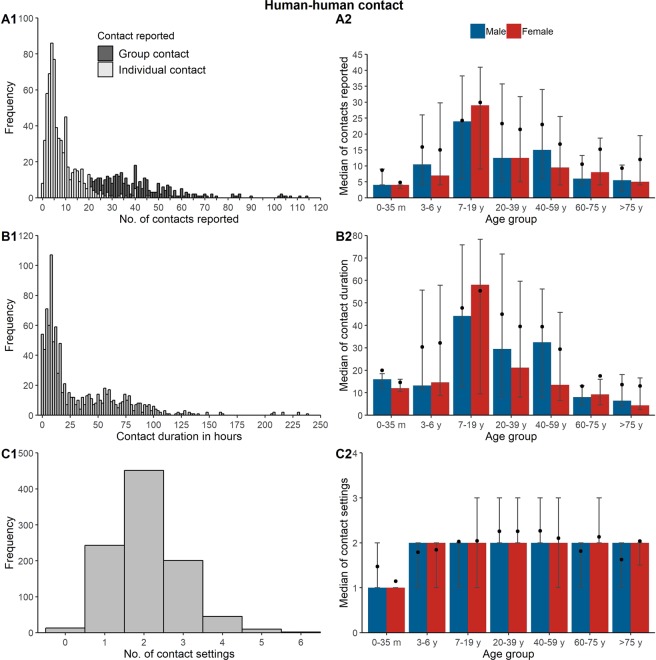
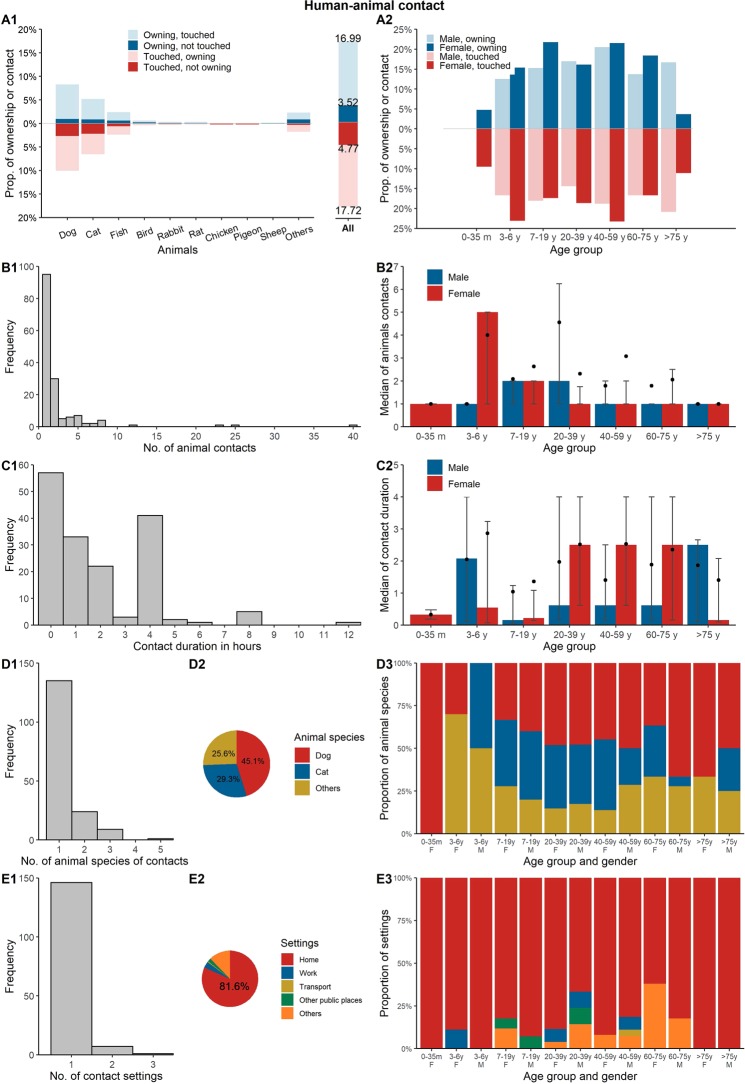
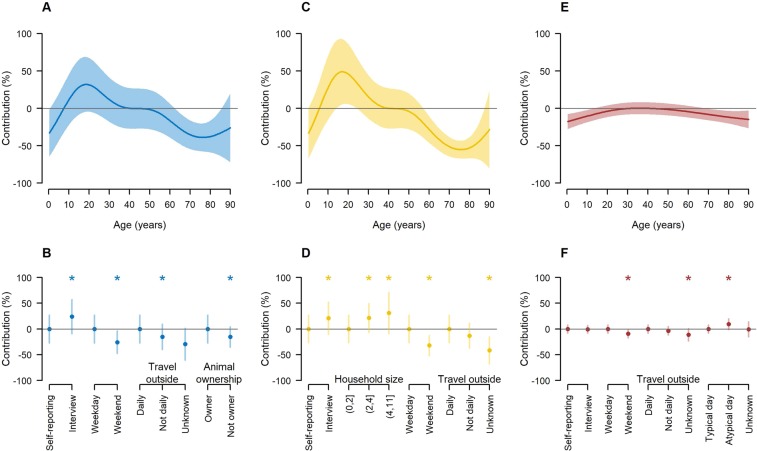
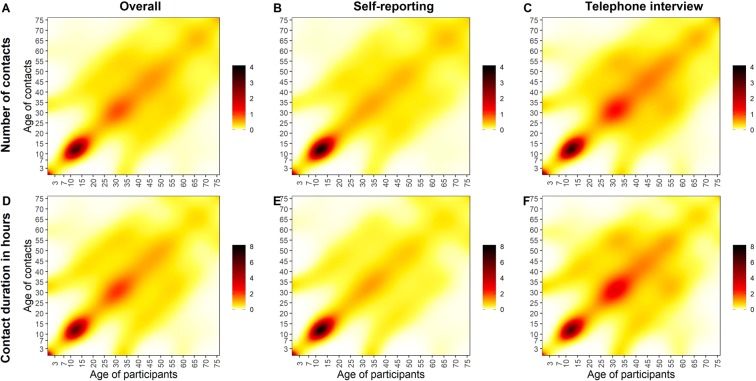
East Asia is as a principal hotspot for emerging zoonotic infections. Understanding the likely pathways for their emergence and spread requires knowledge on human-human and human-animal contacts, but such studies are rare. We used self-completed and interviewer-completed contact diaries to quantify patterns of these contacts for 965 individuals in 2017/2018 in a high-income densely-populated area of China, Shanghai City. Interviewer-completed diaries recorded more social contacts (19.3 vs. 18.0) and longer social contact duration (35.0 vs. 29.1 hours) than self-reporting. Strong age-assortativity was observed in all age groups especially among young participants (aged 7-20) and middle aged participants (25-55 years). 17.7% of participants reported touching animals (15.3% (pets), 0.0% (poultry) and 0.1% (livestock)). Human-human contact was very frequent but contact with animals (especially poultry) was rare although associated with frequent human-human contact. Hence, this densely populated area is more likely to act as an accelerator for human-human spread but less likely to be at the source of a zoonosis outbreak. We also propose that telephone interview at the end of reporting day is a potential improvement of the design of future contact surveys.
Conflict of interest statement
H.Y. has received investigator-initiated research funding from Sanofi Pasteur, GlaxoSmithKline, and Yichang HEC Changjiang Pharmaceutical Company. Other authors have declared that no competing interests exist.
Figures
References
-
- Pourbohloul, B. Modeling infectious diseases in humans and animals. (Princeton University Press, 2008).
Publication types
MeSH terms
Grants and funding
LinkOut - more resources
Full Text Sources
