. 2019 Oct 2;2(10):e1913900.
doi: 10.1001/jamanetworkopen.2019.13900.

Assessment of Diagnostic Outcomes of RNA Genetic Testing for Hereditary Cancer

Affiliations

Assessment of Diagnostic Outcomes of RNA Genetic Testing for Hereditary Cancer

Rachid Karam et al. JAMA Netw Open. .

Abstract

Importance: Performing DNA genetic testing (DGT) for hereditary cancer genes is now a well-accepted clinical practice; however, the interpretation of DNA variation remains a challenge for laboratories and clinicians. Adding RNA genetic testing (RGT) enhances DGT by clarifying the clinical actionability of hereditary cancer gene variants, thus improving clinicians' ability to accurately apply strategies for cancer risk reduction and treatment.

Objective: To evaluate whether RGT is associated with improvement in the diagnostic outcome of DGT and in the delivery of personalized cancer risk management for patients with hereditary cancer predisposition.

Design, setting, and participants: Diagnostic study in which patients and/or families with inconclusive variants detected by DGT in genes associated with hereditary breast and ovarian cancer, Lynch syndrome, and hereditary diffuse gastric cancer sent blood samples for RGT from March 2016 to April 2018. Clinicians who ordered genetic testing and received a reclassification report for these variants were surveyed to assess whether RGT-related variant reclassifications changed clinical management of these patients. To quantify the potential number of tested individuals who could benefit from RGT, a cohort of 307 812 patients who underwent DGT for hereditary cancer were separately queried to identify variants predicted to affect splicing. Data analysis was conducted from March 2016 and September 2018.

Main outcomes and measures: Variant reclassification outcomes following RGT, clinical management changes associated with RGT-related variant reclassifications, and the proportion of patients who would likely be affected by a concurrent DGT and RGT multigene panel testing approach.

Results: In total, 93 if 909 eligible families (10.2%) submitted samples for RGT. Evidence from RGT clarified the interpretation of 49 of 56 inconclusive cases (88%) studied; 26 (47%) were reclassified as clinically actionable and 23 (41%) were clarified as benign. Variant reclassifications based on RGT results changed clinical management recommendations for 8 of 18 patients (44%) and 14 of 18 families (78%), based on responses from 18 of 45 clinicians (40%) surveyed. A total of 7265 of 307 812 patients who underwent DGT had likely pathogenic variants or variants of uncertain significance potentially affecting splicing, indicating that approximately 1 in 43 individuals could benefit from RGT.

Conclusions and relevance: In this diagnostic study, conducting RNA testing resolved a substantial proportion of variants of uncertain significance in a cohort of individuals previously tested for cancer predisposition by DGT. Performing RGT might change the diagnostic outcome of at least 1 in 43 patients if performed in all individuals undergoing genetic evaluation for hereditary cancer.


Conflict of interest statement

Conflict of Interest Disclosures: Drs Karam, McGoldrick, Richardson, Zimmermann, Farber-Katz, Tippin Davis, Elliott, and Chao, Mss Conner, LaDuca, Krempely, Gutierrez, Hoang, Yussuf, Haynes, Pesaran, and Dolinsky, and Messrs Reineke and Allen were employees of Ambry Genetics during the time this study was conducted. Mr Lee reported serving on an advisory board at Invitae Corp and receiving honoraria. Dr Toppmeyer reported that her spouse was employed by Novartis until April 2019 and is now employed by Merck and Co. Dr Chao reported having previously held stock in Ambry Genetics. No other disclosures were reported.

Figures

Figure 1.
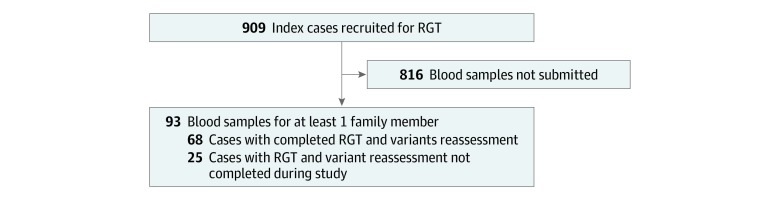
Figure 1.. Ascertainment of Cases Studied by RNA Genetic Testing (RGT)
Figure 2.
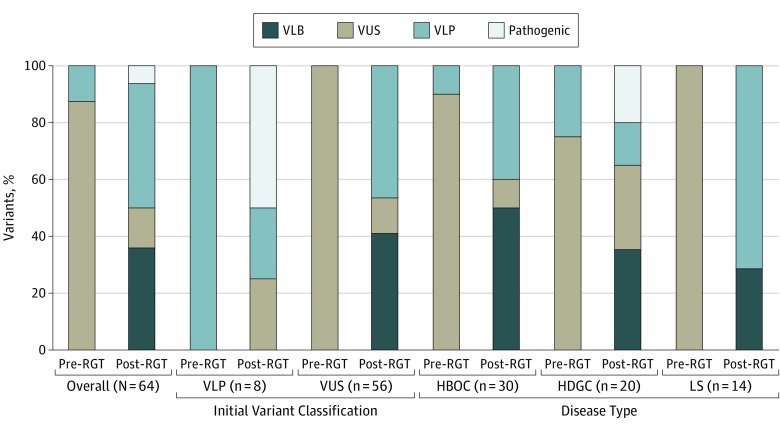
Figure 2.. Variant Classification Before and After RNA Genetic Testing (RGT)
Variant classifications before and after RGT for all variants tested, stratified by initial classification and disease type. HBOC indicates hereditary breast and ovarian cancer; HDGC, hereditary diffuse gastric cancer; LS, Lynch syndrome; VLB, variant, likely benign; VLP, variant, likely pathogenic; VUS, variant of uncertain significance.
Figure 3.
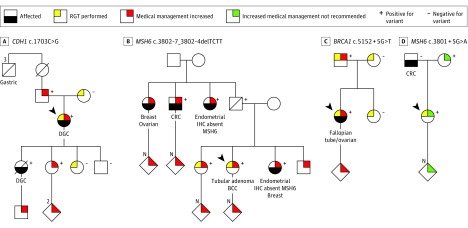
Figure 3.. Pedigrees Demonstrating Clinical Management Changes From Selected Cases Undergoing RNA Genetic Testing
A, The variant CDH1 c.1703C>G was identified by DNA genetic testing in an index patient meeting diagnostic criteria for hereditary diffuse gastric cancer (DGC; ie, 2 gastric cancer cases in the family, regardless of age, at least 1 confirmed DGC, and 1 case of DGC diagnosed at age <40 years). The variant was initially classified as a variant of uncertain significance, and subsequent to the reclassification to a likely pathogenic variant, the index patient was referred to the high-risk breast clinic for management of increased lobular breast cancer risk and consideration of risk-reducing bilateral mastectomy. The reclassification also impacted the clinical management of family members, as they became eligible for cascade genetic testing. B, Index patient was diagnosed with colorectal tubular adenoma and was found to carry the variant MSH6 c.3802-7_3802-4delTCTT on a 67-gene panel test. The patient’s sister, who had been previously diagnosed with endometrial adenocarcinoma showing loss of MSH6 (OMIM 600678) protein expression on immunohistochemistry (IHC), also carried this variant. Both sisters opted to participate in this study, and reclassification of the variant from a variant of uncertain significance to a likely pathogenic variant confirmed a diagnosis of Lynch syndrome. Both sisters elected risk-reducing total abdominal hysterectomy with bilateral salpingo-oophorectomy and were recommended to continue additional screening per National Comprehensive Cancer Network guidelines. Genetic testing for their adult children and other at-risk relatives was also recommended. C, A 24-gene panel identified the variant BRCA1 c.5152 + 5G>T in a woman diagnosed with papillary serous carcinoma of the right fallopian tube and both ovaries. The patient and her family opted to participate in this study, which resulted in the variant being reclassified from a variant of uncertain significance to a likely pathogenic variant. Subsequently, the patient was offered high-risk breast screening as defined by the National Comprehensive Cancer Network. The patient’s father was identified to carry the likely pathogenic variant and was recommended increased screening for prostate and breast cancers. D, A 34-gene panel identified the variant MSH6 c.3801 + 5G>A in an index patient with a family history of cancer. Colorectal cancer (CRC) screening recommendations for the patient included colonoscopy every 5 years based on family history. No abnormal transcripts were identified by RGT, resulting in reclassification from a variant of uncertain significance to a likely benign variant and no recommendation of increased medical management. No further familial testing was recommended for this variant. Diagonal lines indicate that the individual is deceased; arrows indicate index patients. BCC indicates basal cell carcinoma.
Figure 4.
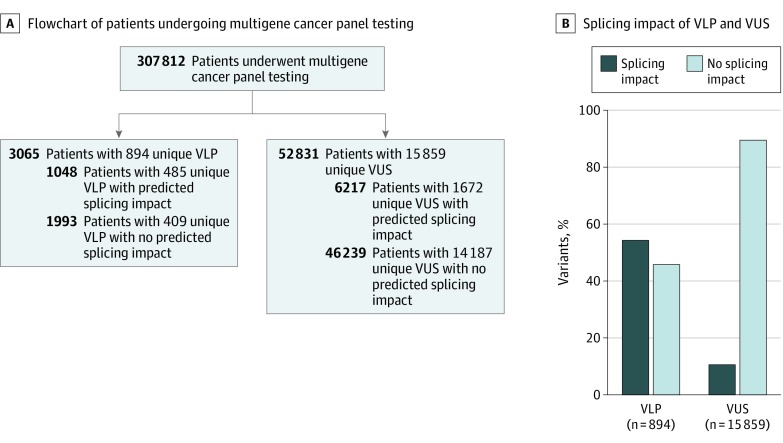
Figure 4.. Distribution of Variants Likely Pathogenic (VLP) and Variants of Uncertain Significance (VUS) in a Multigene Panel Testing Cohort
A, In a cohort of 307 812 patients receiving multigene panel testing, 3065 individuals were identified with 894 unique VLPs, and 52 831 individuals were identified with 15 859 unique VUS in the following genes: APC, ATM, BRCA1, BRCA2, BRIP1, CHEK2, CDH1, MLH1, MSH2, MSH6, PMS2, MUTYH, NF1, PTEN, PALB2, RAD51C, RAD51D, TP53. A total of 7265 individuals (2.4%) were carriers for variants predicted to affect splicing. B, Distribution of VLP and VUS in the studied cohort. Variants predicted to affect splicing accounted for 485 VLPs (54%) and 1672 VUS (11%).

References

    1. Easton DF, Pharoah PD, Antoniou AC, et al. . Gene-panel sequencing and the prediction of breast-cancer risk. N Engl J Med. 2015;372(23):-. doi:10.1056/NEJMsr1501341 - DOI - PMC - PubMed
    1. Hansford S, Kaurah P, Li-Chang H, et al. . Hereditary diffuse gastric cancer syndrome: CDH1 mutations and beyond. JAMA Oncol. 2015;1(1):23-32. doi:10.1001/jamaoncol.2014.168 - DOI - PubMed
    1. Rubenstein JH, Enns R, Heidelbaugh J, Barkun A; Clinical Guidelines Committee . American Gastroenterological Association Institute guideline on the diagnosis and management of Lynch syndrome. Gastroenterology. 2015;149(3):777-782. - PubMed
    1. LaDuca H, Stuenkel AJ, Dolinsky JS, et al. . Utilization of multigene panels in hereditary cancer predisposition testing: analysis of more than 2,000 patients. Genet Med. 2014;16(11):830-837. - PMC - PubMed
    1. Pesaran T, Karam R, Huether R, et al. . Beyond DNA: an integrated and functional approach for classifying germline variants in breast cancer genes. Int J Breast Cancer. 2016;2016:2469523. doi:10.1155/2016/2469523 - DOI - PMC - PubMed

Publication types