


Geographic Availability of Assistance Dogs: Dogs Placed in 2013-2014 by ADI- or IGDF-Accredited or Candidate Facilities in the United States and Canada, and Non-accredited U.S. Facilities
- PMID: 31649944
- PMCID: PMC6794437
- DOI: 10.3389/fvets.2019.00349
Geographic Availability of Assistance Dogs: Dogs Placed in 2013-2014 by ADI- or IGDF-Accredited or Candidate Facilities in the United States and Canada, and Non-accredited U.S. Facilities
Abstract
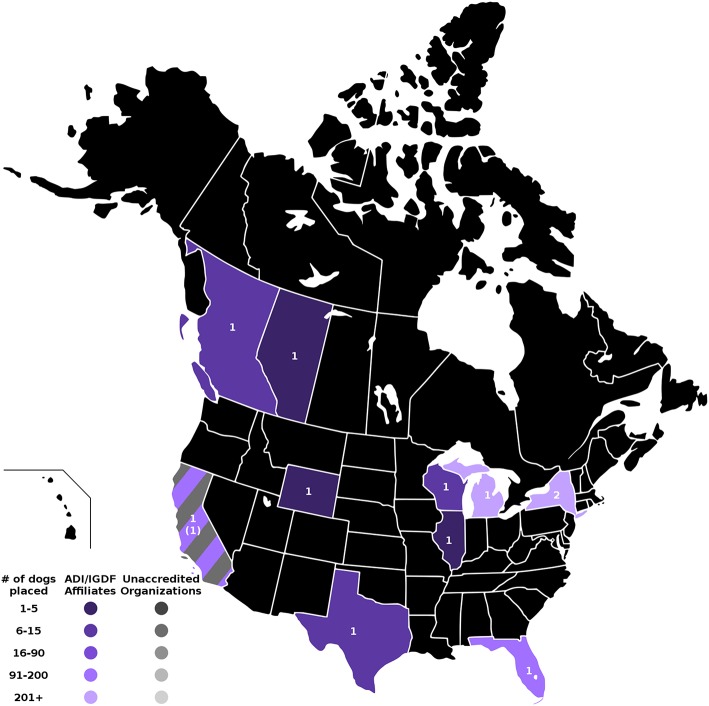
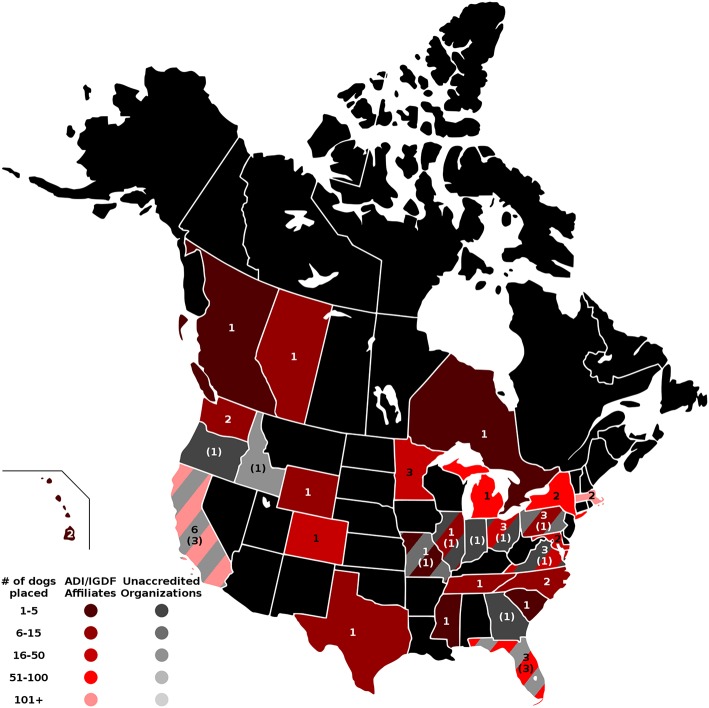
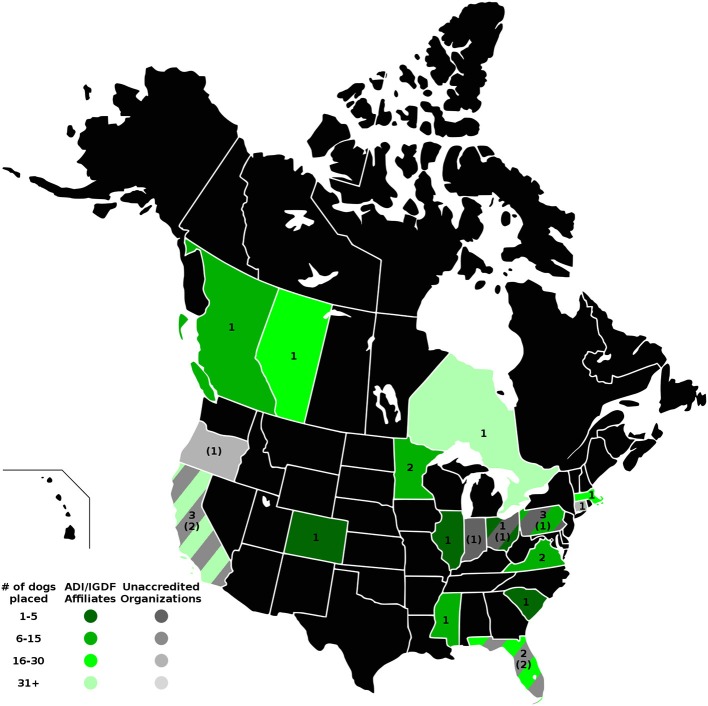
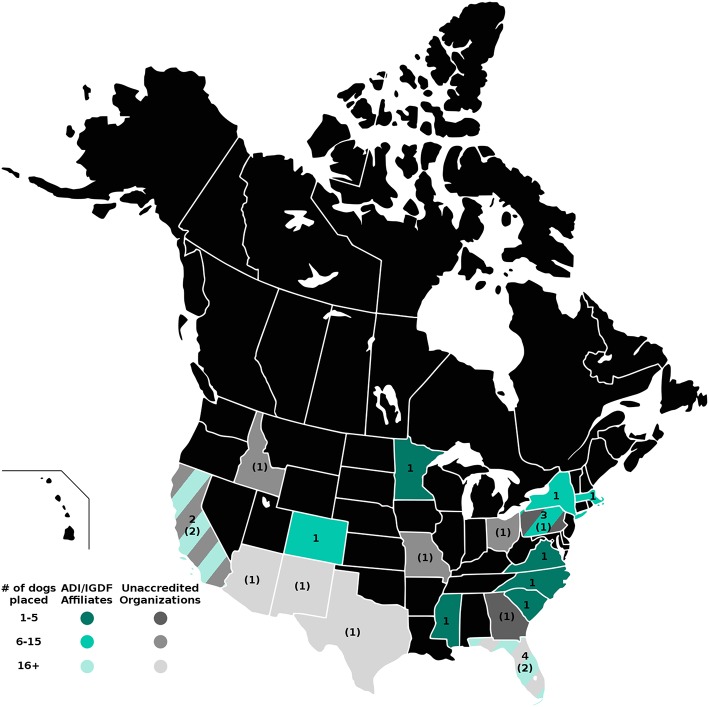
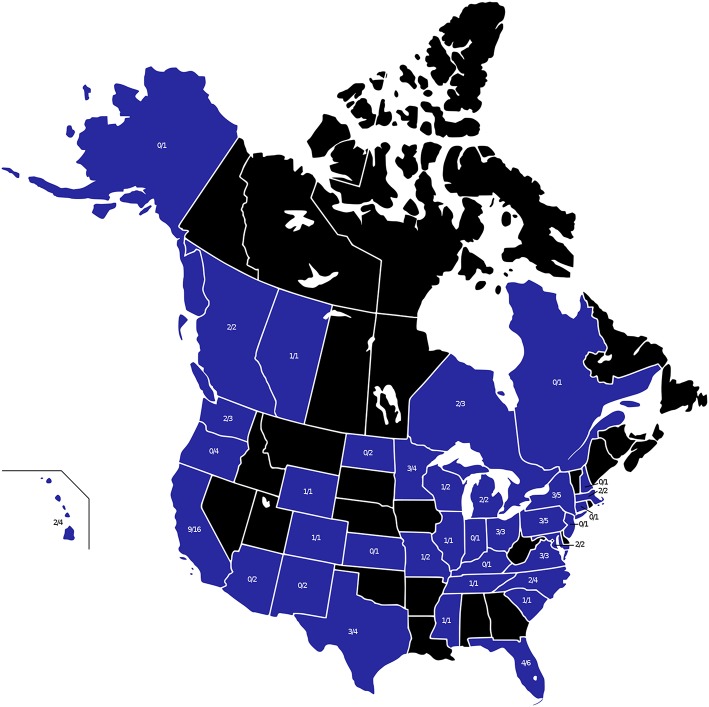
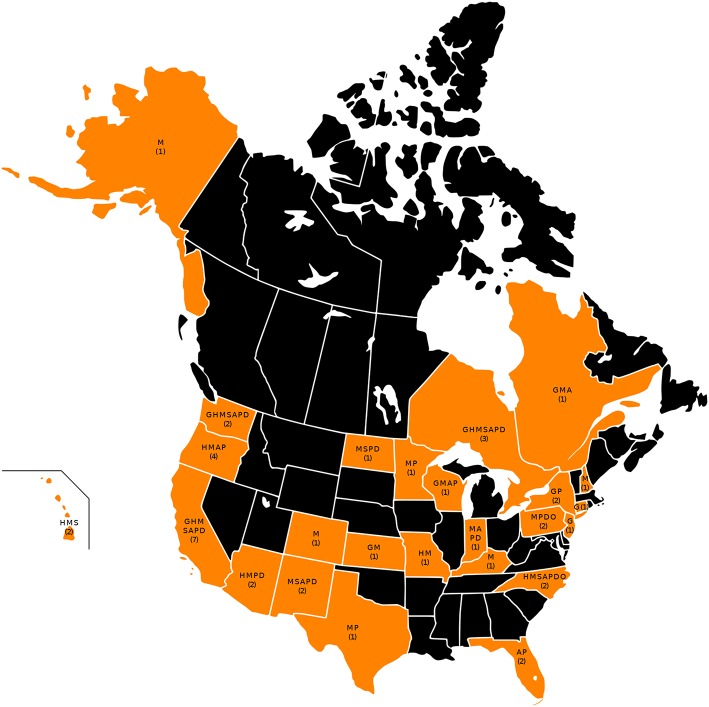
Assistance dogs' roles have diversified to support people with various disabilities, especially in the U.S. Data presented here are from the U.S. and Canada non-profit facilities (including both accredited and candidate members that fulfilled partial requirements: all here termed "accredited") of Assistance Dogs International (ADI) and the International Guide Dog Federation (IGDF), and from non-accredited U.S. assistance dog training facilities, on the numbers and types of dogs they placed in 2013 and 2014 with persons who have disabilities. ADI categories of assistance dogs are for guide, hearing, and service (including for assistance with mobility, autism, psychiatric, diabetes, seizure disabilities). Accredited facilities in 28 states and 3 provinces responded; accredited non-responding facilities were in 22 states and 1 province (some in states/provinces with responding accredited facilities). Non-accredited facilities in 16 states responded. U.S./Canada responding accredited facilities (55 of 96: 57%) placed 2,374 dogs; non-accredited U.S. facilities (22 of 133: 16.5%) placed 797 dogs. Accredited facilities placed similar numbers of dogs for guiding (n = 918) or mobility (n = 943), but many more facilities placed mobility service dogs than guide dogs. Autism service dogs were third most for accredited (n = 205 placements) and U.S. non-accredited (n = 72) facilities. Psychiatric service dogs were fourth most common in accredited placements (n = 119) and accounted for most placements (n = 526) in non-accredited facilities. Other accredited placements were for: hearing (n = 109); diabetic alert (n = 69), and seizure response (n = 11). Responding non-accredited facilities placed 17 hearing dogs, 30 diabetic alert dogs, and 18 seizure response dogs. Non-accredited facilities placed many dogs for psychiatric assistance, often for veterans, but ADI accreditation is required for veterans to have financial reimbursement. Twenty states and several provinces had no responding facilities; 17 of these states had no accredited facilities. In regions lacking facilities, some people with disabilities may find it inconvenient living far from any supportive facility, even if travel costs are provided. Despite accelerated U.S./Canada placements, access to well-trained assistance dogs continues to be limited and inconvenient for many people with disabilities, and the numerous sources of expensive, poorly trained dogs add confusion for potential handlers.
Keywords: assistance dogs; autism service dogs; diabetes alert dogs; hearing dogs; mobility service dogs; psychiatric service dogs; seizure assistance dogs; service dogs.
Copyright © 2019 Walther, Yamamoto, Thigpen, Willits and Hart.
Figures
References
-
- U.S. Department of Justice (DOJ). Part 35. Nondiscrimination on the Basis of Disability in State and Local Government Services (as Amended by the Final Rule Published on September 15, 2010). (2010). Available online at: http://www.ada.gov/regs2010/titleII_2010/titleII_2010_withbold.htm
-
- Ministry of Health Labour and Welfare Japan Assistance Dogs for Persons with Physical Disabilities Portal Site. Available online at: https://www.mhlw.go.jp/english/policy/care-welfare/welfare-disabilities/... (accessed May 01, 2019).
-
- Taiwan Guide Dog Association Available online at: http://www.guidedog.org.tw/aboutguidedog/about-2.html (in Chinese) (accessed May 01, 2019).
-
- U.S. Department of Justice (DOJ). ADA 2010 Revised Requirements. Service Animals. (2011). Available online at: https://www.ada.gov/service_animals_2010.htm (accessed September 29, 2019).
