. 2019 Oct 23;9(11):640.
doi: 10.3390/biom9110640.

24-Epibrassinolide (EBR) Confers Tolerance against NaCl Stress in Soybean Plants by Up-Regulating Antioxidant System, Ascorbate-Glutathione Cycle, and Glyoxalase System

Affiliations

24-Epibrassinolide (EBR) Confers Tolerance against NaCl Stress in Soybean Plants by Up-Regulating Antioxidant System, Ascorbate-Glutathione Cycle, and Glyoxalase System

Pravej Alam et al. Biomolecules. .

Abstract

: The present research was performed to assess the effect of 24-epibrassinolide (EBR) on salt-stressed soybean plants. Salt stress suppressed growth, biomass yield, gas exchange parameters, pigment content, and chlorophyll fluorescence, but all these parameters were up-regulated by EBR supply. Moreover, salt stress increased hydrogen peroxide, malondialdehyde, and electrolyte leakage. EBR supplementation reduced the accumulation of oxidative stress biomarkers. The activities of superoxide dismutase and catalase, and the accumulation of proline, glycinebetaine, total phenols, and total flavonoids increased with NaCl stress, but these attributes further increased with EBR supplementation. The activities of enzymes and the levels of non-enzymatic antioxidants involved in the Asc-Glu cycle also increased with NaCl stress, and further enhancement in these attributes was recorded by EBR supplementation. Salinity elevated the methylglyoxal content, but it was decreased by the EBR supplementation accompanying with up-regulation of the glyoxalase cycle (GlyI and GlyII). Salinity enhanced the Na+ uptake in root and shoot coupled with a decrease in uptake of Ca2+, K+, and P. However, EBR supplementation declined Na+ accumulation and promoted the uptake of the aforementioned nutrients. Overall, EBR supplementation regulated the salt tolerance mechanism in soybean plants by modulating osmolytes, activities of key enzymes, and the levels of non-enzymatic antioxidants.

Keywords: 24-epibrassinolide; Asc-Glu cycle; NaCl stress; antioxidants; glyoxalase cycle; growth; mineral uptake; soybean.


Conflict of interest statement

The authors declare no conflict of interest.

Figures
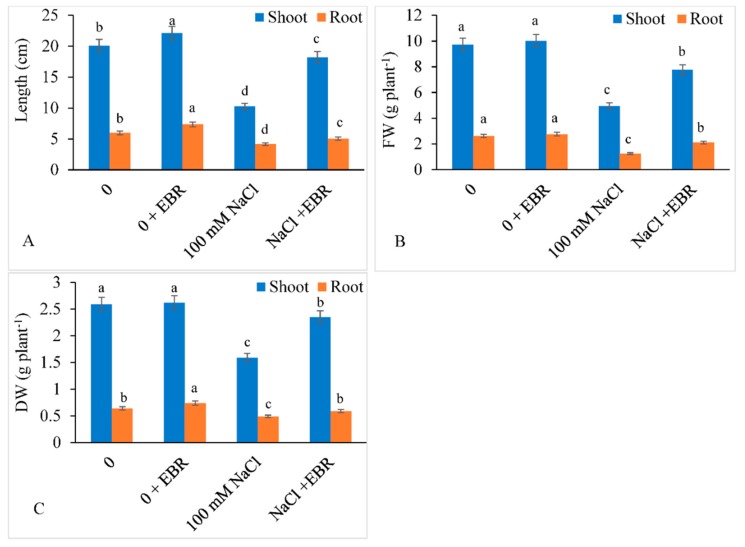
Figure 1
Figure 1
Ameliorating role of 24-epibrassinolide (EBR) on (A) length, (B) fresh weight, and (C) dry weight of shoot and root under NaCl toxicity in soybean. Data presented are the means ± SE (n = 5) and significant difference calculated between the means at p ≤ 0.05 using the Duncan’s multiple range test.
Figure 2
Figure 2
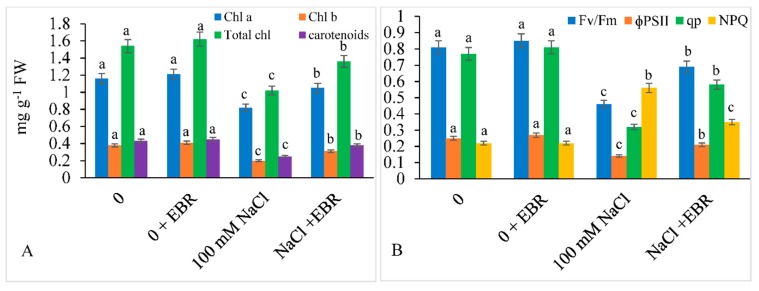
Effect of 24-epibrassinolide (EBR) on (A) pigment content and (B) chlorophyll fluorescence parameters under NaCl toxicity in soybean. Data presented are the means ± SE (n = 5) and significant difference between the means calculated at p ≤ 0.05 using the Duncan’s multiple range test.
Figure 3
Figure 3
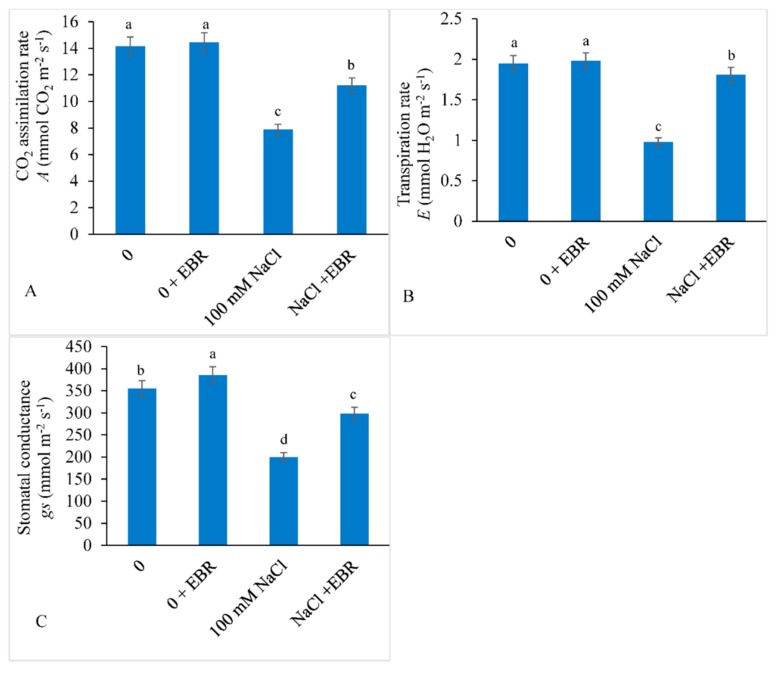
Effect of exogenously applied 24-epibrassinolide (EBR) on (A) CO2 assimilation rate (A), (B) transpiration rate (E), and (C) stomatal conductance (gs) in soybean under NaCl toxicity. Data presented are the means ± SE (n = 5) and significant difference between the means calculated at p ≤ 0.05 using Duncan’s multiple range test.
Figure 4
Figure 4
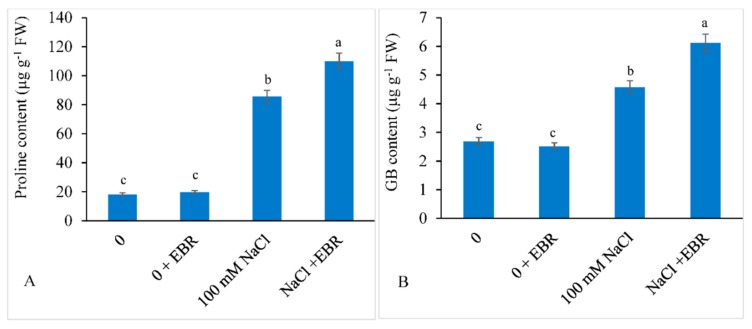
Exogenously applied 24-epibrassinolide (EBR) enhanced the proline (A) and glycine betaine (GB) (B) content in soybean under NaCl stress. Data presented are the means ± SE (n = 5) and significant difference between the means calculated at p ≤ 0.05 using the Duncan’s multiple range test.
Figure 5
Figure 5
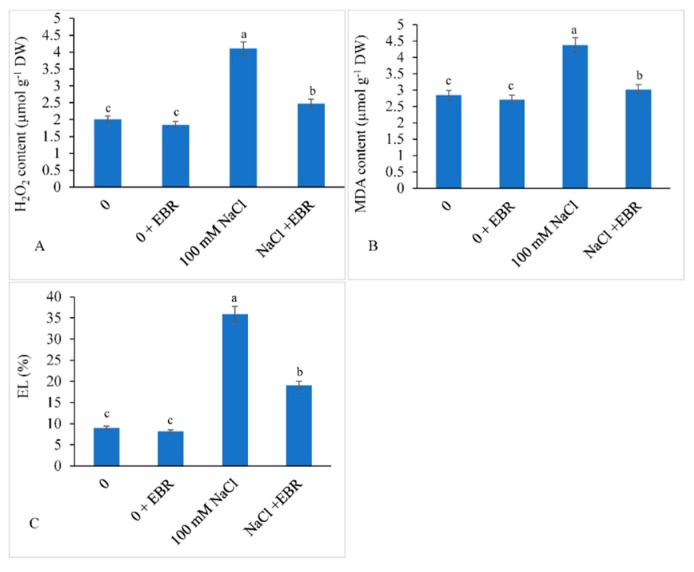
Exogenously applied 24-epibrassinolide (EBR) reduced the H2O2 (A) and malondialdehyde (MDA) (B) contents as well as electrolyte leakage (EL) (C) in soybean plants under NaCl stress. Data presented are the means ± SE (n = 5) and significant difference between the means calculated at p ≤ 0.05 using the Duncan’s multiple range test.
Figure 6
Figure 6
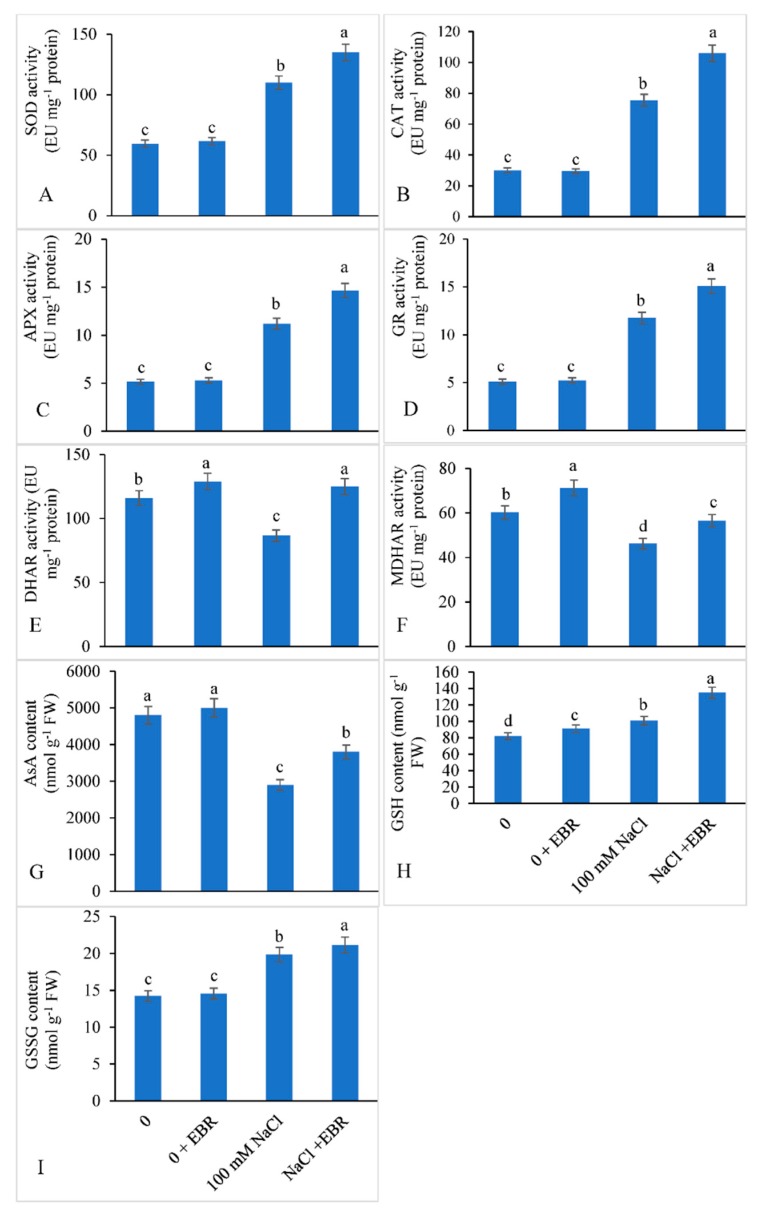
Exogenously applied 24-epibrassinolide (EBR) enhanced the activities of (A) superoxide dismutase (SOD), (B) catalase (CAT), (C) ascorbate peroxidase (APX), (D) glutathione reductase (GR), (E) Dehydroascorbate reductase (DHAR), (F) manodehydroascorbate reductase (MDHAR), (G) ascorbate (AsA) content, (H) glutathione (GSH) content, and (I) GSSG content in soybean plants under NaCl stress. Data presented are the means ± SE (n = 5) and significant difference between the means calculated at p ≤ 0.05 using the Duncan’s multiple range test.
Figure 7
Figure 7
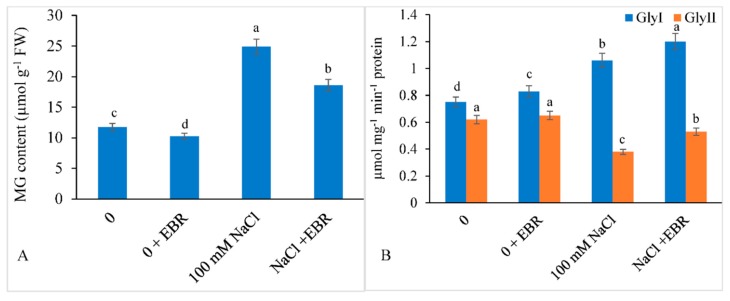
24-epibrassinolide (EBR) declines methylglyoxal (MG) content (A) and enhances GlyI and GlyII (B) under NaCl toxicity in soybean. Data presented are the means ± SE (n = 5) and significant difference between the means calculated at p ≤ 0.05 using the Duncan’s multiple range test.
Figure 8
Figure 8
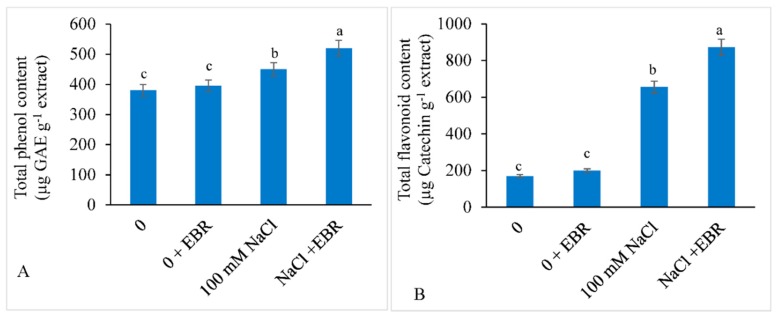
Effect of 24-epibrassinolide (EBR) on (A) total phenol content and (B) total flavonoid content in soybean plants under NaCl stress. Data presented are the means ± SE (n = 5) and significant difference between the means calculated at p ≤ 0.05 using the Duncan’s multiple range test.
Figure 9
Figure 9
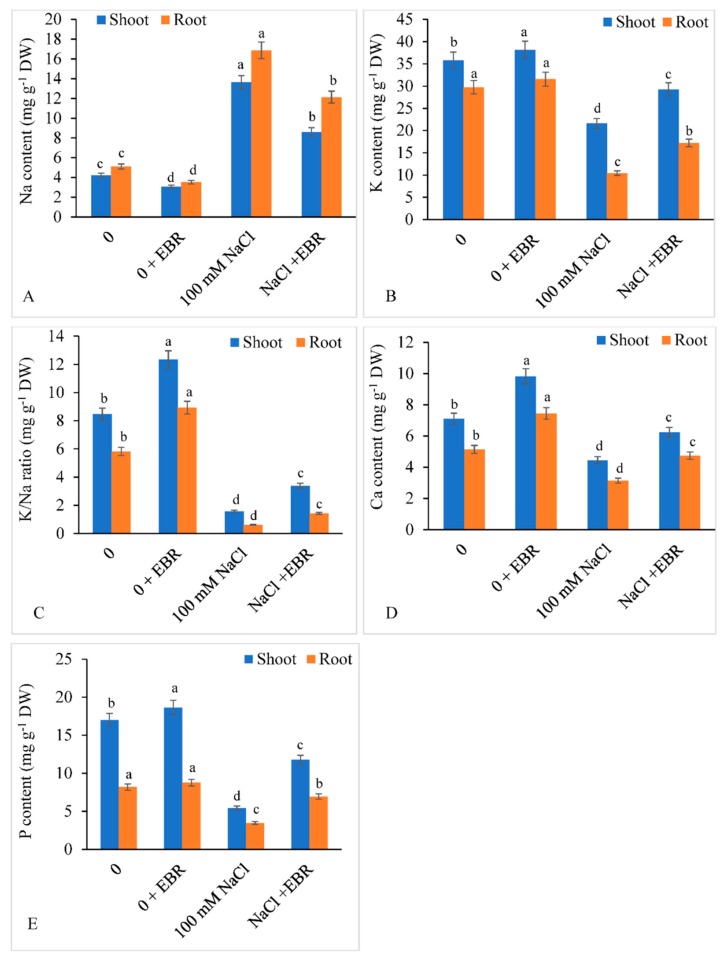
Effect of 24-epibrassinolide (EBR) on shoot and root mineral contents (A) Na content, (B) K content, (C) K/Na ratio, (D) Ca content, and (E) P content in soybean plants under NaCl stress. Data presented are the means ± SE (n = 5) and significant difference between the means calculated at p ≤ 0.05 using the Duncan’s multiple range test.

References

    1. Haque S. Salinity problems and crop production in coastal regions of Bangladesh. Pak. J. Bot. 2006;38:1359–1365.
    1. Shalhevet J. Using water of marginal quality for crop production: major issues. Agric. Water Manag. 1994;25:233–269. doi: 10.1016/0378-3774(94)90063-9. - DOI
    1. Wang W., Vinocur B., Altman A. Plant responses to drought, salinity and extreme temperatures: Towards genetic engineering for stress tolerance. Planta. 2003;218:1–14. doi: 10.1007/s00425-003-1105-5. - DOI - PubMed
    1. Ahanger M.A., Qin C., Maodong Q., Dong X.X., Ahmad P., Abd_Allah E.F., Zhang L. Spermine application alleviates salinity induced growth and photosynthetic inhibition in Solanum lycopersicum by modulating osmolyte and secondary metabolite accumulation and differentially regulating antioxidant metabolism. Plant Physiol. Biochem. 2019;144:1–13. doi: 10.1016/j.plaphy.2019.09.021. - DOI - PubMed
    1. Ahanger M.A., Agarwal R. Salinity stress induced alterations in antioxidant metabolism and nitrogen assimilation in wheat (Triticum aestivum L.) as influenced by potassium supplementation. Plant Physiol. Biochem. 2017;115:449–460. doi: 10.1016/j.plaphy.2017.04.017. - DOI - PubMed

Publication types

MeSH terms

LinkOut - more resources