


The Fate of Bacteriophages in Recirculating Aquaculture Systems (RAS)-Towards Developing Phage Therapy for RAS
- PMID: 31652887
- PMCID: PMC6963195
- DOI: 10.3390/antibiotics8040192
The Fate of Bacteriophages in Recirculating Aquaculture Systems (RAS)-Towards Developing Phage Therapy for RAS
Abstract
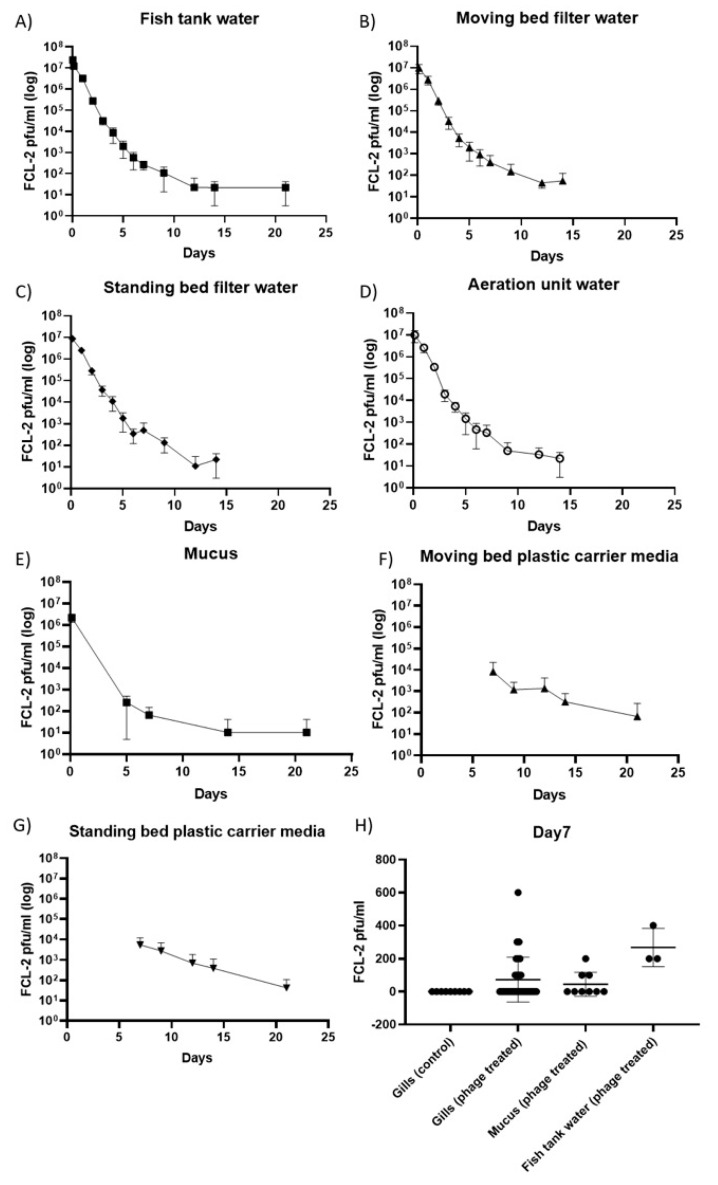
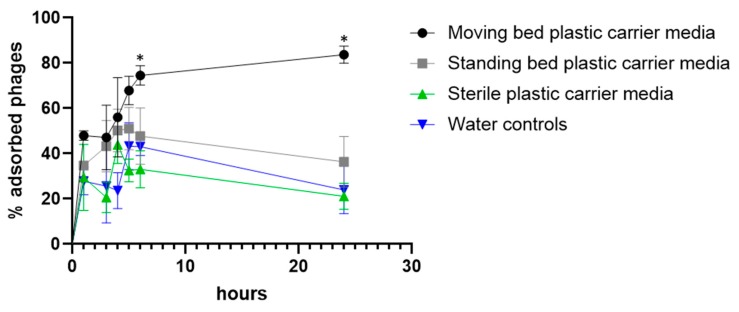
Aquaculture production has increased tremendously during the last decades, and new techniques have been developed, e.g., recirculating aquaculture systems (RAS). In RAS, the majority of water volume is circulated via mechanical and biological filters and reused in the tanks. However, the prevention and treatment of diseases in these systems are challenging, as the pathogens spread throughout the system, and the addition of chemicals and antibiotics disrupts the microbiome of the biofilters. The increasing antibiotic resistance has made phage therapy a relevant alternative for antibiotics in food production. Indeed, as host-specific and self-replicating agent they might be optimal for targeted pathogen eradication in RAS. We tested the survival and spread of Flavobacterium columnare -infecting phage FCL-2 in recirculating aquaculture fish farm with rainbow trout (Oncorhynchus mykiss) in a fully controlled study. After a single addition, phage persisted in water samples collected from tank, fixed bed, moving bed, and aeration unit up to 14 days, and in the water of rearing tanks, rainbow trout mucus, and bioreactor carrier media from the fixed and moving bed biofilters for 21 days. Furthermore, phage adsorbed preferentially to moving bed carrier media, which contained biofilm attached and from which higher phage numbers were recovered. This study shows phages as a potent strategy for maintaining biosecurity in RAS systems.
Keywords: RAS; aquaculture; bacteriophage; biofilter; disease; phage therapy; recirculating aquaculture systems.
Conflict of interest statement
Authors declare no conflict of interest.
Figures
References
-
- Martins C.I.M., Eding E.H., Verdegem M.C.J., Heinsbroek L.T.N., Schneider O., Blancheton J.P., d’Orbcastel E.R., Verreth J.A.J. New developments in recirculating aquaculture systems in Europe: A perspective on environmental sustainability. Aquac. Eng. 2010 doi: 10.1016/j.aquaeng.2010.09.002. - DOI
-
- Badiola M., Mendiola D., Bostock J. Recirculating aquaculture systems (RAS) analysis: Main issues on management and future challenges. Aquac. Eng. 2012 doi: 10.1016/j.aquaeng.2012.07.004. - DOI
Grants and funding
LinkOut - more resources
Full Text Sources
