


Supporting Family Caregivers With Technology for Dementia Home Care: A Randomized Controlled Trial
- PMID: 31660443
- PMCID: PMC6794215
- DOI: 10.1093/geroni/igz037
Supporting Family Caregivers With Technology for Dementia Home Care: A Randomized Controlled Trial
Abstract
Background and objectives: The number of persons living with dementia (PLWD) in the United States will reach 16 million by 2050. Behavioral and psychological symptoms of dementia challenge family caregivers and contribute to negative caregiver outcomes such as burden and depression. Available technology can support the delivery of effective interventions to families providing dementia care at home. The Supporting Family Caregivers with Technology for Dementia Home Care (FamTechCare) randomized controlled trial evaluated the effects of a telehealth intervention on caregiver outcomes.
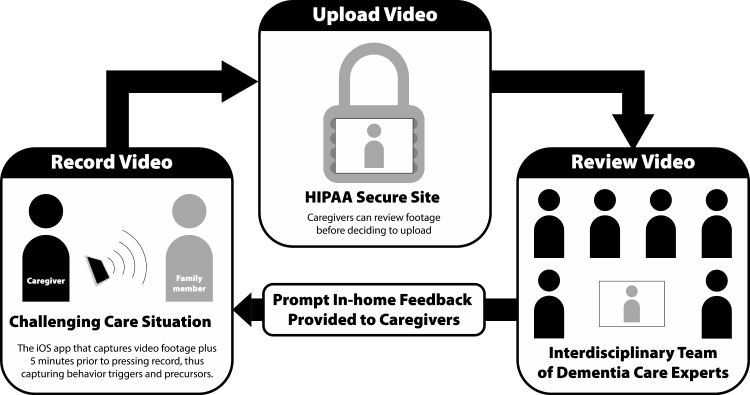
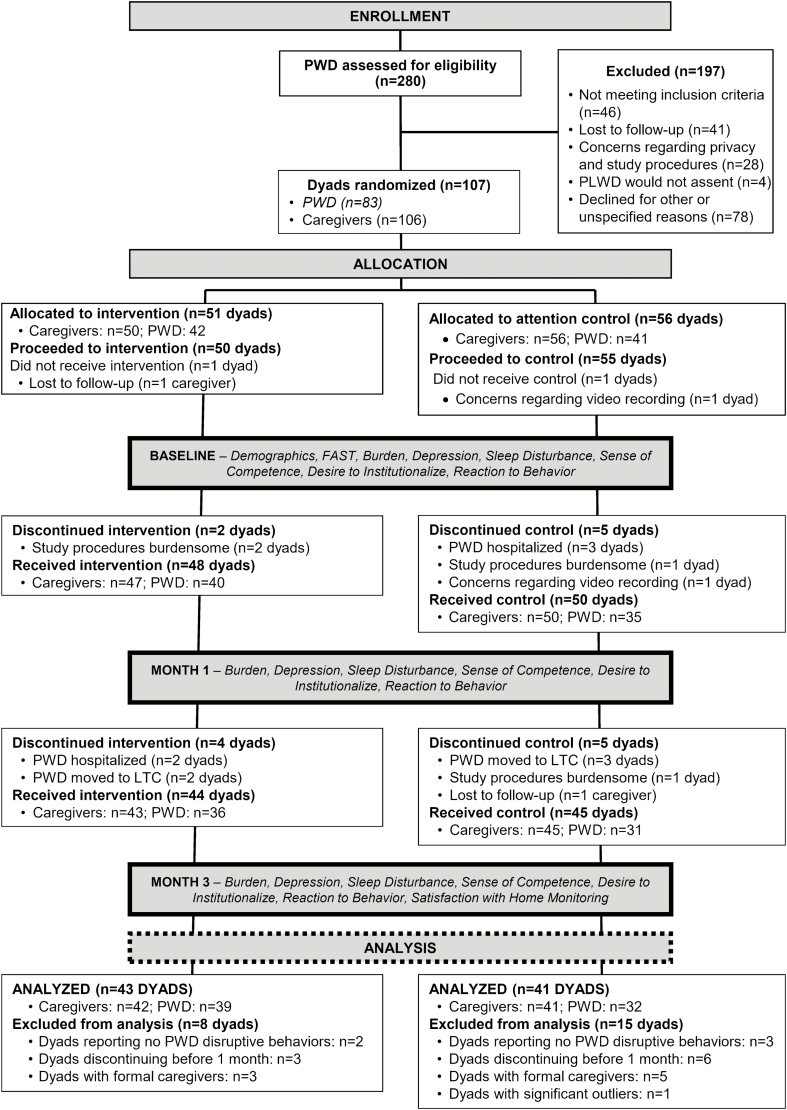
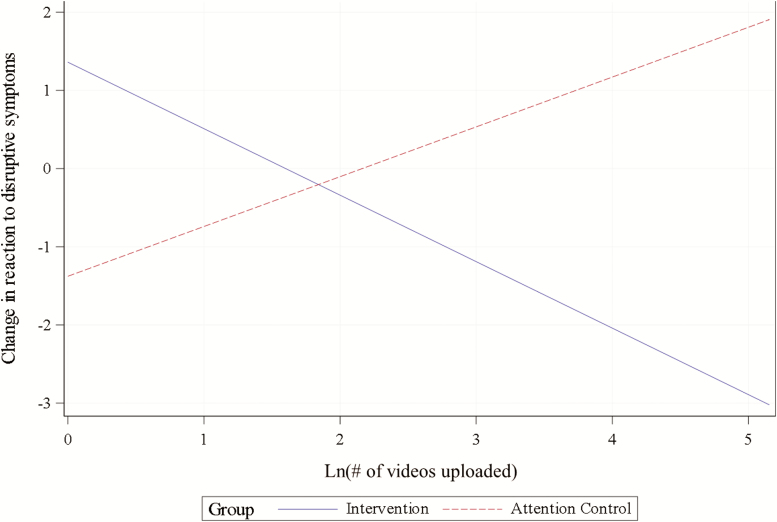
Research design and methods: The FamTechCare intervention provides tailored dementia-care strategies to in-home caregivers based on video recordings caregivers submit of challenging care situations. An expert team reviews the videos and provides individualized interventions weekly for the experimental group. In the telephone-support attention control group, caregivers receive feedback from an interventionist via the telephone based on caregiver retrospective recall of care challenges. Effects of the intervention on caregiver outcomes, including burden, depression, sleep disturbance, competence, desire to institutionalize the PLWD, and caregiver reaction to behavioral symptoms were evaluated by fitting linear mixed regression models to changes in the outcomes measured at 1 and 3 months.
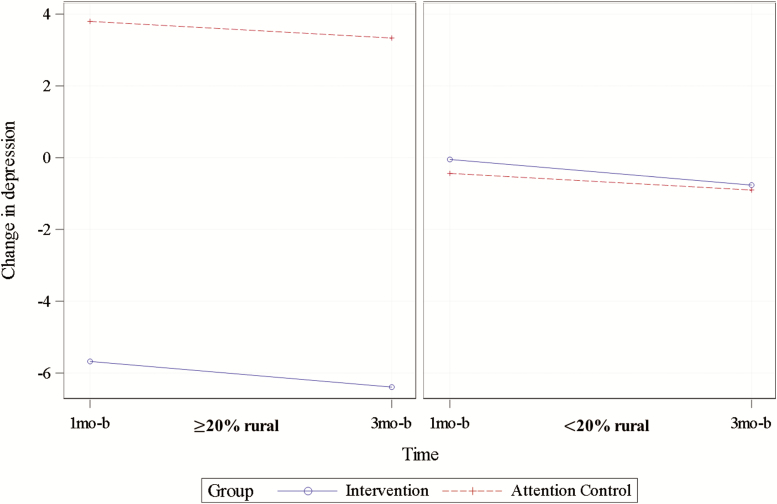
Results: FamTechCare caregivers (n = 42) had greater reductions in depression (p = .012) and gains in competence (p = .033) after 3 months compared to the attention control group (n = 41). Living in rural areas was associated with a reduction in depression for FamTechCare caregivers (p = .002). Higher level of education was associated with greater improvements or lesser declines in burden, competence, and reaction to behavioral symptoms for both the FamTechCare and attention control caregivers.
Discussion and implications: This research demonstrated benefits of using available technology to link families to dementia care experts using video-recording technology. It provides a foundation for future research testing telehealth interventions, tailored based on rich contextual data to support families, including those in rural or remote locations.
Keywords: Alzheimer disease; Behavioral symptoms; Caregivers; Dementia; Telemedicine.
© The Author(s) 2019. Published by Oxford University Press on behalf of The Gerontological Society of America.
Figures
References
-
- Prince M, Comas-Herrera A, Knapp M, Guerchet M, Karagiannidou M.. World Alzheimer Report 2016: Improving Healthcare for People Living with Dementia. Alzheimer’s Disease International; 2016. Retrieved from https://www.alz.co.uk/research/WorldAlzheimerReport2016.pdf. Accessed January 25, 2019.
Grants and funding
LinkOut - more resources
Full Text Sources
