


Psychological interventions for alcohol use disorders in people living with HIV/AIDS: a systematic review
- PMID: 31661030
- PMCID: PMC6819454
- DOI: 10.1186/s13643-019-1176-4
Psychological interventions for alcohol use disorders in people living with HIV/AIDS: a systematic review
Abstract
Background: Alcohol use disorders (AUDs) in people living with HIV/AIDS (PLWH) are a significant impediment to achieving virological control. HIV non-suppression in PLWH with AUDs is mainly attributable to sub-optimal antiretroviral therapy adherence. Sub-optimal adherence makes control of the epidemic elusive, considering that effective antiretroviral treatment and viral suppression are the two key pillars in reducing new infections. Psychological interventions have been proposed as effective treatments for the management of AUDs in PLWH. Evidence for their effectiveness has been inconsistent, with two reviews (2010 and 2013) concluding a lack of effectiveness. However, a 2017 review that examined multiple HIV prevention and treatment outcomes suggested that behavioural interventions were effective in reducing alcohol use. Since then, several studies have been published necessitating a re-examination of this evidence. This review provides an updated synthesis of the effectiveness of psychological interventions for AUDs in PLWH.
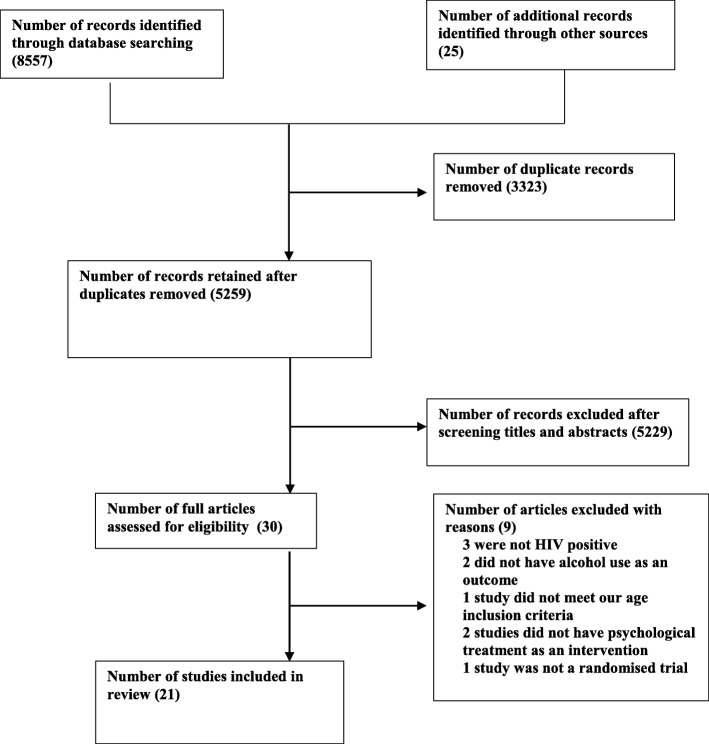
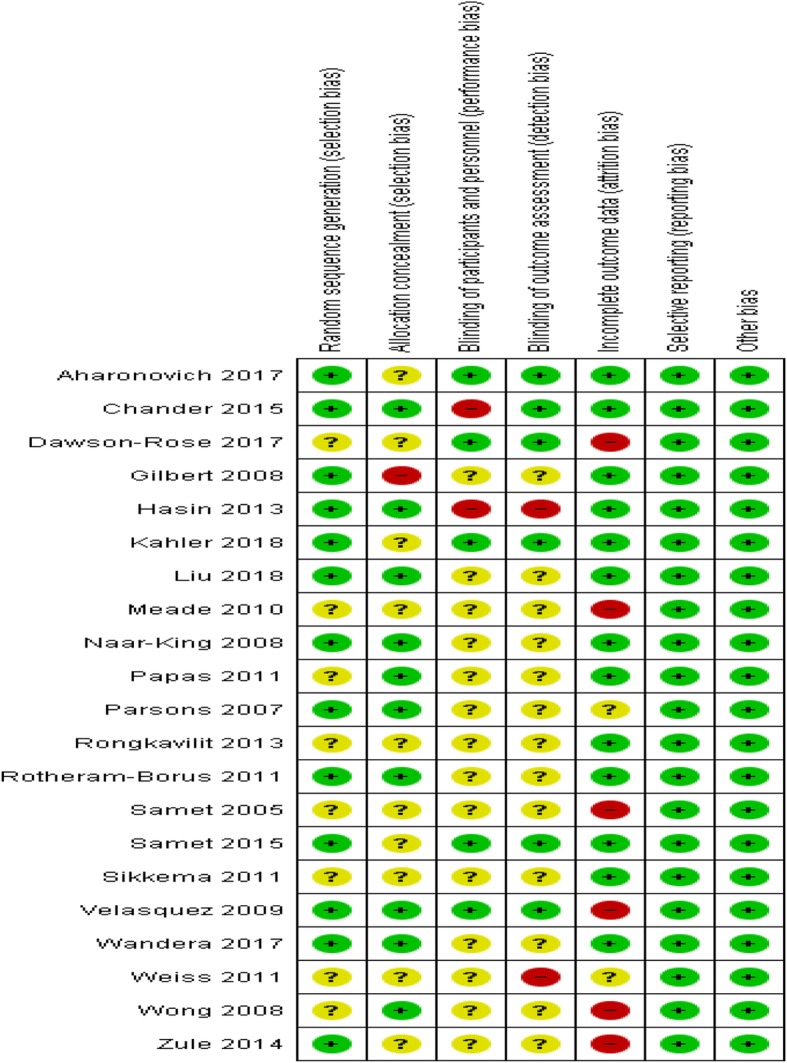
Methods: A search was conducted in the following databases: PubMed, Cochrane Central Register of Trials (CENTRAL), MEDLINE (Ovid), EMBASE, PsychInfo (Ovid) and Clinical trials.gov (clinicaltrials.gov) for eligible studies until August 2018 for psychotherapy and psychosocial interventions for PLWH with AUDs. Two reviewers independently screened titles, abstracts and full texts to select studies that met the inclusion criteria. Two reviewers independently performed data extraction with any differences resolved through discussion. Risk of bias was assessed by two independent reviewers using the Cochrane risk of bias tool, and the concordance between the first and second reviewers was 0.63 and between the first and third reviewers 0.71. Inclusion criteria were randomised controlled trials using psychological interventions in people aged 16 and above, with comparisons being usual care, enhanced usual care, other active treatments or waitlist controls.
Results: A total of 21 studies (6954 participants) were included in this review. Studies had diverse populations including men alone, men and women and men who had sex with men (MSM). Use of motivational interviewing alone or blended with cognitive behavioural therapy (CBT) and technology/computer-assisted platforms were common as individual-level interventions, while a few studies investigated group motivational interviewing or CBT. Alcohol use outcomes were all self-report and included assessment of the quantity and the frequency of alcohol use. Measured secondary outcomes included viral load, CD4 count or other self-reported outcomes. There was a lack of evidence for significant intervention effects in the included studies. Isolated effects of motivational interviewing, cognitive behavioural therapy and group therapy were noted. However for some of the studies that found significant effects, the effect sizes were small and not sustained over time. Owing to the variation in outcome measures employed across studies, no meta-analysis could be carried out.
Conclusion: This systematic review did not reveal large or sustained intervention effects of psychological interventions for either primary alcohol use or secondary HIV-related outcomes. Due to the methodological heterogeneity, we were unable to undertake a meta-analysis. Effectiveness trials of psychological interventions for AUDs in PLWH that include disaggregation of data by level of alcohol consumption, gender and age are needed. There is a need to standardise alcohol use outcome measures across studies and include objective biomarkers that provide a more accurate measure of alcohol consumption and are relatively free from social desirability bias.
Systematic review registration: PROSPERO CRD 42017063856 .
Keywords: Alcohol; Brief; Cognitive; HIV; Interventions; Motivational; Psychological; Screening; Systematic review.
Conflict of interest statement
The authors declare that they have no competing interests.
Figures

References
-
- Galvan FH, Bing EG, Fleishman JA, London AS, Caetano R, Burnam MA, et al. The prevalence of alcohol consumption and heavy drinking among people with HIV in the United States: results from the HIV cost and services utilization study. J Stud Alcohol. 2002;63(2):179–186. doi: 10.15288/jsa.2002.63.179. - DOI - PubMed
-
- Van der Elst EM, Mbogua J, Operario D, Mutua G, Kuo C, Mugo P, et al. High acceptability of HIV pre-exposure prophylaxis but challenges in adherence and use: qualitative insights from a phase I trial of intermittent and daily PrEP in at-risk populations in Kenya. AIDS Behav. 2013;17(6):2162–2172. doi: 10.1007/s10461-012-0317-8. - DOI - PMC - PubMed
-
- van Griensven F, Thienkrua W, Sukwicha W, Wimonsate W, Chaikummao S, Varangrat A, et al. Sex frequency and sex planning among men who have sex with men in Bangkok, Thailand: implications for pre- and post-exposure prophylaxis against HIV infection. J Int AIDS Soc. 2010;13:13. doi: 10.1186/1758-2652-13-13. - DOI - PMC - PubMed
Publication types
MeSH terms
Substances
LinkOut - more resources
Full Text Sources
Medical
Research Materials
Miscellaneous
