


A Clinical Pathway to Standardize Care of Children With Delirium in Pediatric Inpatient Settings
- PMID: 31662421
- PMCID: PMC11416144
- DOI: 10.1542/hpeds.2019-0115
A Clinical Pathway to Standardize Care of Children With Delirium in Pediatric Inpatient Settings
Abstract
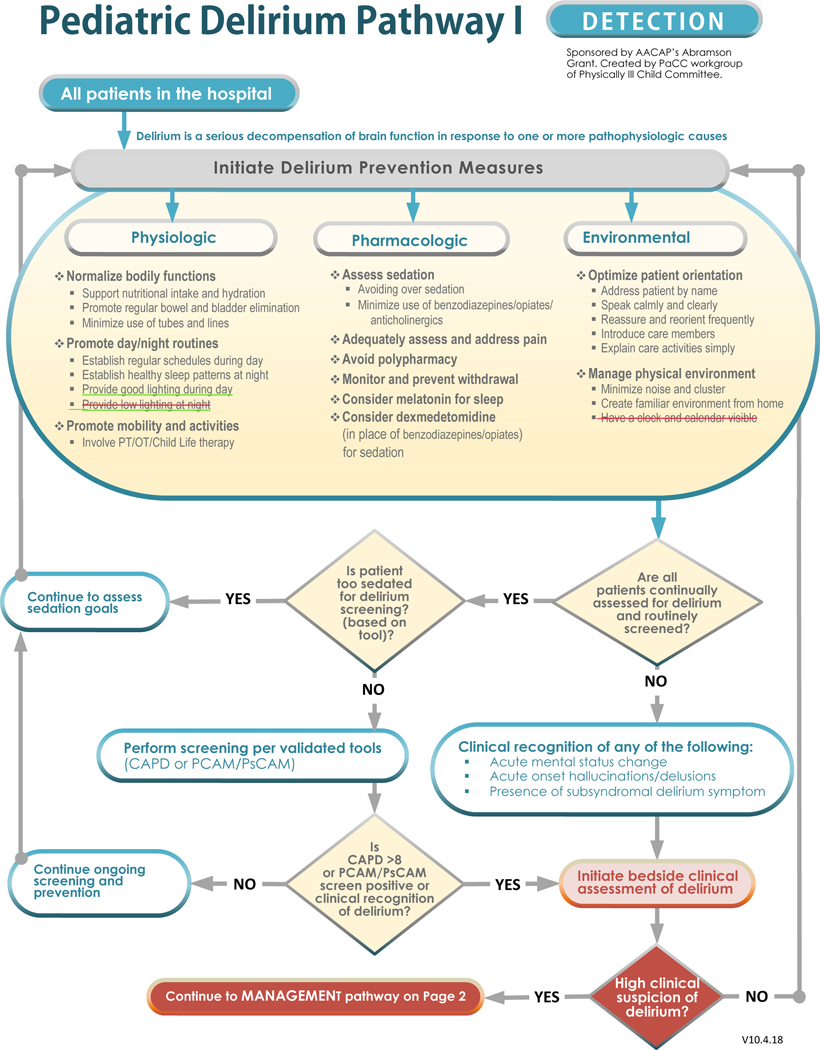
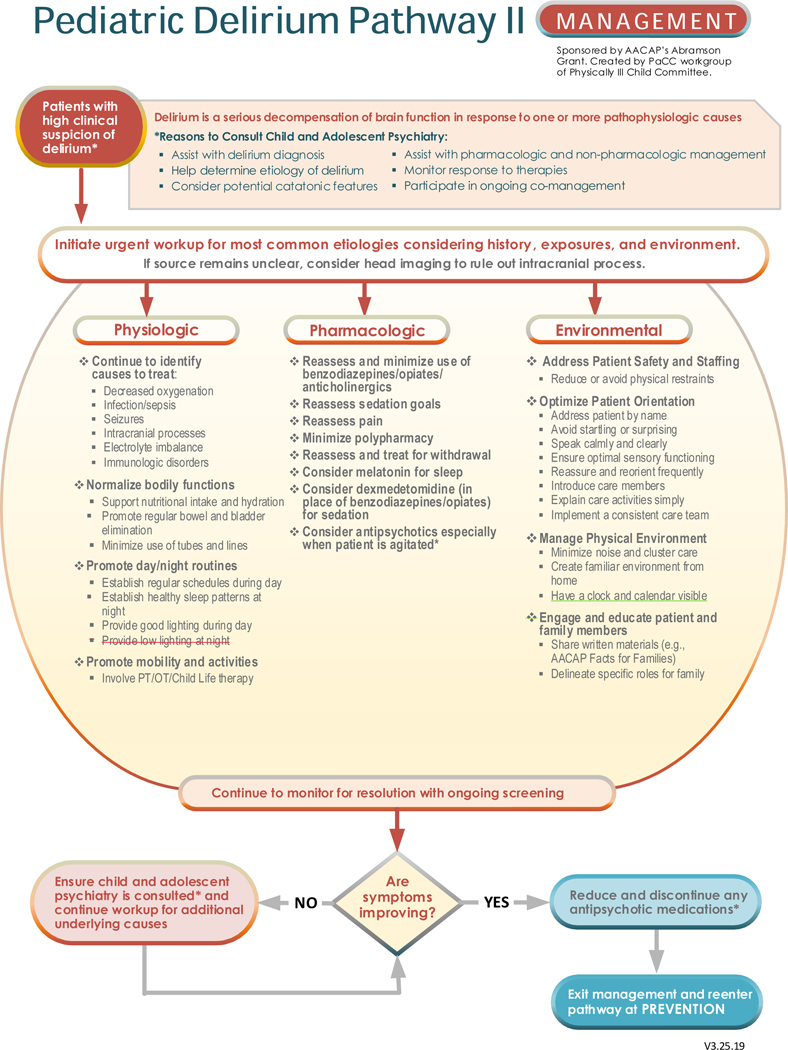
Pediatric delirium is an important comorbidity of medical illness in inpatient pediatric care that has lacked a consistent approach for detection and management. A clinical pathway (CP) was developed to address this need. Pediatric delirium contributes significantly to morbidity, mortality, and costs of inpatient care of medically ill children and adolescents. Screening for delirium in hospital settings with validated tools is feasible and effective in reducing delirium and improving outcomes; however, multidisciplinary coordination is required for implementation. The workgroup, composed of international experts in child and adolescent consultation psychiatry, reviewed the literature and developed a flowchart for feasible screening and management of pediatric delirium. When evidence was lacking, expert consensus was reached; stakeholder feedback was included to create the final pathway. A CP expert collaborated with the workgroup. Two sequential CPs were created: (1) "Prevention and Identification of Pediatric Delirium" emphasizes the need for systematic preventive measures and screening, and (2) "Diagnosis and Management of Pediatric Delirium" recommends an urgent and ongoing search for the underlying causes to reverse the syndrome while providing symptomatic management focused on comfort and safety. Detailed accompanying documents explain the supporting literature and the rationale for recommendations and provide resources such as screening tools and implementation guides. Additionally, the role of the child and adolescent consultation-liaison psychiatrist as a resource for collaborative care of patients with delirium is discussed.
Copyright © 2019 by the American Academy of Pediatrics.
Conflict of interest statement
POTENTIAL CONFLICT OF INTEREST: The authors have indicated they have no potential conflicts of interest to disclose.
References
-
- Schieveld JN, Janssen NJ, van Cauteren YJ. On the Cornell Assessment for Pediatric Delirium and both the diagnostic and statistical manual, 5th edition, and International Classification of Diseases, 11th revision: quo vadis?*. Crit Care Med. 2014;42(3):751–2. - PubMed
-
- American Psychiatric Association. Desk Reference to the Diagnostic Criteria from DSM-5. Washington, DC: American Psychiatric Association. 2013
-
- Maldonado JR. Acute Brain Failure: Pathophysiology, Diagnosis, Management, and Sequelae of Delirium. Crit Care Clin. 2017;33(3):461–519. - PubMed
-
- Cerejeira J, Batista P, Nogueira V, Vaz-Serra A, Mukaetova-Ladinska EB. The stress response to surgery and postoperative delirium: evidence of hypothalamic-pituitary-adrenal axis hyperresponsiveness and decreased suppression of the GH/IGF-1 Axis. J Geriatr Psychiatry Neurol. 2013;26(3):185–94. - PubMed
-
- Cano Londoño EM, Gil IC Mejía, Uribe Hernández K, et al. Delirium during the first evaluation of children aged five to 14 years admitted to a paediatric critical care unit. Intensive Crit Care Nurs. 2018;45:37–43 - PubMed
Publication types
MeSH terms
Grants and funding
LinkOut - more resources
Full Text Sources
Medical
Miscellaneous
