


Common risk factors for major noncommunicable disease, a systematic overview of reviews and commentary: the implied potential for targeted risk reduction
- PMID: 31662837
- PMCID: PMC6794648
- DOI: 10.1177/2040622319880392
Common risk factors for major noncommunicable disease, a systematic overview of reviews and commentary: the implied potential for targeted risk reduction
Abstract
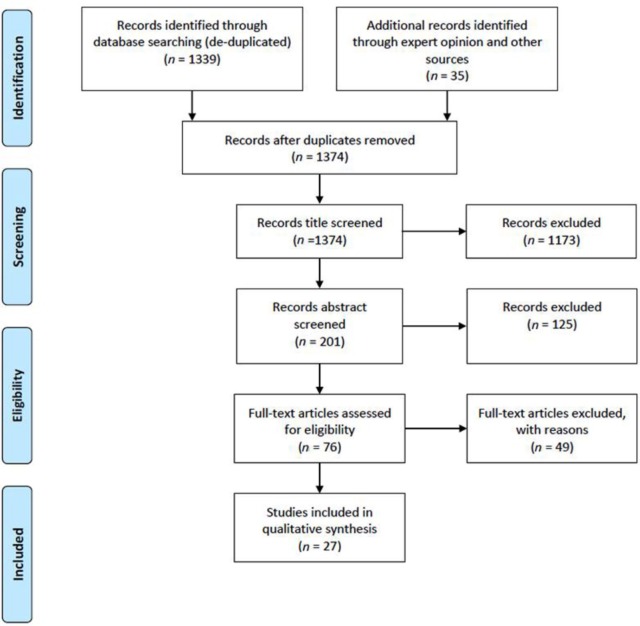
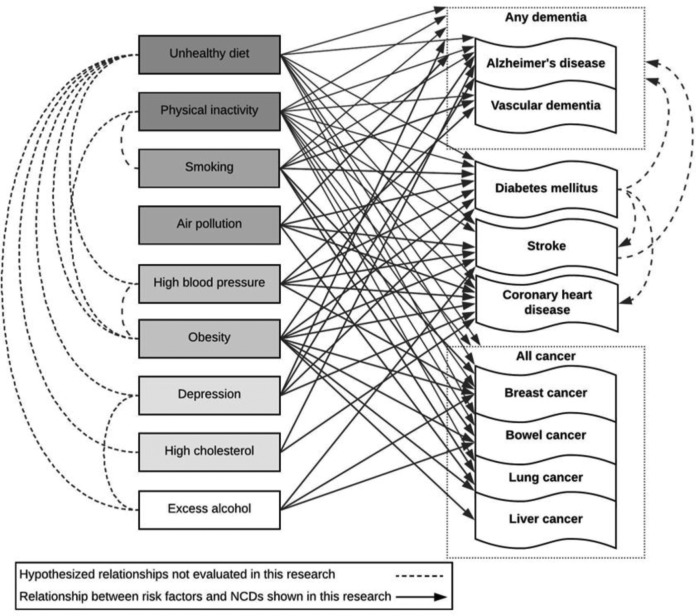
Noncommunicable disease now contributes to the World Health Organization top 10 causes of death in low-, middle- and high-income countries. Particular examples include stroke, coronary heart disease, dementia and certain cancers. Research linking clinical and lifestyle risk factors to increased risk of noncommunicable disease is now well established with examples of confirmed risk factors, including smoking, physical inactivity, obesity and hypertension. However, despite a need to target our resources to achieve risk reduction, relatively little work has examined the overlap between the risk factors for these main noncommunicable diseases. Our high-level review draws together the evidence in this area. Using a systematic overview of reviews, we demonstrate the likely commonality of established risk factors having an impact on multiple noncommunicable disease outcomes. For example, systematic reviews of the evidence on physical inactivity and poor diet found each to be associated with increased risk of cancers, coronary heart disease, stroke, diabetes mellitus and dementia. We highlight the potential for targeted risk reduction to simultaneously impact multiple noncommunicable disease areas. These relationships now need to be further quantified to allow the most effective development of public health interventions in this area.
Keywords: air pollution; cancer; dementia; diabetes; heart disease; hyperten; hypertension; non-communicable disease; obesity; physical activity.
© The Author(s), 2019.
Conflict of interest statement
Conflict of interest statement: The author(s) declared no potential conflicts of interest with respect to the research, authorship, and/or publication of this article.
Figures
References
-
- Beaglehole R, Bonita R, Horton R, et al. Priority actions for the non-communicable disease crisis. Lancet 2011; 377: 1438–1447. - PubMed
-
- World Health Organization. World report on ageing and health. Geneva: World Health Organization, 2015.
-
- World Health Organization. Dementia: a public health priority. Geneva: World Health Organization, 2012.
-
- Skoog I, Lernfelt B, Landahl S, et al. 15-year longitudinal study of blood pressure and dementia. Lancet 1996; 347: 1141–1145. - PubMed
Publication types
Grants and funding
LinkOut - more resources
Full Text Sources
