Early-stage Mycosis Fungoides: Epidemiology and Prognosis
- PMID: 31663598
- PMCID: PMC9128921
- DOI: 10.2340/00015555-3367
Early-stage Mycosis Fungoides: Epidemiology and Prognosis
Abstract
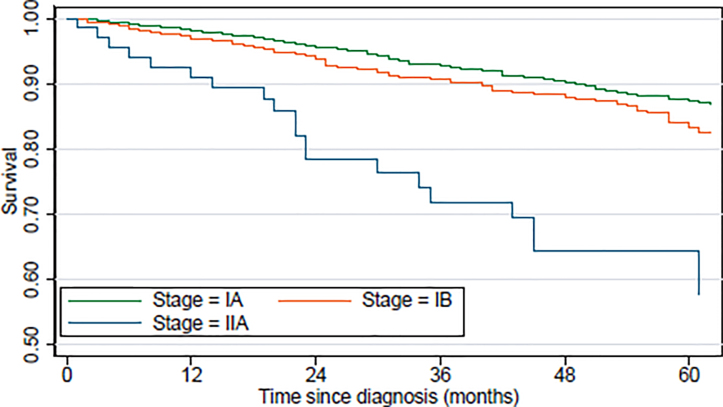
Most patients with mycosis fungoides are diagnosed with early-stage disease. However, prevalence of early-stage disease is unknown, and evidence of its burden is scarce. The aim of this study is to estimate the prevalence of early-stage mycosis fungoides, how long patients live with early-stage disease and to characterise these patients. Data were obtained from 4 key publications and from US cancer registries (Surveillance, Epidemiology and End Results Program; SEER). The derived incidence of early-stage mycosis fungoides was 0.26/100,000 (UK), 0.29/100,000 (US) and 0.38/100,000 (US-SEER) and the prevalence was 4.8/100,000 (UK), 5.2/100,000 (US) and 6.6/100,000 (US-SEER). Early-stage disease may last for 18 years. From SEER registries, 3,132 were diagnosed at early stage (mostly stage IA). Median age at diagnosis was 58 years. Compared with stage IA, the relative risk of death was 1.3 for stage IB and 3.5 for stage IIA. We confirm the rarity of early-stage mycosis fungoides, a differential prognosis and the potential for elevated burden of disease.
Keywords: epidemiology; mycosis fungoides; prevalence; prognosis; stage.
Conflict of interest statement
Figures
References
-
- Agar NS, Wedgeworth E, Crichton S, Mitchell TJ, Cox M, Ferreira S, et al. Survival Outcomes and Prognostic Factors in Mycosis Fungoides/Sezary Syndrome: Validation of the Revised International Society for Cutaneous Lymphomas/European Organisation for Research and Treatment of Cancer Staging Proposal. J Clin Oncol 2010; 28: 4730–4739. - PubMed
-
- Wilcox RA. Cutaneous T-cell lymphoma: 2017 update on diagnosis, risk-stratification, and management. Am J Hematol 2017; 92: 1085–1102. - PubMed
-
- Aschebrook-Kilfoy B, Cocco P, La Vecchia C, Chang ET, Vajdic CM, Kadin ME, et al. Medical history, lifestyle, family history, and occupational risk factors for mycosis fungoides and Sézary syndrome: The InterLymph Non-Hodgkin Lymphoma Subtypes Project. J Natl Cancer Inst Monogr 2014; 48: 98–105. - PMC - PubMed
-
- Scarisbrick JJ, Prince HM, Vermeer MH, Quaglino P, Horwitz S, Porcu P, et al. Cutaneous lymphoma international consortium study of outcome in advanced stages of mycosis fungoides and Sezary syndrome: effect of specific prognostic markers on survival and development of a prognostic model. Clin Oncol 2015; 33: 3766–3773. - PMC - PubMed
-
- Nikolaou V, Papadavid E, Patsatsi A, Siakantaris M, Economidi A, Marinos L, et al. Prognostic indicators for mycosis fungoides in a Greek population. Br J Dermatol 2017; 176: 1321–1330. - PubMed
MeSH terms
LinkOut - more resources
Full Text Sources
Medical