


Genomewide Expression Profiling Identifies a Novel miRNA-based Signature for the Detection of Peritoneal Metastasis in Patients With Gastric Cancer
- PMID: 31663973
- PMCID: PMC7577555
- DOI: 10.1097/SLA.0000000000003647
Genomewide Expression Profiling Identifies a Novel miRNA-based Signature for the Detection of Peritoneal Metastasis in Patients With Gastric Cancer
Abstract
Objective: This study aimed to conduct a genomewide transcriptomic profiling to develop a microRNA (miRNA)-based signature for the identification of peritoneal metastasis (PM) in patients with gastric cancer (GC).
Summary background data: Even though PM in patients with GC has long been recognized to associate with poor prognosis, currently there is lack of availability of molecular biomarkers for its robust diagnosis.
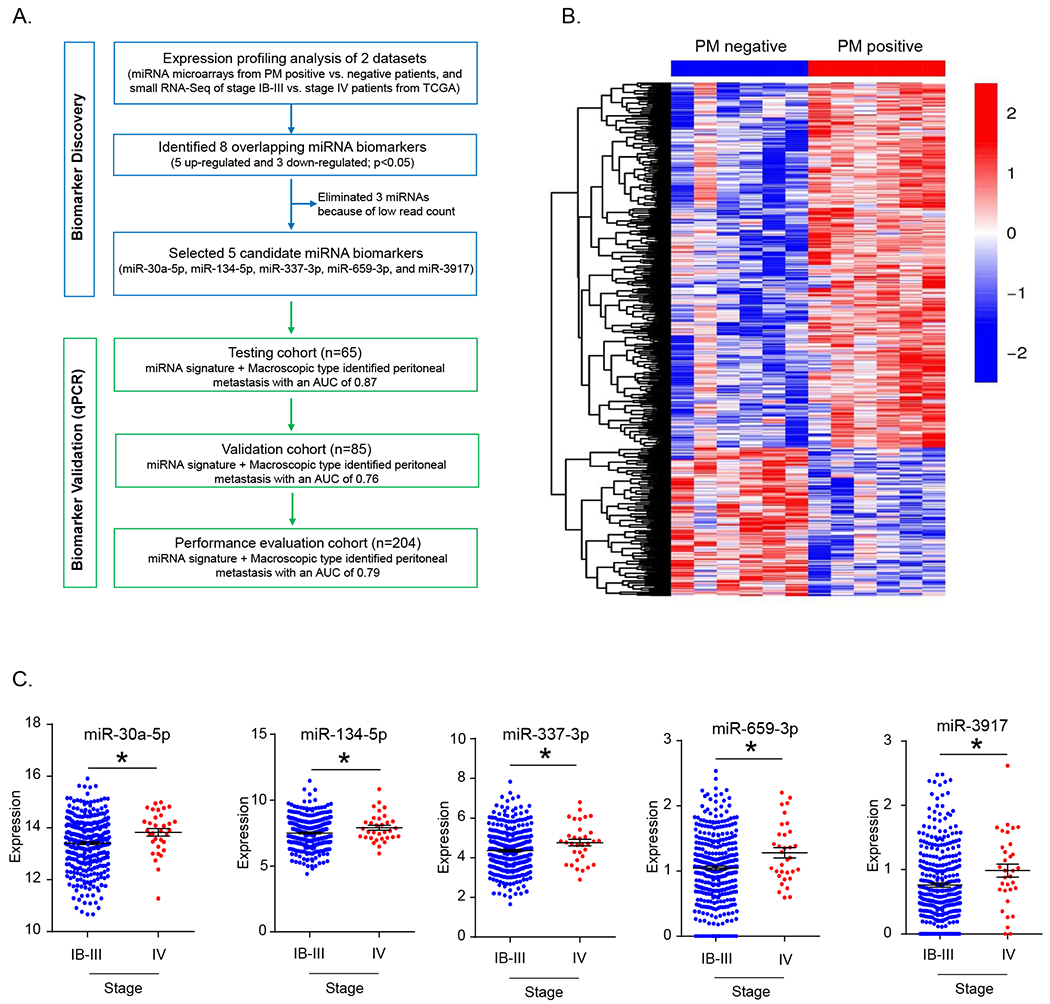
Methods: We performed a systematic biomarker discovery by analyzing miRNA expression profiles in primary tumors from GC patients with and without PM, and subsequently validated the expression of candidate miRNA biomarkers in 3 independent clinical cohorts of 354 patients with advanced GC.
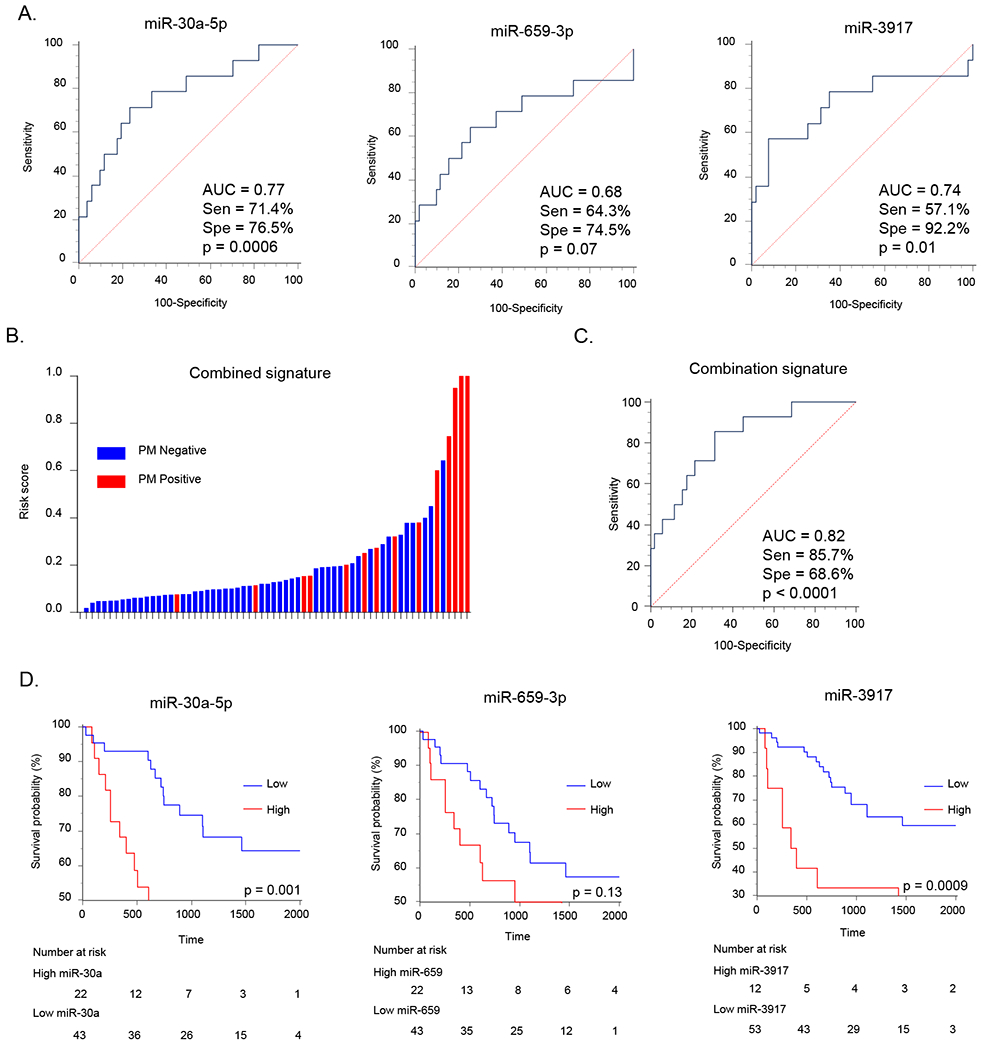
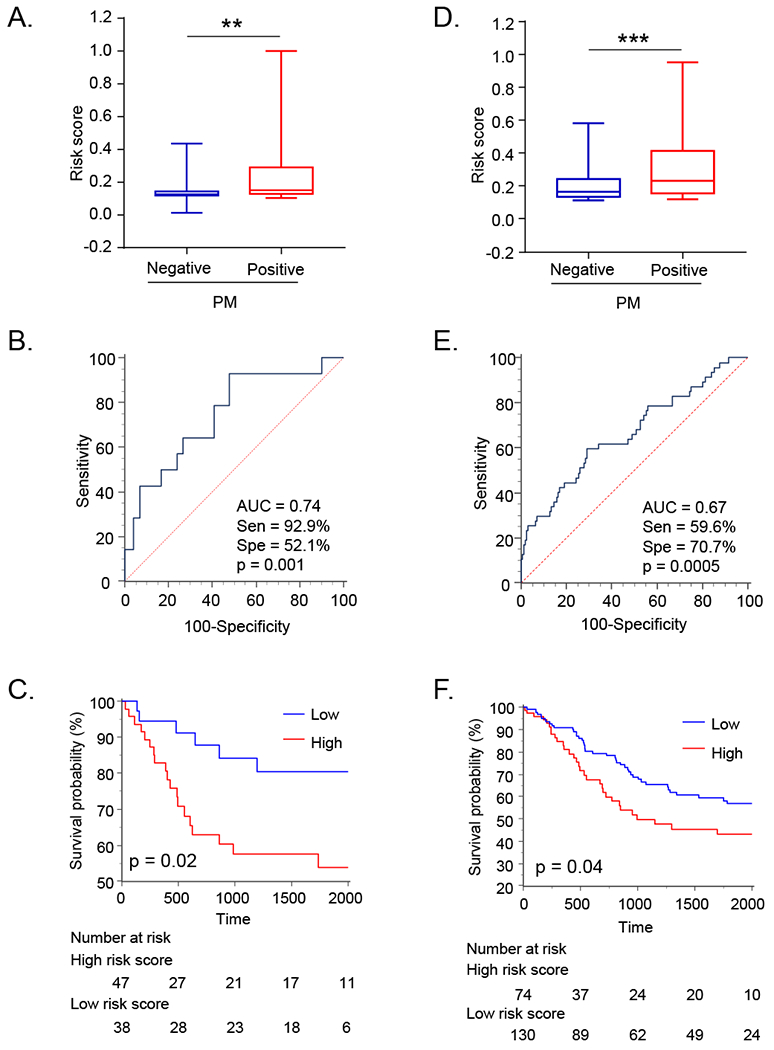
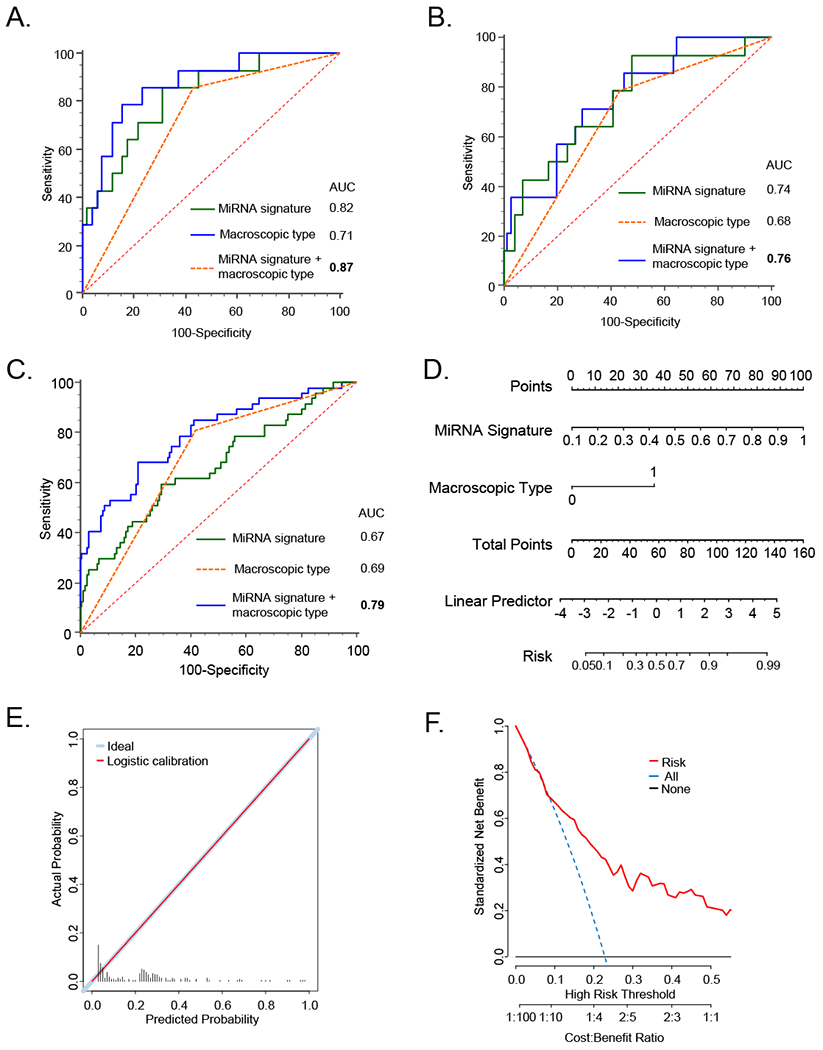
Results: Five miRNAs (miR-30a-5p, -134-5p, -337-3p, -659-3p, and -3917) were identified during the initial discovery phase; three of which (miR-30a-5p, -659-3p, and -3917) were significantly overexpressed in the primary tumors from PM-positive patients in the testing cohort (P = 0.002, 0.04, and 0.007, respectively), and distinguished patients with versus without peritoneal metastasis with the value of area under the curve (AUC) of 0.82. Furthermore, high expression of these miRNAs also associated with poor prognosis (hazard ratio = 2.18, P = 0.04). The efficacy of the combination miRNA signature was subsequently validated in an independent validation cohort (AUC = 0.74). Finally, our miRNA signature when combined together with the macroscopic Borrmann's type score offered a much superior diagnostic in all 3 cohorts (AUC = 0.87, 0.76, and 0.79, respectively).
Conclusions: We have established an miRNA-based signature that have a potential to identify peritoneal metastasis in GC patients.
Copyright © 2019 Wolters Kluwer Health, Inc. All rights reserved.
Conflict of interest statement
The authors report no conflicts of interest to disclose.
Figures
References
-
- Siegel RL, Miller KD, Jemal A. Cancer statistics, 2015. CA Cancer J Clin 2015; 65: 5–29. - PubMed
-
- Yoo CH, Noh SH, Shin DW et al. Recurrence following curative resection for gastric carcinoma. Br J Surg 2000; 87: 236–242. - PubMed
-
- Ishizone S, Maruta F, Saito H et al. Efficacy of S-1 for patients with peritoneal metastasis of gastric cancer. Chemotherapy 2006; 52: 301–307. - PubMed
-
- Koizumi W, Narahara H, Hara T et al. S-1 plus cisplatin versus S-1 alone for first-line treatment of advanced gastric cancer (SPIRITS trial): a phase III trial. Lancet Oncol 2008; 9: 215–221. - PubMed
-
- Thomassen I, van Gestel YR, van Ramshorst B et al. Peritoneal carcinomatosis of gastric origin: a population-based study on incidence, survival and risk factors. Int J Cancer 2014; 134: 622–628. - PubMed
Publication types
MeSH terms
Substances
Grants and funding
LinkOut - more resources
Full Text Sources
Medical
Miscellaneous
