


HIV prevalence in South Africa through gender and racial lenses: results from the 2012 population-based national household survey
- PMID: 31666077
- PMCID: PMC6821038
- DOI: 10.1186/s12939-019-1055-6
HIV prevalence in South Africa through gender and racial lenses: results from the 2012 population-based national household survey
Abstract
Background: In South Africa, persistence of the HIV epidemic and associated gender and racial disparities is a major concern after more than 20 years of democratic dispensation and efforts to create a more healthy and equal society. This paper profiles HIV prevalence and related factors among Black African men and women compared to other race groups in South Africa using the 2012 population-based national household HIV survey.
Methods: This secondary data analysis was based on the 2012 population-based nationally representative multi-stage stratified cluster random household sample. Bivariate and multiple logistic regression analysis were used to assess the relationship between HIV prevalence and associated factors by gender and racial profile.
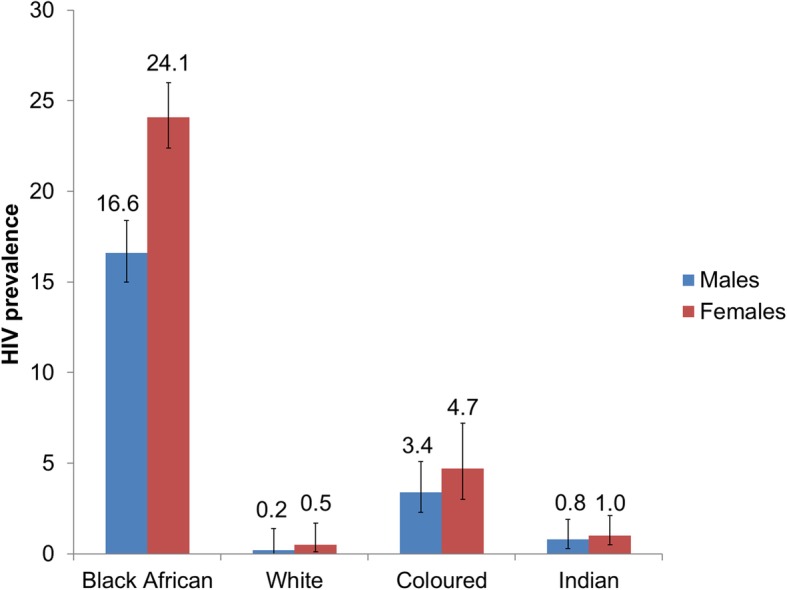
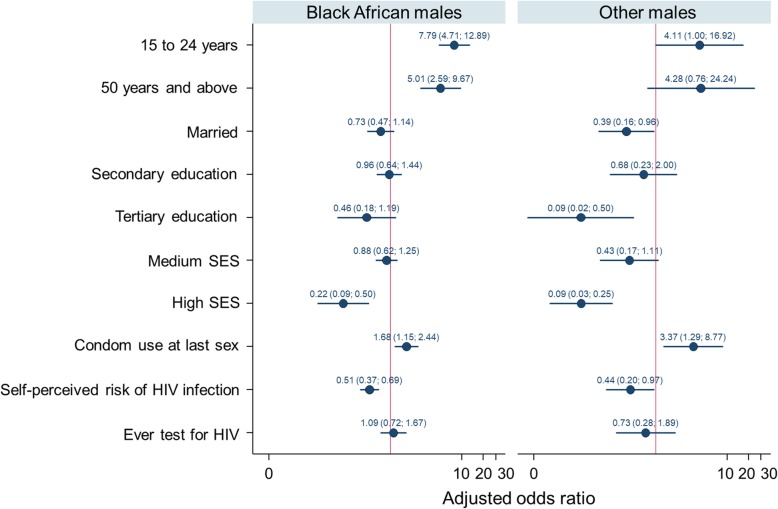
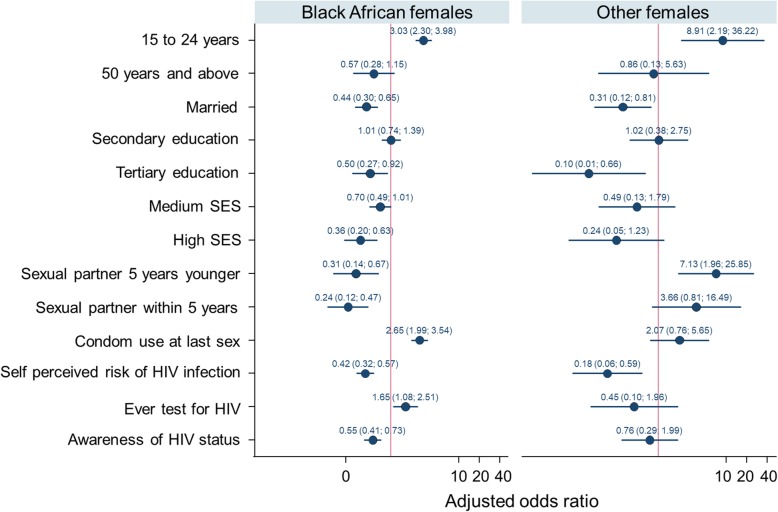
Results: Overall HIV prevalence was significantly higher (p < 0.001) among both Black African males (16.6%; 95% CI: 15.0-18.4) and females (24.1%; 95% CI: 22.4-26.0) compared to their counterparts from other races. Among Black African males, increased risk of HIV was significantly associated with age group 25-49 years and those 50 years and older compared with young males 15-25 years. Among all males, reported condom use at last sex was significantly associated with increased risk of HIV. High socio-economic status (SES) and perceived risk of HIV were associated with a decreased risk of HIV. Among female condom use at last sex and ever testing for HIV was associated with increased prevalence of HIV only among Black African females. Lower prevalence of HIV was associated with marriage, tertiary education, high SES, having a partner five years younger, perceived risk of HIV, and awareness of HIV status among Black African females.
Conclusion: Gender and racial disparities rooted in structural and contextual inequalities remain important factors for the maintenance of the generalized HIV epidemic in the country. HIV prevention interventions need to cut across all strata of society but also target risk factors salient for specific groups. Alleviating vulnerability to HIV along gender and racial lines should also be viewed as part of a broader public health strategy.
Keywords: Gender and racial disparities; HIV prevalence; South Africa.
Conflict of interest statement
The authors declare that they have no competing interests.
Figures
References
-
- Richardson Eugene T, Collins Sean E, Kung Tiffany, Jones James H, Tram Khai Hoan, Boggiano Victoria L, Bekker Linda-Gail, Zolopa Andrew R. Gender inequality and HIV transmission: a global analysis. Journal of the International AIDS Society. 2014;17(1):19035. doi: 10.7448/IAS.17.1.19035. - DOI - PMC - PubMed
-
- Shisana O, Rehle T, Simbayi LC, Zuma K, Jooste S, Zungu N, et al. South African national HIV prevalence, incidence and behavior survey, 2012. Cape Town: HSRC Press; 2014. - PubMed
-
- Shisana O, Simbayi L. Nelson Mandela HSRC study of HIV/AIDS. South African national HIV prevalence, behavioural risks and mass media. Household survey 2002. Pretoria: HSRC; 2002.
Publication types
MeSH terms
Grants and funding
LinkOut - more resources
Full Text Sources
Medical
