


A Novel Tool to Improve Shared Decision Making and Adherence in Multiple Sclerosis: Development and Preliminary Testing
- PMID: 31667351
- PMCID: PMC6798166
- DOI: 10.1177/2381468319879134
A Novel Tool to Improve Shared Decision Making and Adherence in Multiple Sclerosis: Development and Preliminary Testing
Abstract
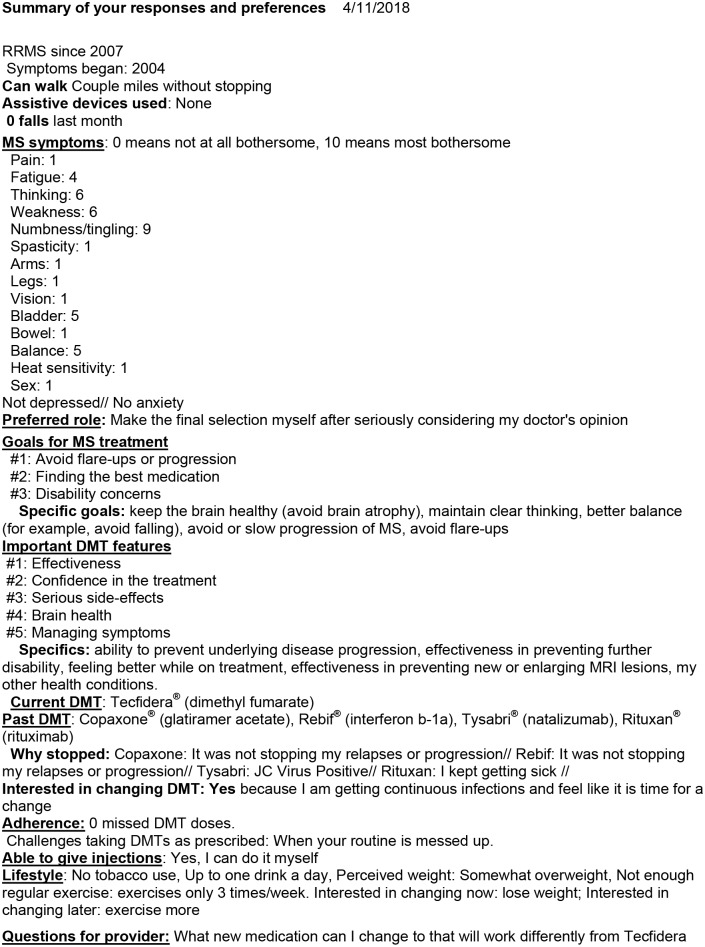
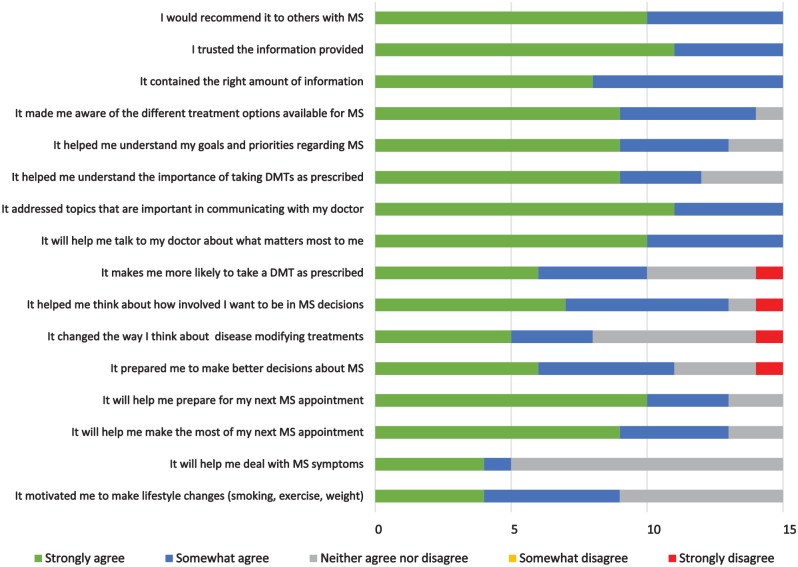
Background. Most people with multiple sclerosis (MS) want to be involved in medical decision making about disease-modifying therapies (DMTs), but new approaches are needed to overcome barriers to participation. Objectives. We sought to develop a shared decision-making (SDM) tool for MS DMTs, evaluate patient and provider responses to the tool, and address challenges encountered during development to guide a future trial. Methods. We created a patient-centered design process informed by image theory to develop the MS-SUPPORT SDM tool. Development included semistructured interviews and alpha and beta testing with MS patients and providers. Beta testing assessed dissemination and clinical integration strategies, decision-making processes, communication, and adherence. Patients evaluated the tool before and after a clinic visit. Results. MS-SUPPORT combines self-assessment with tailored feedback to help patients identify their treatment goals and preferences, correct misperceptions, frame decisions, and promote adherence. MS-SUPPORT generates a personal summary of their responses that patients can share with their provider to facilitate communication. Alpha testing (14 patients) identified areas needing improvement, resulting in reorganization and shortening of the tool. MS-SUPPORT was highly rated in beta testing (15 patients, 4 providers) on patient-provider communication, patient preparation, adherence, and other endpoints. Dissemination through both patient and provider networks appeared feasible. All patient testers wanted to share the summary report with their provider, but only 60% did. Limitations. Small sample size, no comparison group. Conclusions. The development process resulted in a patient-centered SDM tool for MS that may facilitate patient involvement in decision making, help providers understand their patients' preferences, and improve adherence, though further testing is needed. Beta testing in real-world conditions was critical to prepare the tool for future testing and inform the design of future studies.
Keywords: adherence; chronic disease; communication; image theory; multiple sclerosis; patient preferences; shared decision making; values clarification.
© The Author(s) 2019.
Conflict of interest statement
The author(s) declared the following potential conflicts of interest with respect to the research, authorship, and/or publication of this article: Nananda Col has received consulting fees and research contracts from various entities through her contract research organization, Five Islands Consulting, LLC, also known as Shared Decision Making Resources.
Figures




References
-
- Matthew WB, Compson A, Allen IV, Martyn CN. McAlpine’s Multiple Sclerosis. 2nd ed. New York: Churchill Livingstone; 1991.
-
- Goodin DS, Frohman EM, Garmany GP, Jr, et al. Disease-modifying therapies in multiple sclerosis: report of the Therapeutics and Technology Assessment Subcommittee of the American Academy of Neurology and the MS Council for Clinical Practice Guidelines. Neurology. 2002;58(2):169–78. - PubMed
-
- Rae-Grant A, Day GS, Marrie RA, et al. Practice guideline recommendations summary: disease-modifying therapies for adults with multiple sclerosis: report of the Guideline Development, Dissemination, and Implementation Subcommittee of the American Academy of Neurology. Neurology. 2018;90(17):777–88. - PubMed
-
- Stacey D, Légaré F, Col NF, et al. Decision aids for people facing health treatment or screening decisions. Cochrane Database Syst Rev. 2014;(1):CD001431. - PubMed
LinkOut - more resources
Full Text Sources
Medical
