Hemorrhagic Fever with Renal Syndrome
- PMID: 31668027
- PMCID: PMC6940369
- DOI: 10.3947/ic.2019.51.4.405
Hemorrhagic Fever with Renal Syndrome
Erratum in
-
Erratum: Special Articles for Korean History of Infectious Diseases.Infect Chemother. 2020 Jun;52(2):305-306. doi: 10.3947/ic.2020.52.2.305. Infect Chemother. 2020. PMID: 32618151 Free PMC article. No abstract available.
Abstract
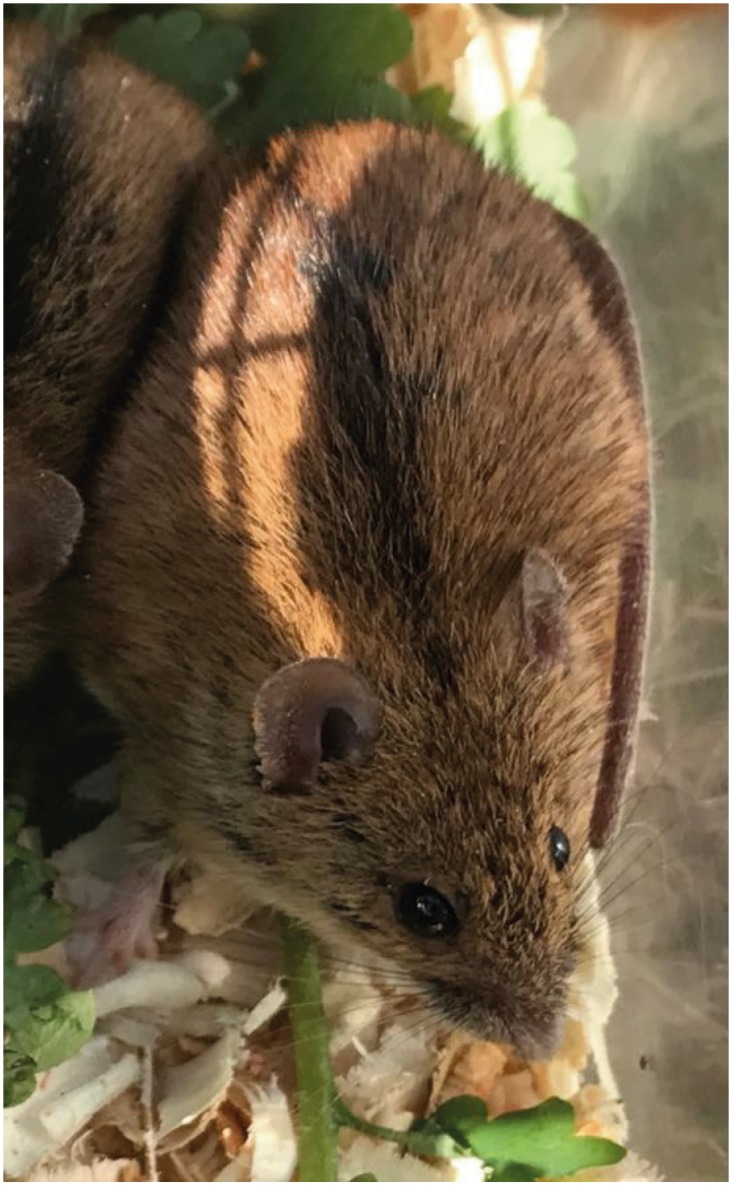
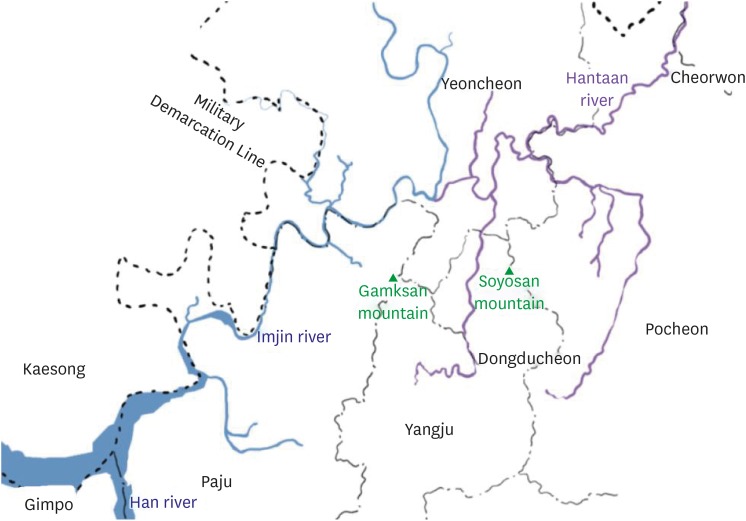
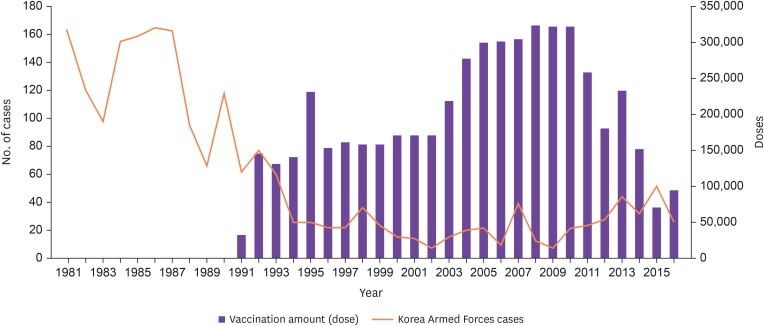
In Korea, hemorrhagic fever with renal syndrome (HFRS) was first reported in a United Nations (UN) soldier stationed in the central front, also known as the "Iron Triangle". In 1976, professor Ho Wang Lee discovered an antigen in the lung and kidney tissues of Apodemus agrarius. In 1980, this novel virus was named Hantaan virus after the Hantaan river. The Old World Hantaviruses, which are usually found in East Asia and Europe, are generally transmitted to humans via the respiratory pathway during dry seasons, usually in late spring and fall. Currently, 300 - 600 cases per year are reported in Korea with a mortality rate of 1 - 2%. The typical clinical course of HFRS is classified into five phases: febrile, hypotensive, oliguric, diuretic, and convalescent. And treatment for HFRS is mostly conservative. A vaccine for the Hantaan virus was developed in 1988 and marketed in 1990. Because HFRS outbreaks mostly occur in regions near the truce line in Korea, vaccination is virtually the only protection against the virus among military personnel working in such regions and local residents. Therefore, proving the effectiveness of the HFRS vaccine and devising efficient vaccination plans have been considered a major task for Korea's health authorities.
Keywords: Epidemiology; Family hantaviridae; Hantavirus; Hemorrhagic fever with renal syndrome.
Copyright © 2019 by The Korean Society of Infectious Diseases, Korean Society for Antimicrobial Therapy, and The Korean Society for AIDS.
Figures
References
-
- Brown WL. Trench nephritis. Lancet. 1916;187:391–395.
-
- Casals J, Henderson BE, Hoogstraal H, Johnson KM, Shelokov A. A review of Soviet viral hemorrhagic fevers, 1969. J Infect Dis. 1970;122:437–453. - PubMed
-
- Lee HW. The miracle of the Hantaan River. 1st edition. Seoul: Sigongsa; 1999. pp. 25–32.pp. 246–254.
-
- French GR, Foulke RS, Brand OA, Eddy GA, Lee HW, Lee PW. Korean hemorrhagic fever: propagation of the etiologic agent in a cell line of human origin. Science. 1981;211:1046–1048. - PubMed