. 2019 Nov 1;366(6465):589-593.
doi: 10.1126/science.aay0934.

Itaconyl-CoA forms a stable biradical in methylmalonyl-CoA mutase and derails its activity and repair

Affiliations

Itaconyl-CoA forms a stable biradical in methylmalonyl-CoA mutase and derails its activity and repair

Markus Ruetz et al. Science. .

Abstract

Itaconate is an immunometabolite with both anti-inflammatory and bactericidal effects. Its coenzyme A (CoA) derivative, itaconyl-CoA, inhibits B12-dependent methylmalonyl-CoA mutase (MCM) by an unknown mechanism. We demonstrate that itaconyl-CoA is a suicide inactivator of human and Mycobacterium tuberculosis MCM, which forms a markedly air-stable biradical adduct with the 5'-deoxyadenosyl moiety of the B12 coenzyme. Termination of the catalytic cycle in this way impairs communication between MCM and its auxiliary repair proteins. Crystallography and spectroscopy of the inhibited enzyme are consistent with a metal-centered cobalt radical ~6 angstroms away from the tertiary carbon-centered radical and suggest a means of controlling radical trajectories during MCM catalysis. Mycobacterial MCM thus joins enzymes in the glyoxylate shunt and the methylcitrate cycle as targets of itaconate in pathogen propionate metabolism.


Conflict of interest statement

Competing interests: V.K.M. is a paid advisor to Janssen Pharmaceuticals and 5AM Ventures and owns equity in Raze Therapeutics.

Figures

Fig. 1.
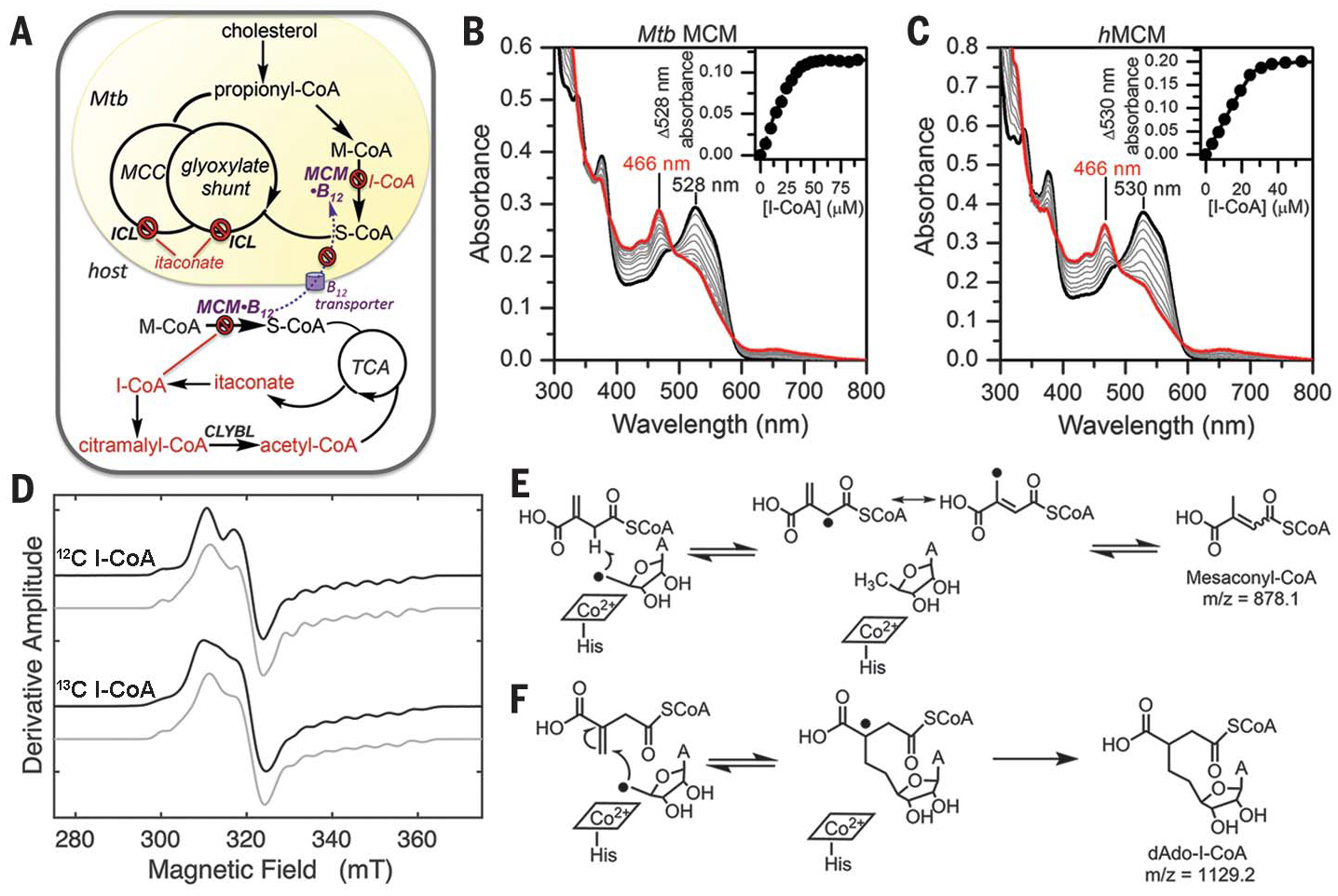
Fig. 1.. I-CoA inhibits human and Mtb MCM by forming an air-stable biradical.
(A) Mtb pathways targetedby I-CoA. MCC, methylcitrate cycle; ICL, isocitrate lyase; S-CoA, succinyl-CoA;TCA, tricarboxylic acid cycle. (B and C) Titration of holo-Mtb MCM (B) with 30 μM bound AdoCbl or holo-hMCM (C) with 40 μM bound AdoCbl (black traces) with increasing concentrations of I-CoA. The intermediate spectra (gray) were recorded after 5 min of equilibration. (Insets) Representative plots of Δ528 or Δ530 nm versus I-CoA indicated stoichiometric binding [n = 2 (Mtb MCM); n = 3 (hMCM)]. (D) EPR spectra of the 1 mM I-CoA-induced biradical on hMCM (375 μM) in the presence of natural abundance (top) or [13C]I-CoA (bottom). The experimental and simulated spectra are in black and gray, respectively. (E and F) Possible fates of dAdo• when I-CoA behaves as substrate (E), not observed, or inhibitor (F).
Fig. 2.
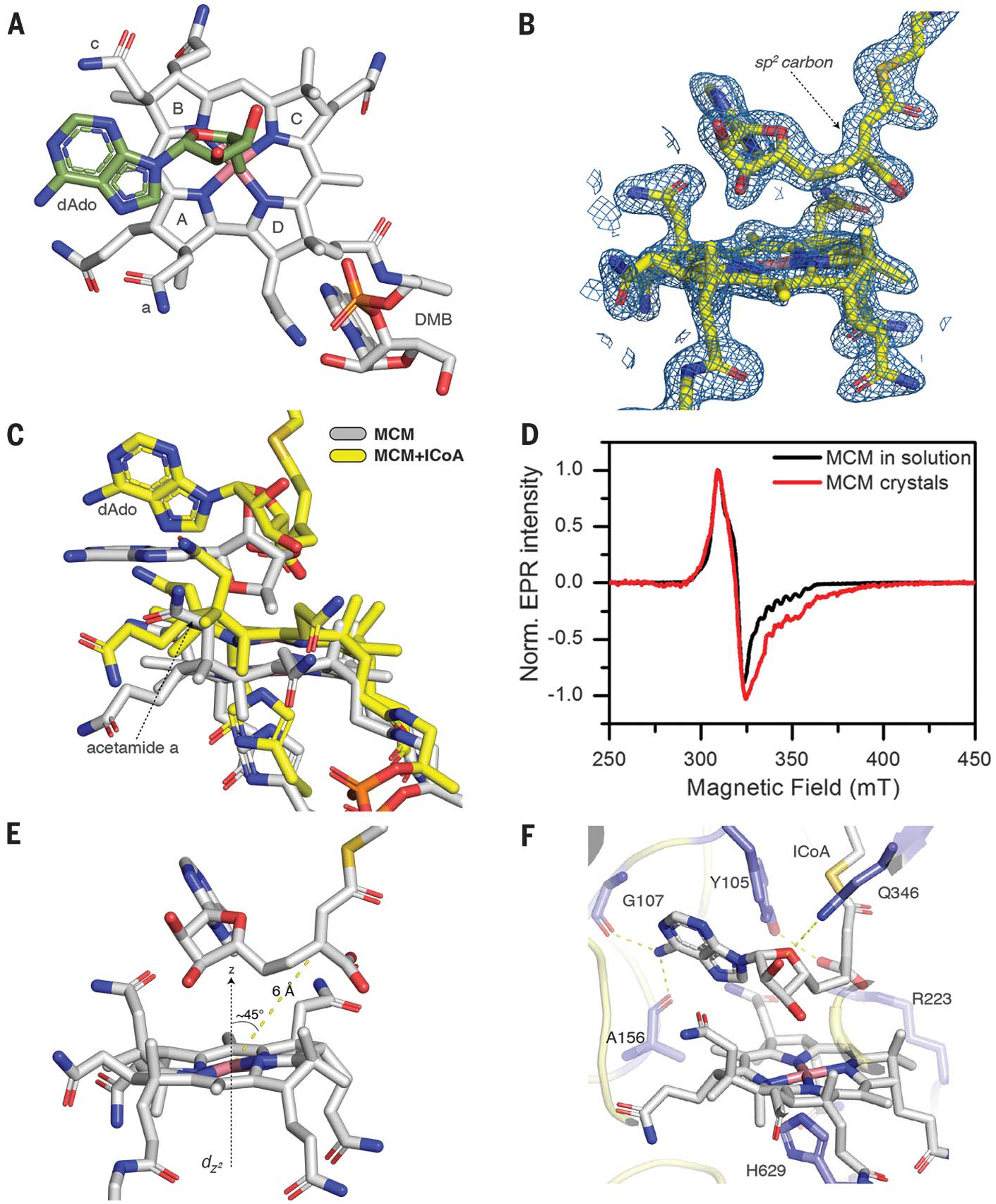
Fig. 2.. Crystallographic capture of a biradical in I-CoA-inactivated Mtb MCM.
(A) Orientation of dAdo (green) in relation to the corrin ring (gray; pyrrole rings A to D and acetamides a and c are shown) in native Mtb MCM. (B) 2Fo-Fc omit maps (blue) around B12 and I-CoA contoured at 1.5s. (C) Shift in B12 and rotation of the adenine ring from the coplanar (gray) to perpendicular (yellow) position relative to the corrin ring. (D) EPR spectra of Mtb MCM + I-CoA. (E) Geometry of B12 and the I-CoA–dAdo adduct in crystal. (F) Hydrogen bonding interactions in the MCM–I-CoA structure.
Fig. 3.
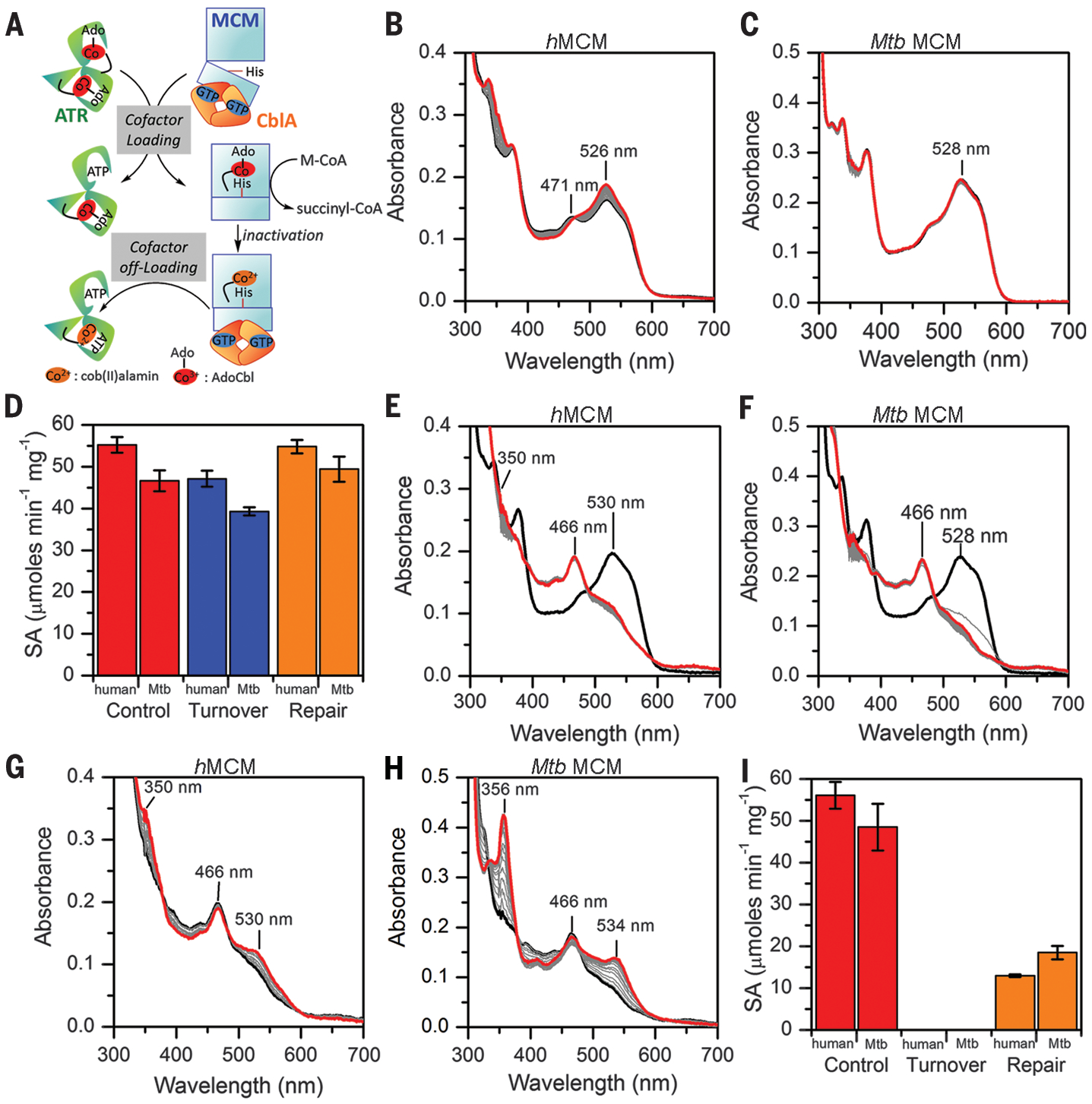
Fig. 3.. I-CoA inactivation impairs MCM repair.
(A) Scheme showing the role of the auxiliary proteins in cofactor loading/off-loading to/from MCM. (B and C) Enzyme-monitored turnover by human (B) and Mtb (C) MCM (black spectra) in the presence of M-CoA and human or Mtb CblA-GTP. Intermediate spectra (gray) were recorded every 2 min. Final spectra (red) were recorded at 1 hour. (D) Specific activity (SA) of human and Mtb MCM after 1-hour preincubation without or with M-CoA (red versus blue) and subsequent addition of the repair system (orange). (E and F) Addition of I-CoA to hMCM-AdoCbl [black, (E)] or Mtb MCM-AdoCbl [black, (F)] results in inactive enzyme (gray). Further incubationover 1 hour causes only modest spectral changes (red). (G and H) At the end of the experiments in (E) and (F), the repair system was added for 20 min to human (G) and Mtb (H) MCM. The increase in absorbance at 350 to 356 nm is indicative of OH2Cbl formation (red). (I) Same as in (D) but with I-CoA; in both panels, data represent means ± SD (n = 3).
Fig. 4.
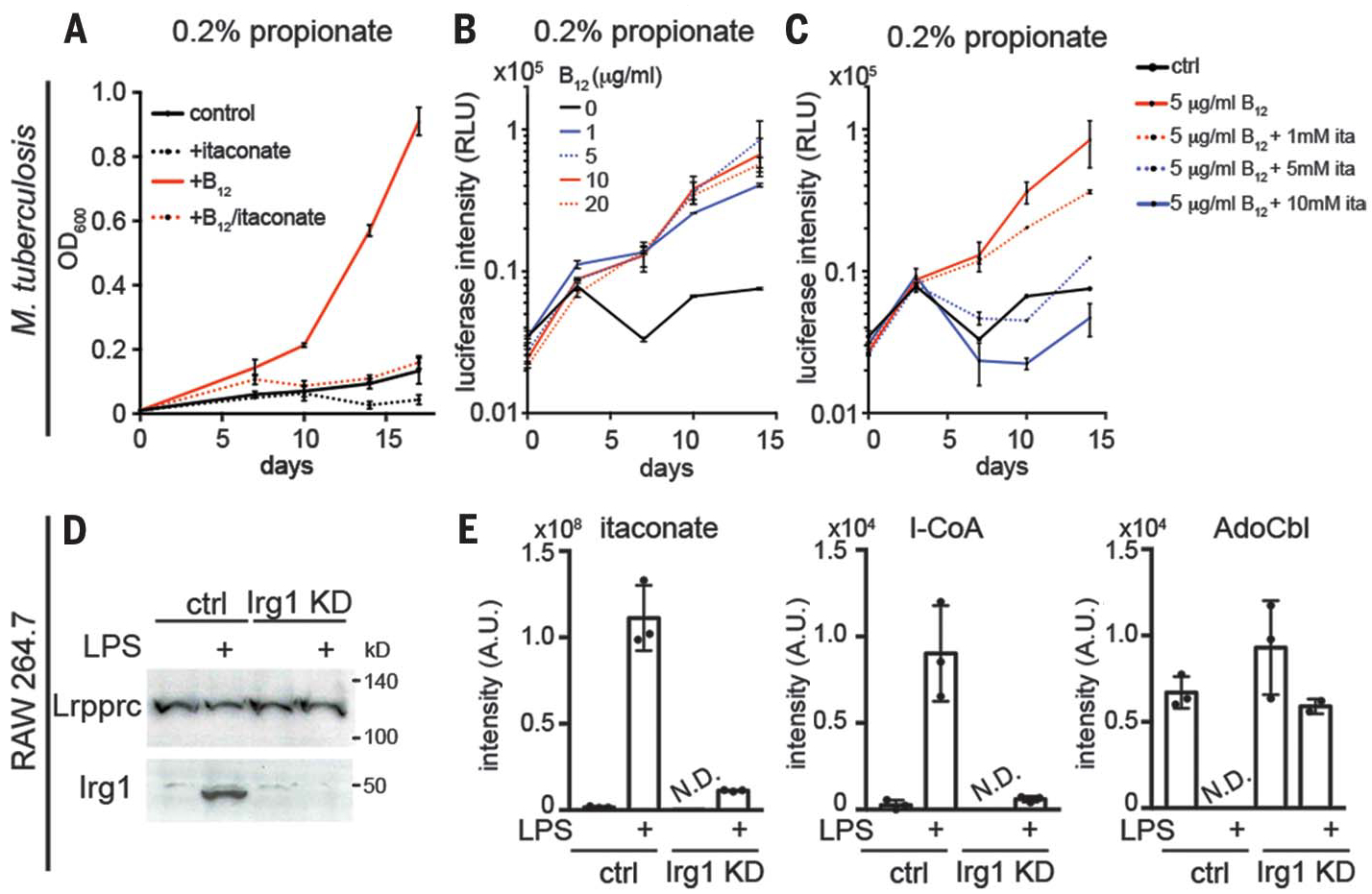
Fig. 4.. Itaconate inhibits B12-dependent Mtb and macrophage metabolism.
(A) Vitamin B12 (10 μg/ml) stimulates growth of wild-type Mtb strain H37Rv on 0.2% propionate as the carbon source. OD, optical density. (B and C) B12 concentration dependence of Mtb growth and its inhibition by itaconate. (D) Western blot of Irg1 in Irg1 CRISPR knockdown (KD) RAW264.7 cells with or without LPS (10 ng/ml) stimulation for 6 hours. Lrpprc, a mitochondrial protein, was used as the loading control. (E) Liquid chromatography–MS of itaconate, I-CoA, and AdoCbl in control and Irg1 KD RAW264.7 cells with or without LPS stimulation for 6 hours. Data represent means ± SD of three independent experiments. N.D., not detected.

Comment in

References

    1. Michelucci A et al. , Proc. Natl. Acad. Sci. U.S.A 110, 7820–7825 (2013). - PMC - PubMed
    1. O’Neill LAJ, Artyomov MN, Nat. Rev. Immunol 19, 273–281 (2019). - PubMed
    1. Kumar R, Int. J. Integr. Biol 7, 69–72 (2009).
    1. McKinney JD et al. , Nature 406, 735–738 (2000). - PubMed
    1. Shen H et al. , Cell 171, 771–782.e11 (2017). - PMC - PubMed

Publication types

MeSH terms

LinkOut - more resources