


Molecular architecture of softwood revealed by solid-state NMR
- PMID: 31673042
- PMCID: PMC6823442
- DOI: 10.1038/s41467-019-12979-9
Molecular architecture of softwood revealed by solid-state NMR
Abstract
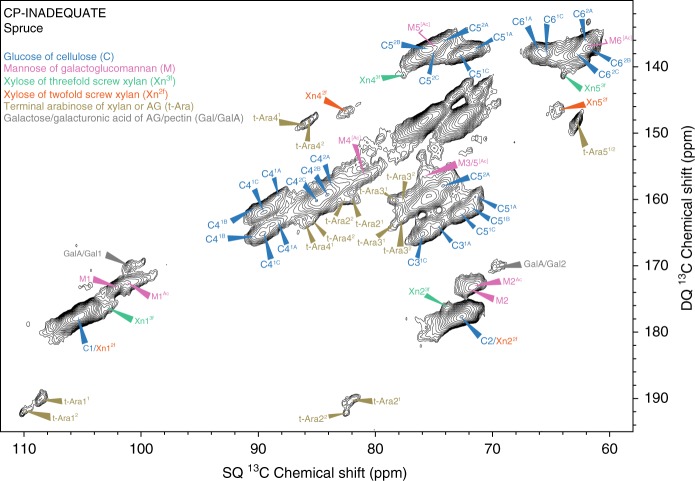
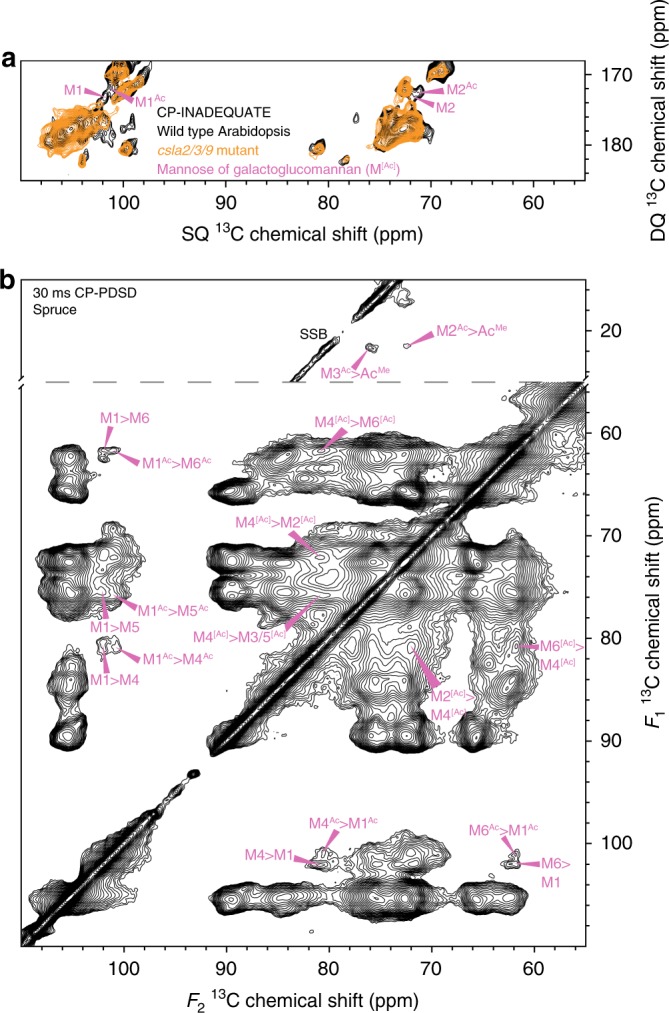
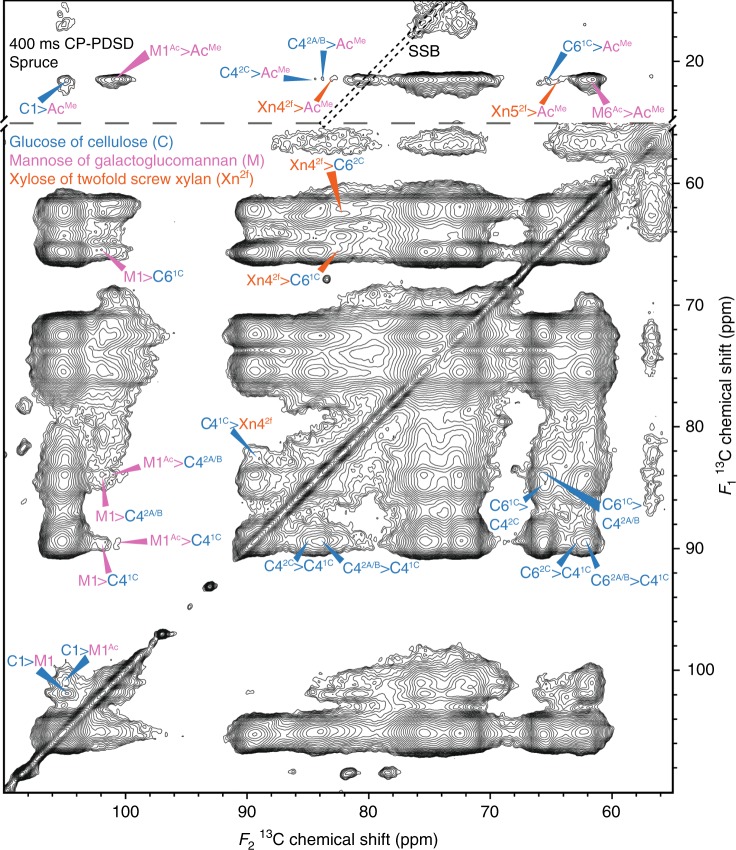
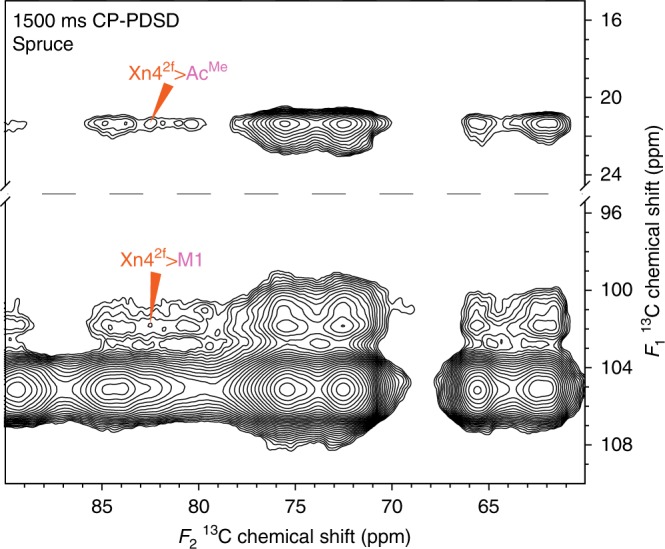
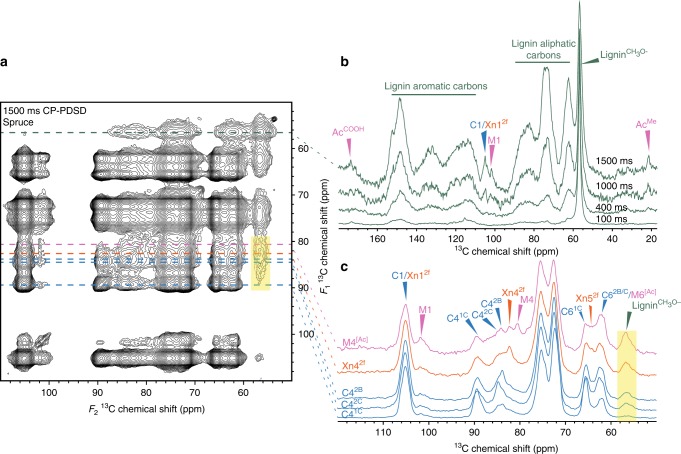
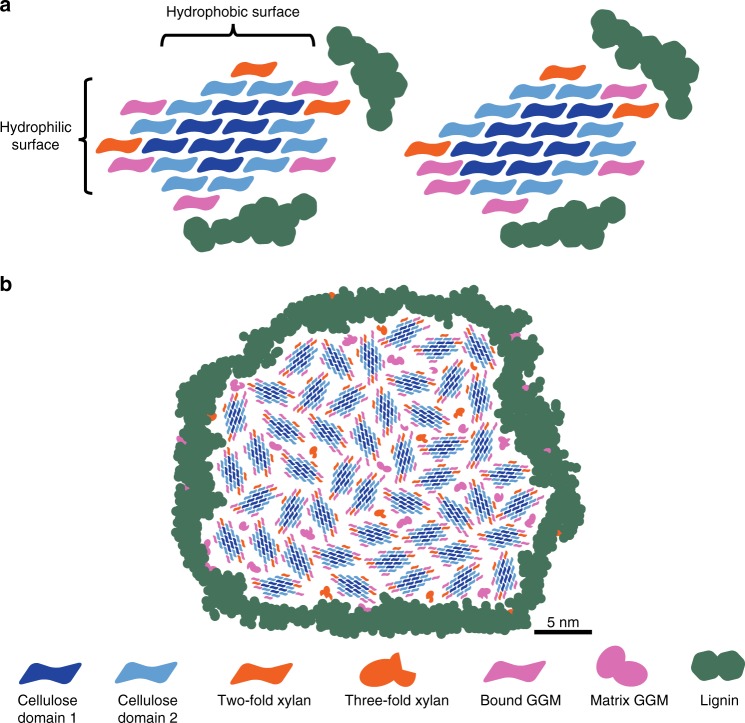
Economically important softwood from conifers is mainly composed of the polysaccharides cellulose, galactoglucomannan and xylan, and the phenolic polymer, lignin. The interactions between these polymers lead to wood mechanical strength and must be overcome in biorefining. Here, we use 13C multidimensional solid-state NMR to analyse the polymer interactions in never-dried cell walls of the softwood, spruce. In contrast to some earlier softwood cell wall models, most of the xylan binds to cellulose in the two-fold screw conformation. Moreover, galactoglucomannan alters its conformation by intimately binding to the surface of cellulose microfibrils in a semi-crystalline fashion. Some galactoglucomannan and xylan bind to the same cellulose microfibrils, and lignin is associated with both of these cellulose-bound polysaccharides. We propose a model of softwood molecular architecture which explains the origin of the different cellulose environments observed in the NMR experiments. Our model will assist strategies for improving wood usage in a sustainable bioeconomy.
Conflict of interest statement
The authors declare no competing interests.
Figures
References
-
- Ramage MH, et al. The wood from the trees: the use of timber in construction. Renew. Sustain. Energy Rev. 2017;68:333–359. doi: 10.1016/j.rser.2016.09.107. - DOI
-
- Del Lungo, A., Ball, J. & Carle, J. Global planted forests thematic study: results and analysis, Planted Forests and Trees Working Paper 38, Food and Agricultural Organisation of the United Nations. (2006).
Publication types
Grants and funding
LinkOut - more resources
Full Text Sources
