. 2019 Nov 1:8:e50033.
doi: 10.7554/eLife.50033.

Intestinal infection regulates behavior and learning via neuroendocrine signaling

Affiliations

Intestinal infection regulates behavior and learning via neuroendocrine signaling

Jogender Singh et al. Elife. .

Abstract

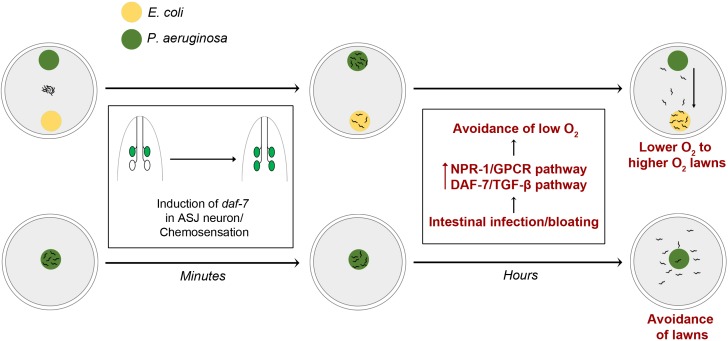
The recognition of pathogens and subsequent activation of defense responses are critical for the survival of organisms. The nematode Caenorhabditis elegans recognizes pathogenic bacteria and elicits defense responses by activating immune pathways and pathogen avoidance. Here we show that chemosensation of phenazines produced by pathogenic Pseudomonas aeruginosa, which leads to rapid activation of DAF-7/TGF-β in ASJ neurons, is insufficient for the elicitation of pathogen avoidance behavior. Instead, intestinal infection and bloating of the lumen, which depend on the virulence of P. aeruginosa, regulates both pathogen avoidance and aversive learning by modulating not only the DAF-7/TGF-β pathway but also the G-protein coupled receptor NPR-1 pathway, which also controls aerotaxis behavior. Modulation of these neuroendocrine pathways by intestinal infection serves as a systemic feedback that enables animals to avoid virulent bacteria. These results reveal how feedback from the intestine during infection can modulate the behavior, learning, and microbial perception of the host.

Keywords: C. elegans; avoidance behavior; bacterial infection; immunology; inflammation; innate immunity; intestine; neuroscience; pathogen avoidance; virulence.


Conflict of interest statement

JS, AA No competing interests declared

Figures
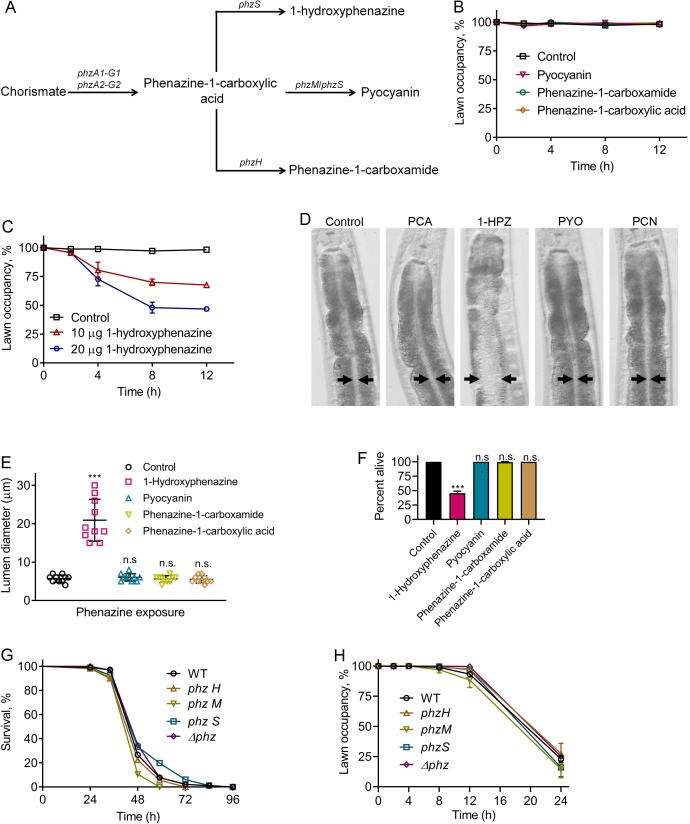
Figure 1.
Figure 1.. Phenazine-independent elicitation of C. elegans avoidance of P. aeruginosa during infection.
(A) Phenazine synthesis pathway of P. aeruginosa. (B) Time course of the percent occupancy of N2 animals on E. coli lawns containing 20 µg of pyocyanin, phenazine-1-carboxamide, and phenazine-1-carboxylic acid. For the control, the animals were exposed to solvent mock E. coli lawns. (C) Time course of the percent occupancy of N2 animals on E. coli lawns containing 1-hydroxyphenazine. For the control, the animals were exposed to solvent mock E. coli lawns. (D) Representative photomicrographs of N2 animals exposed for 8 hr to E. coli lawns containing 20 µg of phenazine-1-carboxylic acid (PCA), 1-hydroxyphenazine (1-HPZ), pyocyanin (PYO), and phenazine-1-carboxamide (PCN). For the control, the animals were exposed for 8 hr to solvent mock E. coli lawns. Arrows point to the border of the intestinal lumen. (E) Quantification of the diameter of the intestinal lumen of N2 animals exposed for 8 hr to E. coli lawns containing 20 µg of different phenazines. ***p<0.001 via the t test. n.s., non-significant. (F) Percent of animals alive after 24 hr of exposure to E. coli lawns containing 20 µg of different phenazines. The bars show the means ± SD from three independent experiments. ***p<0.001 via the t test. n.s., non-significant. (G) Representative survival plots of N2 animals on different phenazine synthesis pathway mutants of P. aeruginosa. p-value relative to WT, n.s., non-significant. (H) Time course of the percent occupancy of N2 animals on lawns of different phenazine synthesis pathway mutants of P. aeruginosa.
Figure 2.
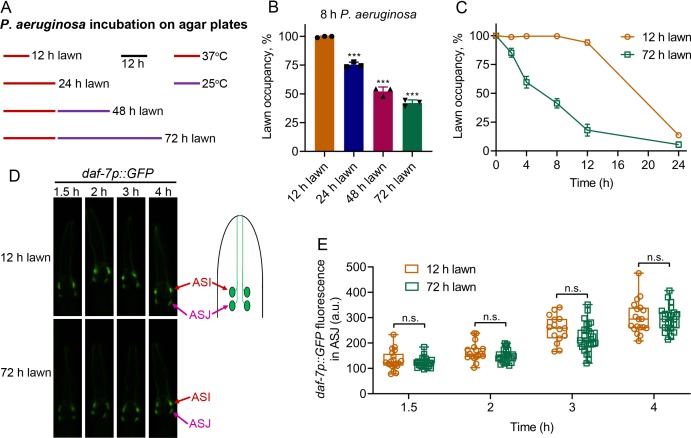
Figure 2.. P. aeruginosa-induced daf-7 expression in ASJ neurons is insufficient to elicit avoidance behavior.
(A) Scheme for obtaining P. aeruginosa preparations with varying times and temperatures of incubation on SK plates. (B) Percent lawn occupancy of N2 animals after 8 hr of incubation on different preparations of P. aeruginosa. The black symbols represent individual data points. The bars show the means ± SD from three independent experiments. ***p<0.001 via the t test. (C) Time course of the percent occupancy of N2 animals on 12 and 72 hr lawns of P. aeruginosa. (D) Time course of induction of daf-7p::GFP on 12 and 72 hr lawns of P. aeruginosa. The ASI and ASJ chemosensory neurons are labeled. The drawing depicts the arrangement of the ASI and ASJ neurons in C. elegans head. (E) Quantification of induction of daf-7p::GFP in the ASJ chemosensory neuron on 12 and 72 hr lawns of P. aeruginosa over time. n.s., non-significant via the t test.
Figure 2—figure supplement 1.
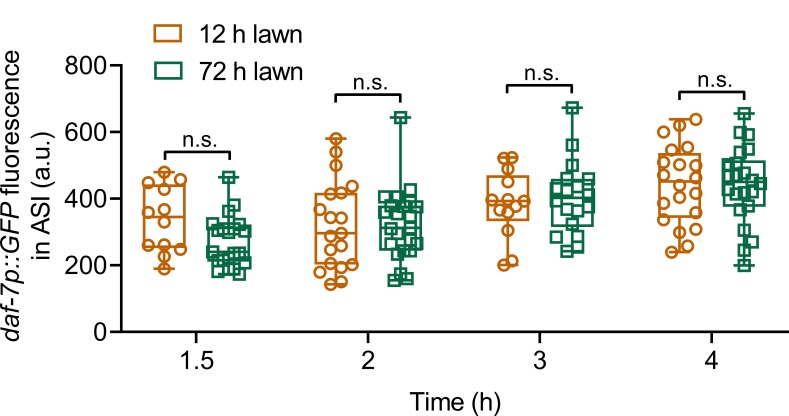
Figure 2—figure supplement 1.. P. aeruginosa-induced daf-7 expression in ASI neurons is indistinguishable on 12 and 72 hr lawns.
Quantification of induction of daf-7p::GFP in the ASI chemosensory neuron on 12 and 72 hr lawns of P. aeruginosa over time. n.s., non-significant via the t test.
Figure 3.
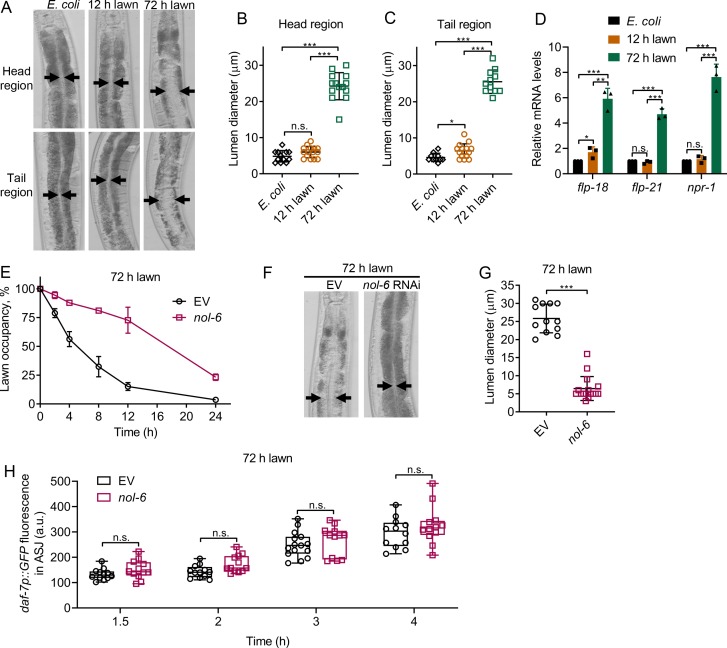
Figure 3.. Intestinal lumen bloating underlies the avoidance behavior towards P. aeruginosa.
(A) Representative photomicrographs of N2 animals exposed for 8 hr to E. coli lawns, and 12 and 72 hr lawns of P. aeruginosa. Representative photomicrographs of the head and tail regions are shown. Arrows point to the border of the intestinal lumen. (B and C) Quantification of the diameter of the intestinal lumen of N2 animals exposed for 8 hr to E. coli lawns, and 12 and 72 hr lawns of P. aeruginosa from the head (B) and tail (C) regions. ***p<0.001 and *p<0.05 via the t test. n.s., non-significant. (D) Gene expression analysis of N2 animals grown on E. coli until the young adult stage, followed by incubation for 8 hr on E. coli lawns, and 12 and 72 hr lawns of P. aeruginosa. The black symbols represent individual data points. ***p<0.001, **p<0.01, and *p<0.05 via the t test. n.s., non-significant. (E) Time course of the percent occupancy of the control (EV) as well as nol-6 RNAi animals on 72 hr lawns of P. aeruginosa. (F) Representative photomicrographs of N2 animals grown on control and nol-6 RNAi exposed for 8 hr to 72 hr lawns of P. aeruginosa. Arrows point to the border of the intestinal lumen. (G) Quantification of the diameter of the intestinal lumen of N2 animals grown on control and nol-6 RNAi exposed for 8 hr to 72 hr lawns of P. aeruginosa. ***p<0.001 via the t test. (H) Time course of induction of daf-7p::GFP in ASJ neurons in animals grown on control and nol-6 RNAi and exposed to 72 hr lawns of P. aeruginosa. n.s., non-significant via the t test.
Figure 3—figure supplement 1.
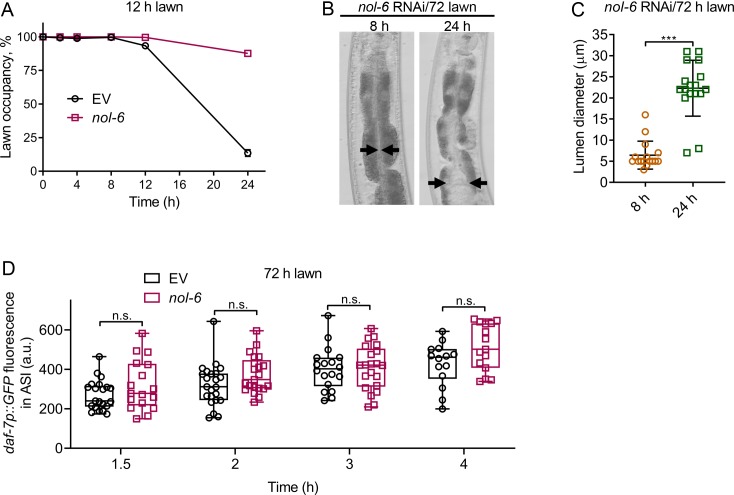
Figure 3—figure supplement 1.. Intestinal lumen bloating underlies the avoidance behavior towards P. aeruginosa.
(A) Time course of the percent occupancy of control (EV) as well as nol-6 RNAi animals on 12 hr lawns of P. aeruginosa. (B) Representative photomicrographs of nol-6 RNAi animals exposed for 8 and 24 hr to 72 hr lawns of P. aeruginosa. Arrows point to the border of the intestinal lumen. (C) Quantification of the diameter of the intestinal lumen of nol-6 RNAi animals exposed for 8 and 24 hr to 72 hr lawns of P. aeruginosa. ***p<0.001 via the t test. (D) Time course of induction of daf-7p::GFP in ASI neurons in animals grown on control and nol-6 RNAi and exposed to 72 hr lawns of P. aeruginosa. n.s., non-significant via the t test.
Figure 4.
Figure 4.. P. aeruginosa virulence correlates with the avoidance behavior.
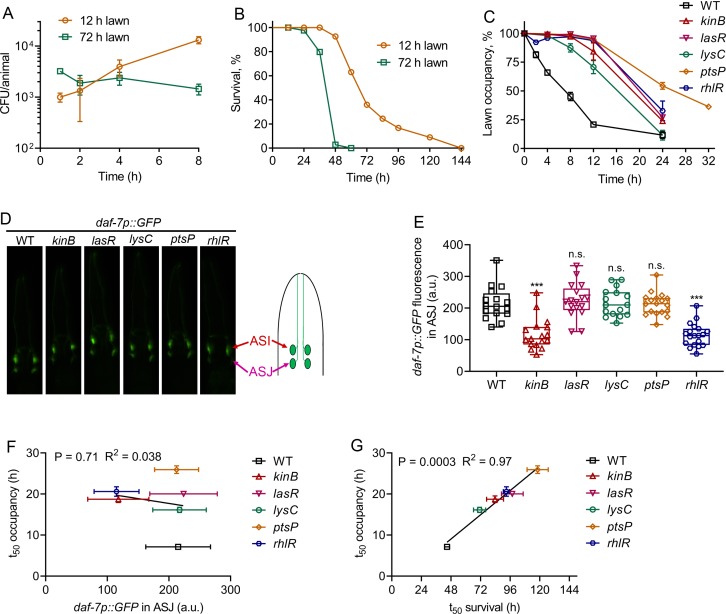
(A) Time course of colony-forming units (CFU) per animal of N2 animals exposed to 12 and 72 hr lawns of P. aeruginosa-GFP. (B) Representative survival plots of N2 animals on 12 and 72 hr lawns of P. aeruginosa. p<0.0001. (C) Time course of the percent occupancy of N2 animals on 72 hr lawns of different mutants of P. aeruginosa. (D) Representative photomicrographs of daf-7p::GFP expressing animals exposed for 4 hr to lawns of different mutants of P. aeruginosa. The drawing depicts the arrangement of the ASI and ASJ neurons in C. elegans head. (E) Quantification of daf-7p::GFP in the ASJ chemosensory neuron pair in animals exposed for 4 hr to lawns of different mutants of P. aeruginosa. ***p<0.001 via the t test. n.s., non-significant. (F) Correlation of the mean lawn occupancy time (t50 occupancy) to the corresponding levels of daf-7p::GFP in the ASJ chemosensory neuron pair in animals exposed to different P. aeruginosa mutants. (G) Correlation of the mean lawn occupancy time (t50 occupancy) to the corresponding mean survival time (t50 survival) in animals exposed to different P. aeruginosa mutants.
Figure 4—figure supplement 1.
Figure 4—figure supplement 1.. P. aeruginosa mutants with reduced virulence induce daf-7p::GFP in ASI neurons.
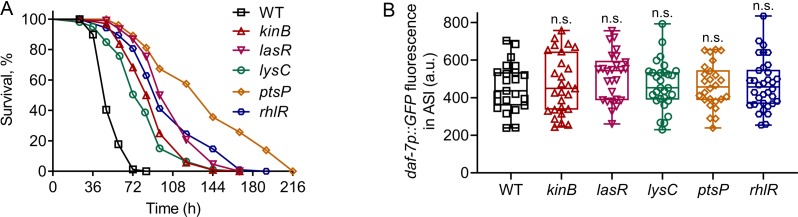
(A) Representative survival plots of N2 animals on different mutants of P. aeruginosa. p values for all mutants compared with WT are p<0.0001. (B) Quantification of daf-7p::GFP in the ASI chemosensory neuron pair in animals exposed for 4 hr to lawns of different mutants of P. aeruginosa. n.s., non-significant via the t test.
Figure 5.
Figure 5.. Neuroendocrine signaling involved in the control of aerotaxis behavior regulates associative learning of pathogens.
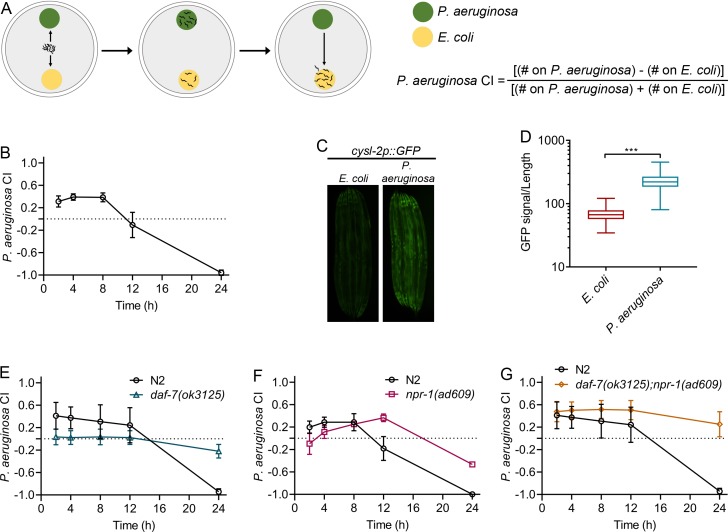
(A) Schematic representation of the two-choice preference assay. Animals are transferred to the center of plates equidistant from the lawns of P. aeruginosa and E. coli. The number of animals on both lawns is counted at a given time and used to calculate the P. aeruginosa choice index (CI). (B) Time course of the P. aeruginosa CI of N2 animals in a two-choice preference assay containing one lawn of each P. aeruginosa and E. coli. (C) Representative photomicrographs of cysl-2p::GFP-expressing animals exposed for 24 hr to E. coli and P. aeruginosa lawns. (D) Quantification of cysl-2p::GFP levels in animals exposed for 24 hr to E. coli and P. aeruginosa lawns. The quantification was conducted using a COPAS Biosort machine to measure the mean GFP signal and the length of individual animals. The GFP signal of each animal was normalized to its length. The data are plotted as a box and whisker plot from over 100 animals for each condition. ***p<0.001 via the t test. (E) Time course of the P. aeruginosa CI of N2 and daf-7(ok3125) animals in a two-choice preference assay containing one lawn of each P. aeruginosa and E. coli. (F) Time course of the P. aeruginosa CI of N2 and npr-1(ad609) animals in a two-choice preference assay containing one lawn of each P. aeruginosa and E. coli. (G) Time course of the P. aeruginosa CI of N2 and daf-7(ok3125);npr-1(ad609) animals in a two-choice preference assay containing one lawn of each P. aeruginosa and E. coli.
Figure 5—figure supplement 1.
Figure 5—figure supplement 1.. Aerotaxis behavior through neuroendocrine signaling controls microbial avoidance behavior.
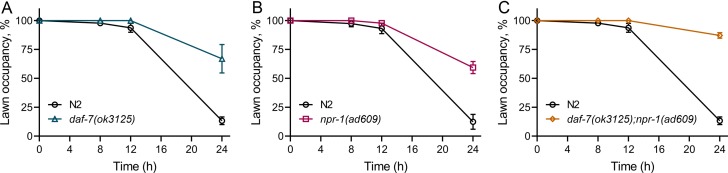
(A) Time course of the percent occupancy of N2 and daf-7(ok3125) animals on P. aeruginosa lawns. (B) Time course of the percent occupancy of N2 and npr-1(ad609) animals on P. aeruginosa lawns. (C) Time course of the percent occupancy of N2 and daf-7(ok3125);npr-1(ad609) animals on P. aeruginosa lawns.
Figure 6.
Figure 6.. Modulation of aerotaxis behavior by intestinal bloating underlies the change in microbial preference upon infection.
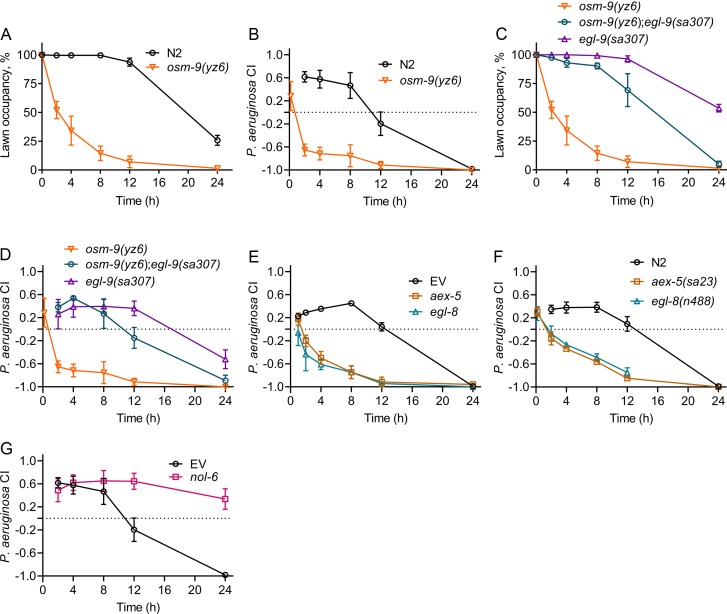
(A) Time course of the percent occupancy of N2 and osm-9(yz6) animals on P. aeruginosa lawns. (B) Time course of the P. aeruginosa CI of N2 and osm-9(yz6) animals in a two-choice preference assay containing one lawn of each P. aeruginosa and E. coli. (C) Time course of the percent occupancy of osm-9(yz6), osm-9(yz6);egl-9(sa307), and egl-9(sa307) animals on P. aeruginosa lawns. (D) Time course of the P. aeruginosa CI of osm-9(yz6), osm-9(yz6);egl-9(sa307), and egl-9(sa307) animals in a two-choice preference assay containing one lawn of each P. aeruginosa and E. coli. (E) Time course of the P. aeruginosa CI of N2 animals grown on RNAi control bacteria, as well as bacteria for RNAi against aex-5 and egl-8 in a two-choice preference assay containing one lawn of each P. aeruginosa and E. coli. EV, empty vector RNAi control. (F) Time course of the P. aeruginosa CI of N2, aex-5(sa23), and egl-8(n488) animals in a two-choice preference assay containing one lawn of each P. aeruginosa and E. coli. (G) Time course of the P. aeruginosa CI of N2 animals grown on nol-6 RNAi as well as control bacteria in a two-choice preference assay containing one lawn of each P. aeruginosa and E. coli. EV, empty vector RNAi control.
Figure 6—figure supplement 1.
Figure 6—figure supplement 1.. Modulation of aerotaxis behavior alters microbial preference.
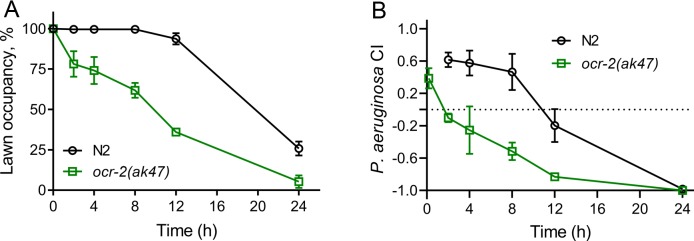
(A) Time course of the percent occupancy of N2 and ocr-2(ak47) animals on P. aeruginosa lawns. (B) Time course of the P. aeruginosa choice index (CI) of N2 and ocr-2(ak47) animals in a two-choice preference assay containing one lawn of each P. aeruginosa and E. coli.
Figure 6—figure supplement 2.
Figure 6—figure supplement 2.. Modulation of aerotaxis alters microbial preference.
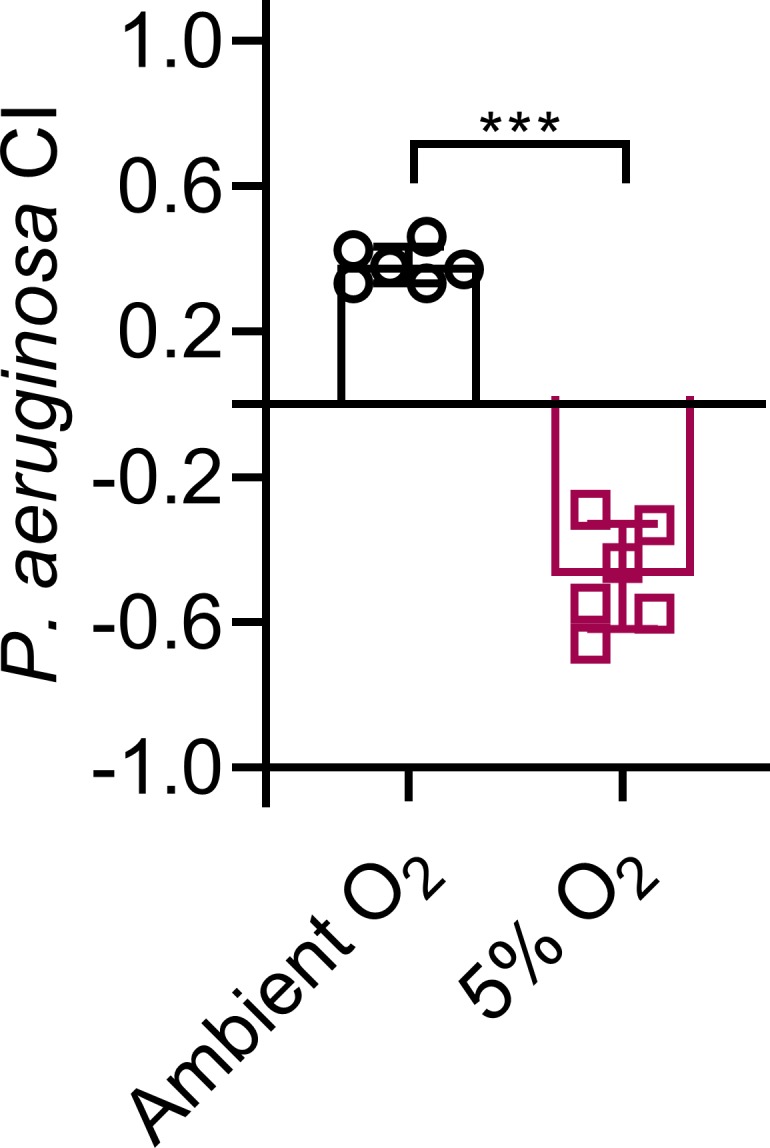
The P. aeruginosa choice index (CI) of N2 animals in a two-choice preference assay containing one lawn of each P. aeruginosa and E. coli after 2 hr of incubation in a hypoxia chamber purged with 5% oxygen. The control animals were incubated for 2 hr at ambient oxygen. ***p<0.001 via the t test.
Figure 6—figure supplement 3.
Figure 6—figure supplement 3.. Low oxygen levels do not affect intestinal colonization and bloating.
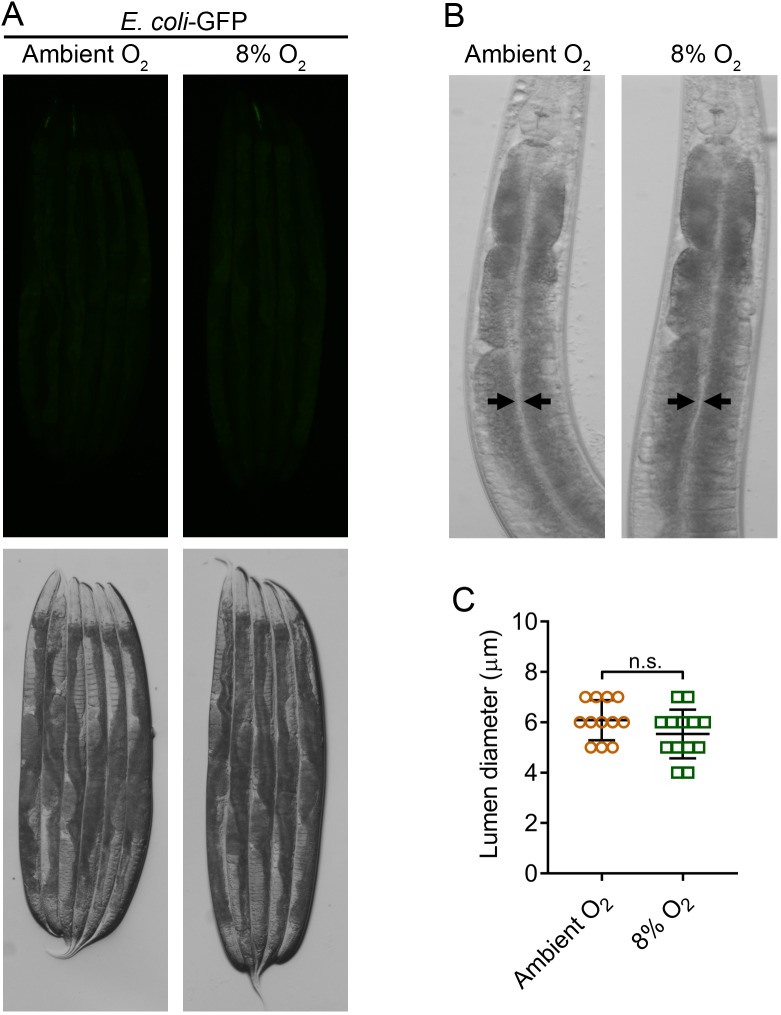
(A) Representative photomicrographs of N2 animals that were incubated on E. coli-GFP lawns for 24 hr either at ambient oxygen levels or 8% oxygen levels in a hypoxia chamber. (B) Representative photomicrographs of the head regions of N2 animals that were incubated on E. coli-GFP lawns for 24 hr either at ambient oxygen levels or 8% oxygen levels in a hypoxia chamber. Arrows point to the border of the intestinal lumen. (C) Quantification of the diameter of the intestinal lumen of N2 animals that were incubated on E. coli-GFP lawns for 24 hr either at ambient oxygen levels or 8% oxygen levels in a hypoxia chamber. n.s., non-significant via the t test.
Figure 7.
Figure 7.. Model for intestinal infection-regulated microbial perception.
Rapid chemosensation of P. aeruginosa resulting in the induction of daf-7 expression in the ASJ neuron pair is insufficient for eliciting avoidance behavior. Intestinal infection leading to bloating activates NPR-1/GPCR and DAF-7/TGF-β neuroendocrine pathways, driving the evacuation of low O2 P. aeruginosa lawns and change in preference from relatively lower O2 lawns of P. aeruginosa to relatively higher O2 lawns of E. coli.

References

    1. Beale E, Li G, Tan MW, Rumbaugh KP. Caenorhabditis elegans senses bacterial autoinducers. Applied and Environmental Microbiology. 2006;72:5135–5137. doi: 10.1128/AEM.00611-06. - DOI - PMC - PubMed
    1. Benomar S, Bender A, Peterson BR, Chandler JR, Ackley BD. The C. elegans CHP1 homolog, pbo-1, functions in innate immunity by regulating the pH of the intestinal lumen. bioRxiv. 2018 doi: 10.1101/424382. - DOI - PMC - PubMed
    1. Boillat M, Challet L, Rossier D, Kan C, Carleton A, Rodriguez I. The vomeronasal system mediates sick conspecific avoidance. Current Biology. 2015;25:251–255. doi: 10.1016/j.cub.2014.11.061. - DOI - PubMed
    1. Brandt JP, Ringstad N. Toll-like receptor signaling promotes development and function of sensory neurons required for a C. elegans Pathogen-Avoidance Behavior. Current Biology. 2015;25:2228–2237. doi: 10.1016/j.cub.2015.07.037. - DOI - PMC - PubMed
    1. Chang AJ, Chronis N, Karow DS, Marletta MA, Bargmann CI. A distributed chemosensory circuit for oxygen preference in C. elegans. PLOS Biology. 2006;4:e274. doi: 10.1371/journal.pbio.0040274. - DOI - PMC - PubMed

Publication types

MeSH terms