Transplanting organs from pigs to humans
- PMID: 31676497
- PMCID: PMC7293579
- DOI: 10.1126/sciimmunol.aau6298
Transplanting organs from pigs to humans
Abstract
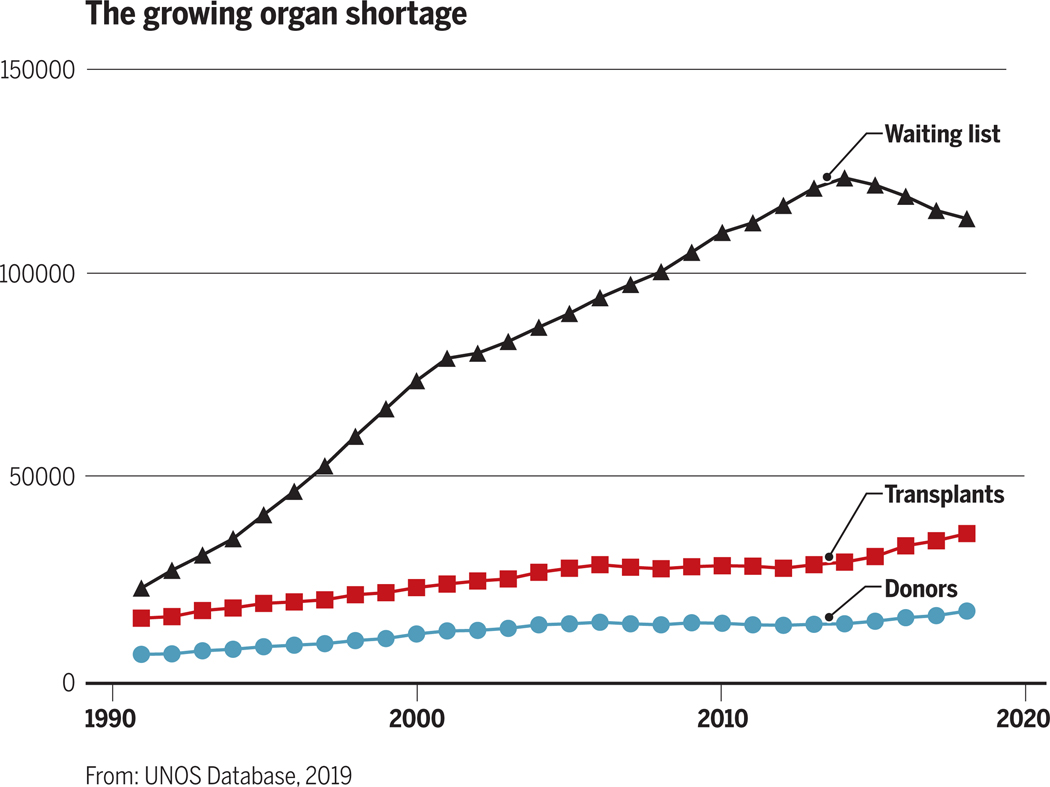
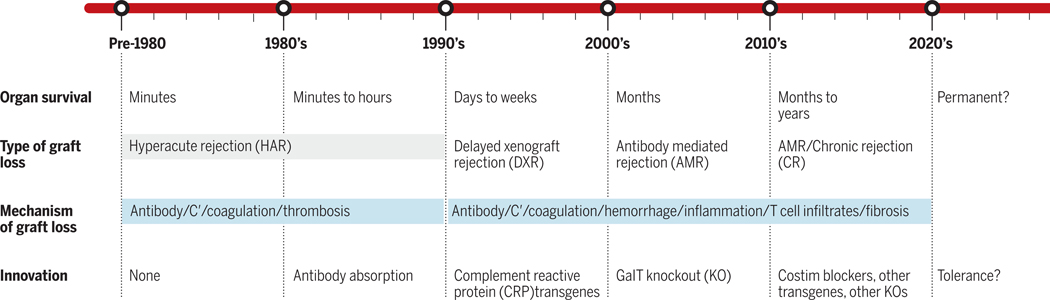
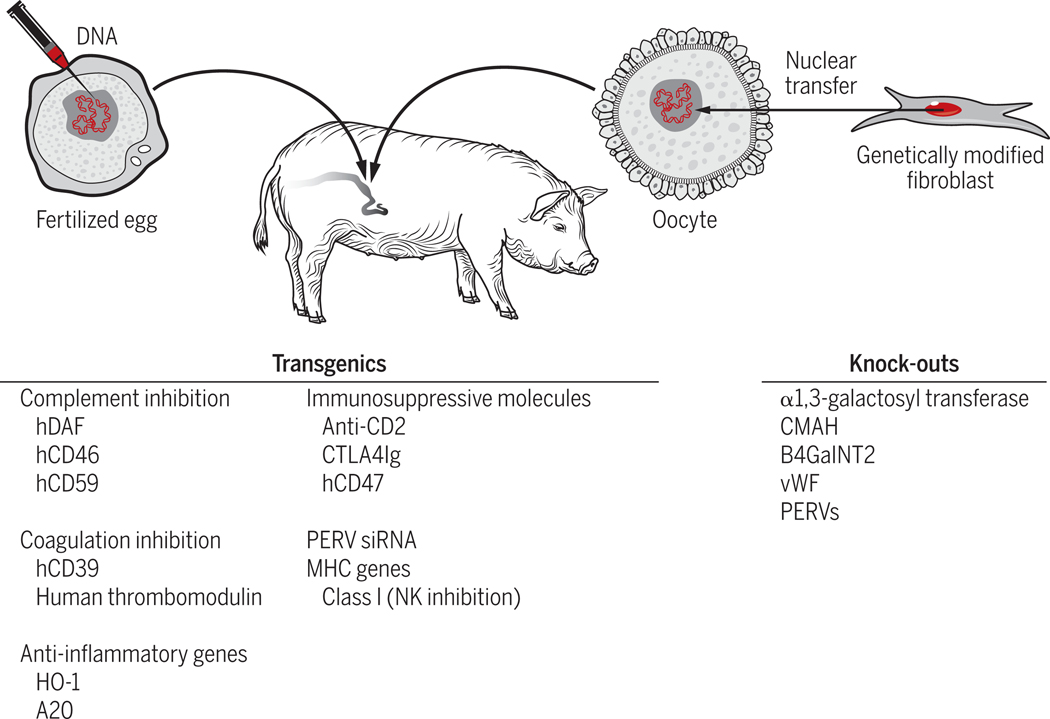
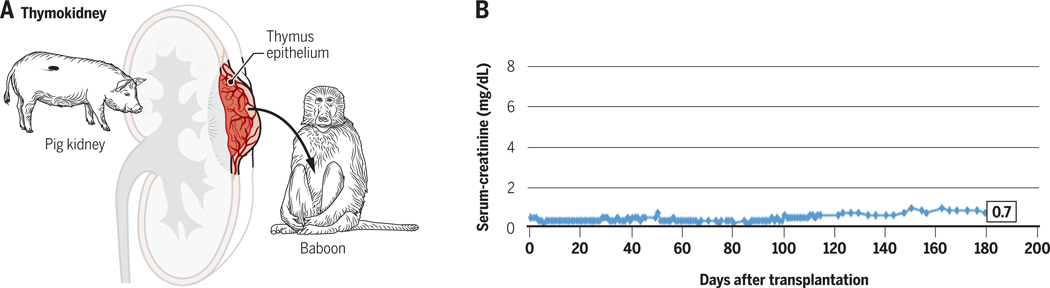
The success of organ transplantation is limited by the complications of immunosuppression, by chronic rejection, and by the insufficient organ supply, and thousands of patients die every year while waiting for a transplant. With recent progress in xenotransplantation permitting porcine organ graft survival of months or even years in nonhuman primates, there is renewed interest in its potential to alleviate the organ shortage. Many of these advances are the result of our heightened capacity to modify pigs genetically, particularly with the development of CRISPR-Cas9-based gene editing methodologies. Although this approach allows the engineering of pig organs that are less prone to rejection, the clinical application of xenotransplantation will require the ability to avoid the ravages of a multifaceted attack on the immune system while preserving the capacity to protect both the recipient and the graft from infectious microorganisms. In this review, we will discuss the potential and limitations of these modifications and how the engineering of the graft can be leveraged to alter the host immune response so that all types of immune attack are avoided.
Copyright © 2019 The Authors, some rights reserved; exclusive licensee American Association for the Advancement of Science. No claim to original U.S. Government Works.
Figures
References
-
- Hardy JD, Timmis HH, Chavez CM, Lehan PH, Hellems HK, Fabian LW. Heart transplantation. JMissState MedAssoc. 1968;9(3):105–110. - PubMed
-
- Platt JL, Fischel RJ, Matas AJ, Reif SA, Bolman RM, Bach FH. Immunopathology of hyperacute xenograft rejection in a swine-to-primate model. Transplantation. 1991;52:214–220. - PubMed
Publication types
MeSH terms
Grants and funding
LinkOut - more resources
Full Text Sources
Other Literature Sources
Medical