Review
. 2019 Nov;18(11):1899-1908.
doi: 10.1158/1535-7163.MCT-19-0208.

ATM Dysfunction in Pancreatic Adenocarcinoma and Associated Therapeutic Implications

Affiliations
Review

ATM Dysfunction in Pancreatic Adenocarcinoma and Associated Therapeutic Implications

Samantha A Armstrong et al. Mol Cancer Ther. 2019 Nov.

Abstract

Pancreatic ductal adenocarcinoma (PDAC) remains one of the most lethal solid malignancies with very few therapeutic options to treat advanced or metastatic disease. The utilization of genomic sequencing has identified therapeutically relevant alterations in approximately 25% of PDAC patients, most notably in the DNA damage response and repair (DDR) genes, rendering cancer cells more sensitive to DNA-damaging agents and to DNA damage response inhibitors, such as PARP inhibitors. ATM is one of the most commonly mutated DDR genes, with somatic mutations identified in 2% to 18% of PDACs and germline mutations identified in 1% to 34% of PDACs. ATM plays a complex role as a cell-cycle checkpoint kinase, regulator of a wide array of downstream proteins, and responder to DNA damage for genome stability. The disruption of ATM signaling leads to downstream reliance on ATR and CHK1, among other DNA-repair mechanisms, which may enable exploiting the inhibition of downstream proteins as therapeutic targets in ATM-mutated PDACs. In this review, we detail the function of ATM, review the current data on ATM deficiency in PDAC, examine the therapeutic implications of ATM alterations, and explore the current clinical trials surrounding the ATM pathway.


Conflict of interest statement

Authors’ disclosures of potential conflicts of interest:

Samantha Armstrong: None

Christopher Shultz: None

Ariana Azimi-Sadjadi: None

Jonathan R. Brody: Scientific Advisory Board for Perthera

Michael J. Pishvaian: None directly related to this work. Dr. Pishvaian does have the following conflicts to report: Speaker/Consultant: AstraZeneca/MedImmune, Caris Life Sciences, Celgene, Merrimack, Perthera, RenovoRx and Sirtex Medical. Travel, Accommodations and Expenses Support: AstraZeneca/MedImmune, Caris Life Sciences, Perthera and Sirtex Medical. Stock: Perthera. Research Funding to my Institution: ARMO BioSciences, Bavarian Nordic, Bayer, Bristol-Myers Squibb, Calithera Biosciences, Celgene, Celldex, Curegenix, Fibrogen, Genentech, Gilead Sciences, GlaxoSmithKline, Halozyme, Karyopharm Therapeutics, MedImmune, Merck, Novartis, Regeneron, Pfizer, Pharmacyclics and Tesaro.

Figures

Figure 1:
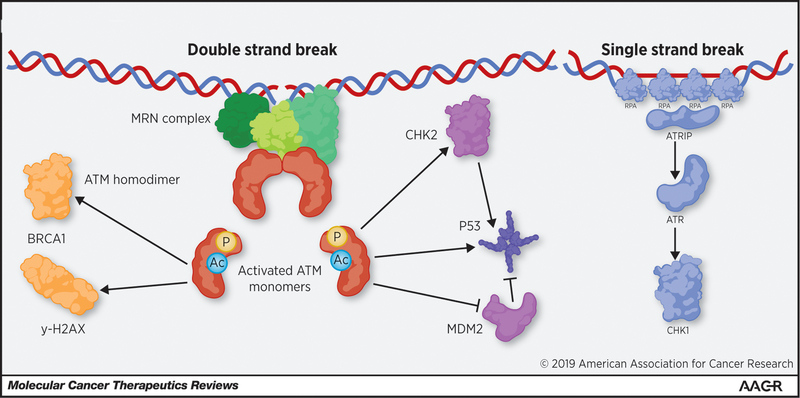
Figure 1:. ATM functions and other related pathways for DNA repair.
ATM is recruited to DSBs by the MRN complex through direct interaction of NSB1 with ATM’s HEAT repeats. ATM is then activated through autophosphorylation, and acetylation by TIP60, this activation allows ATM to dissociate to the active monomeric state. ATM monomers can then signal for DNA repair through BRCA1 and γ-H2AX. ATM can also signal for cell cycle arrest and/or apoptosis through the activation of p53 through direct phosphorylation and indirect activation through CHK2 and MDM2. In parallel, ATR is recruited to long stretches of single strand DNA caused by single strand breaks, the resection of DSBs, or replication stress. PARP1 is another factor that is critical for the repair of single strand breaks.
Figure 2:
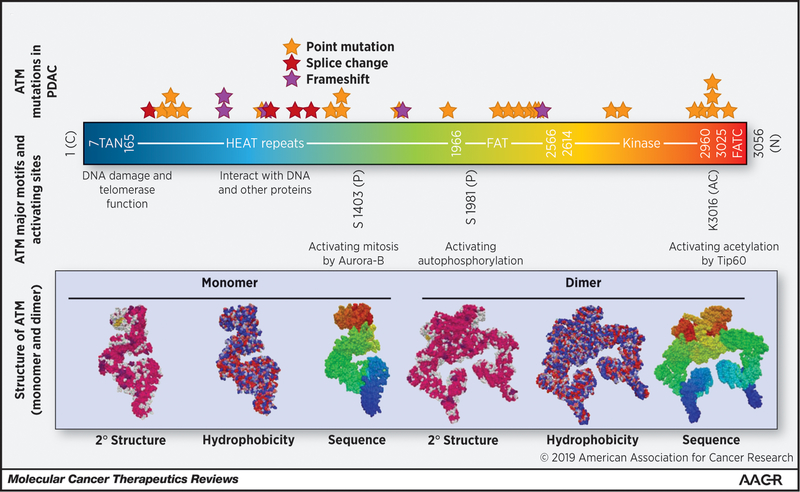
Figure 2:. ATM Structure-function domains and frequent mutations in PDAC.
ATM has several important domains that are critical for ATM function as either a monomer, dimer or both. The TAN domain is critical for telomerase function and recruitment to DSBs. This recruitment is also dependent on interactions between the ATM HEAT repeats and NBS1 (part of the MRN complex)(31,34). The FAT domain normally inhibits the kinase activity as a dimer, but after DNA damage induced autophosphorylation at S1981 and subsequent dissociation of the dimer the kinase domain becomes active (36). The FATC domain is critical for interaction with TIP60, TIP60 acetylation of ATM at K3016 is necessary for ATM activation. Mutational analysis of PDAC patients with ATM mutations from Cbio-portal (date of accession 01/21/2019) did not show significant clustering or hotspot mutations in ATM, but the number of patients was low (N=34).

References

    1. Quante AS, Ming C, Rottmann M, Engel J, Boeck S, Heinemann V, et al. Projections of cancer incidence and cancer-related deaths in Germany by 2020 and 2030. Cancer Med 2016;5(9):2649–56 doi 10.1002/cam4.767. - DOI - PMC - PubMed
    1. Rahib L, Smith BD, Aizenberg R, Rosenzweig AB, Fleshman JM, Matrisian LM. Projecting cancer incidence and deaths to 2030: the unexpected burden of thyroid, liver, and pancreas cancers in the United States. Cancer Res 2014;74(11):2913–21 doi 10.1158/0008-5472.CAN-14-0155. - DOI - PubMed
    1. Conroy T, Desseigne F, Ychou M, Bouche O, Guimbaud R, Becouarn Y, et al. FOLFIRINOX versus gemcitabine for metastatic pancreatic cancer. N Engl J Med 2011;364(19):1817–25 doi 10.1056/NEJMoa1011923. - DOI - PubMed
    1. Von Hoff DD, Ervin T, Arena FP, Chiorean EG, Infante J, Moore M, et al. Increased survival in pancreatic cancer with nab-paclitaxel plus gemcitabine. N Engl J Med 2013;369(18):1691–703 doi 10.1056/NEJMoa1304369. - DOI - PMC - PubMed
    1. Pishvaian MJ, Bender RJ, Halverson D, Rahib L, Hendifar AE, Mikhail S, et al. Molecular Profiling of Patients with Pancreatic Cancer: Initial Results from the Know Your Tumor Initiative. Clin Cancer Res 2018;24(20):5018–27 doi 10.1158/1078-0432.CCR-18-0531. - DOI - PubMed

Publication types

MeSH terms

Substances