Review
. 2019 Nov;7(11):1742-1747.
doi: 10.1158/2326-6066.CIR-19-0404.

Harnessing Natural Killer Cell Antitumor Immunity: From the Bench to Bedside

Affiliations
Review

Harnessing Natural Killer Cell Antitumor Immunity: From the Bench to Bedside

Karrune V Woan et al. Cancer Immunol Res. 2019 Nov.

Abstract

Natural killer (NK) cells are critical effector lymphocytes mediating tumor immune surveillance and clearance. They do so by direct tumor killing using cytolytic granules and death receptors, and by interfacing with and potentiating adaptive immune responses through the production of cytokines. From a therapeutic perspective, NK cells have been shown to exert graft-versus-leukemia activity in the context of hematopoietic stem cell transplantation and are important in the clinical efficacy of antibodies. Advances in basic and translational NK cell biology have led to multiple potential strategies to augment their in vivo activity to improve antitumor responses. Despite their potent effects, NK cells have been shown to be safe for adoptive cell therapy in both the autologous and allogeneic settings, with promising, but so far limited, clinical efficacy. This review will provide an overview of strategies being pursued to improve NK cell activity and efficacy, focusing on cell source, NK cell activation, and in vivo persistence.


Figures

Figure 1:
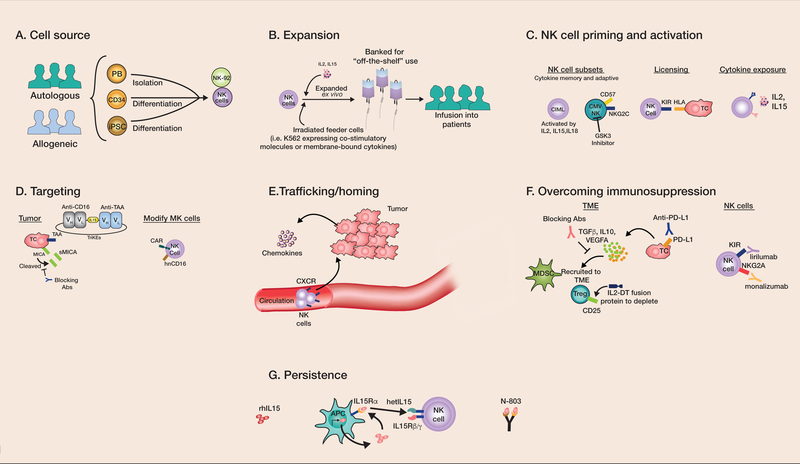
Figure 1:. Strategies to improve NK cell immunotherapy.
(A) NK cells can be derived from autologous or allogeneic sources. Although most autologous NK cells are blood derived, allogeneic sources include PB NKs, CD34-, and iPSC-differentiated NK cells. PB NK: peripheral blood NKs; CD34: CD34+ hematopoietic stem cells; iPSC: induced pluripotent stem cells. (B) Ex vivo expansion is typically accomplished with cytokines such as IL2 or IL15, with many also incorporating irradiated feeder cells (typically using genetically modified K562 cells). The expanded NK cells can be used fresh or banked and frozen to be available on demand. To improve NK cell antitumor activity further, (C) cytokine-primed viral or small molecular–primed NK cells can be used, which include those with a memory phenotype, licensed subsets, and those generally exposed to gamma-chain cytokine activating cytokines. CIML: cytokine-induced memory-like; CMV-exposed NK: NK cells from cytomegalovirus seropositive individuals; GSK3: glycogen synthase kinase 3, KIR: killer cell immunoglobulin-like receptor, HLA: human leukocyte antigen. (D) Tumor targeting can be accomplished through increasing tumor expression of activating ligands (e.g. MICA) via upregulation or preventing cleavage. Tumor-associated antigens (TAAs) can also be targeted using therapeutic antibodies, engager molecules (e.g. tri-specific killer engagers (TriKEs)), and chimeric antigen receptors (CARs). sMICA: soluble MICA; hnCD16: high affinity, ADAM17 non-cleavable CD16. (E) Expression of chemokine receptors (like CXCL4) on NK cells can improve homing to tumor sites. (F) Strategies to overcome the immunosuppressive TME include blockade of inhibitory receptor interactions, interruption of negative immunoregulatory cytokines, and addressing suppressive immune cells such as Tregs and MDSCs through targeted depletion. IL-2-DT: IL2-diphtheria toxin fusion protein. (G) Improving NK cell persistence utilizing pro-survival and proliferative cytokines that do not stimulate Tregs, such as IL15 or modified versions (e.g. hetIL15, N-803), may mimic physiologic IL15 trans-presentation by antigen presenting cells (APCs). rhIL15: recombinant human IL15.

References

    1. Sade-Feldman M, Jiao YJ, Chen JH, Rooney MS, Barzily-Rokni M, Eliane JP, et al. Resistance to checkpoint blockade therapy through inactivation of antigen presentation. Nat Commun 2017;8(1):1136 doi 10.1038/s41467-017-01062-w. - DOI - PMC - PubMed
    1. Miller JS, Lanier LL. Natural Killer Cells in Cancer Immunotherapy. Annual Review of Cancer Biology 2019;3(1):77–103 doi 10.1146/annurev-cancerbio-030518-055653. - DOI
    1. Kaiser BK, Pizarro JC, Kerns J, Strong RK. Structural basis for NKG2A/CD94 recognition of HLA-E. Proc Natl Acad Sci U S A 2008;105(18):6696–701 doi 10.1073/pnas.0802736105. - DOI - PMC - PubMed
    1. West EJ, Scott KJ, Jennings VA, Melcher AA. Immune activation by combination human lymphokine-activated killer and dendritic cell therapy. Br J Cancer 2011;105(6):787–95 doi 10.1038/bjc.2011.290. - DOI - PMC - PubMed
    1. Minculescu L, Marquart HV, Friis LS, Petersen SL, Schiødt I, Ryder LP, et al. Early Natural Killer Cell Reconstitution Predicts Overall Survival in T Cell-Replete Allogeneic Hematopoietic Stem Cell Transplantation. Biol Blood Marrow Transplant 2016;22(12):2187–93 doi 10.1016/j.bbmt.2016.09.006. - DOI - PubMed

Publication types

MeSH terms