


Mitochondrial Dysfunction in Cardiac Surgery
- PMID: 31677690
- PMCID: PMC6986803
- DOI: 10.1016/j.anclin.2019.08.003
Mitochondrial Dysfunction in Cardiac Surgery
Abstract
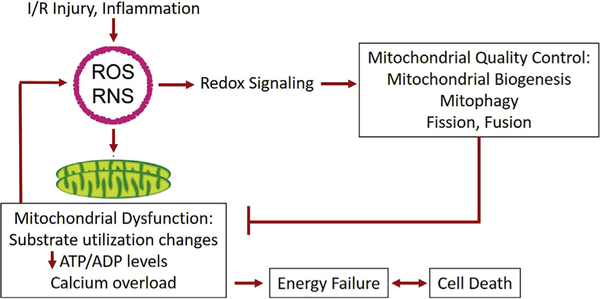
Mitochondria are key to the cellular response to energetic demand, but are also vital to reactive oxygen species signaling, calcium hemostasis, and regulation of cell death. Cardiac surgical patients with diabetes, heart failure, advanced age, or cardiomyopathies may have underlying mitochondrial dysfunction or be more sensitive to perioperative mitochondrial injury. Mitochondrial dysfunction, due to ischemia/reperfusion injury and an increased systemic inflammatory response due to exposure to cardiopulmonary bypass and surgical tissue trauma, impacts myocardial contractility and predisposes to arrhythmias. Strategies for perioperative mitochondrial protection and recovery include both well-established cardioprotective protocols and targeted therapies that remain under investigation.
Keywords: Cardiac surgery; Cardioprotection; Cardiopulmonary bypass; Inflammation; Ischemia/reperfusion injury; Mitochondria; Myocardial metabolism.
Copyright © 2019 Elsevier Inc. All rights reserved.
Figures
References
-
- Westerhof N Cardiac work and efficiency. Cardiovasc Res 2000;48(1):4–7. - PubMed
-
- Schaper J, Meiser E, Stammler G. Ultrastructural morphometric analysis of myocardium from dogs, rats, hamsters, mice, and from human hearts. Circ Res 1985;56(3):377–91. - PubMed
-
- Stanley WC, Recchia FA, Lopaschuk GD. Myocardial substrate metabolism in the normal and failing heart. Physiol Rev 2005;85(3):1093–129. - PubMed
-
- Razeghi P, Young ME, Alcorn JL, et al. Metabolic gene expression in fetal and failing human heart. Circulation 2001;104(24):2923–31. - PubMed
Publication types
MeSH terms
Grants and funding
LinkOut - more resources
Full Text Sources
Medical
