


Genetic testing for Parkinson disease: current practice, knowledge, and attitudes among US and Canadian movement disorders specialists
- PMID: 31680121
- PMCID: PMC7056638
- DOI: 10.1038/s41436-019-0684-x
Genetic testing for Parkinson disease: current practice, knowledge, and attitudes among US and Canadian movement disorders specialists
Erratum in
-
Correction: Genetic testing for Parkinson disease: current practice, knowledge, and attitudes among US and Canadian movement disorders specialists.Genet Med. 2020 Feb;22(2):448. doi: 10.1038/s41436-019-0709-5. Genet Med. 2020. PMID: 31772350 Free PMC article.
Abstract
Purpose: Genetic testing for Parkinson disease (PD) has not been widely used in clinical practice. In preparation for upcoming precision medicine-designed clinical trials for GBA and LRRK2, we evaluated movement disorders specialists' current practice, knowledge, attitudes, and barriers to genetic testing in PD.
Methods: An anonymous questionnaire was sent to movement disorders specialists at 146 Parkinson Study Group (PSG) sites in the United States (n = 131) and Canada (n = 15) to assess their knowledge and attitudes about genetic testing for PD.
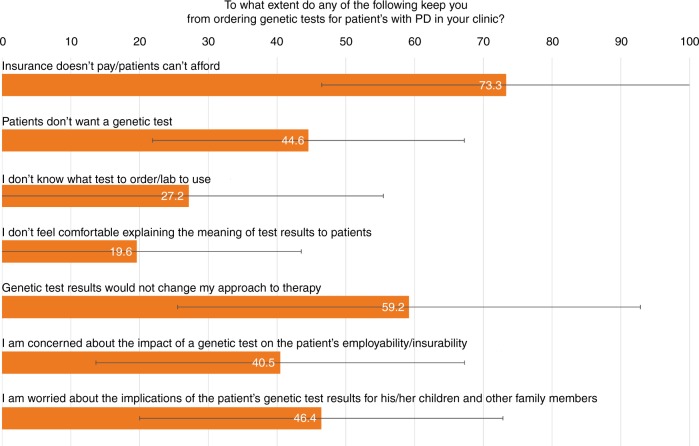
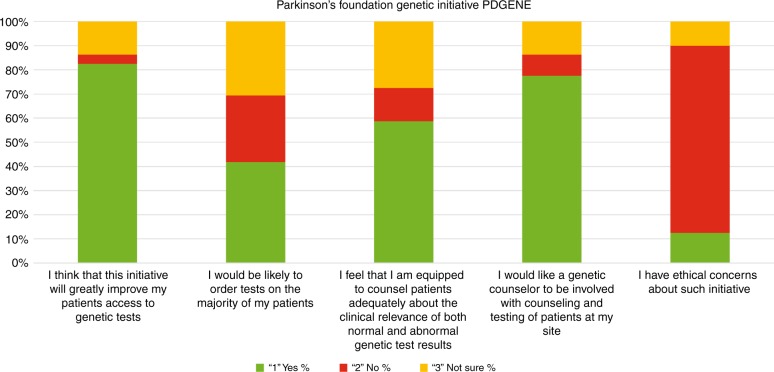
Results: One hundred seventy-eight (47.6%) PSG clinicians completed the questionnaire. Forty-one percent of respondents had not referred any PD patients for genetic testing in the last year and >80% reported referring fewer than 11 patients over the same period. Most common reasons for not referring for genetic testing included lack of insurance coverage/cost to the patient and lack of perceived utility. On a scale of 0-100, the mean level of comfort in respondents' own ability to genetically counsel PD patients on GBA and LRRK2 was 52 (SD = 28). Sixty percent of clinicians correctly answered all questions about the inheritance and penetrance of GBA and LRRK2 variants.
Conclusions: There is an urgent need to increase knowledge and reduce practical barriers to genetic counseling and testing in PD.
Keywords: GBA; LRRK2; Parkinson disease; genetic testing; questionnaire.
Figures
References
Publication types
MeSH terms
Substances
Grants and funding
LinkOut - more resources
Full Text Sources
Medical
