


Positive Orientation and Strategies for Coping with Stress as Predictors of Professional Burnout among Polish Nurses
- PMID: 31684078
- PMCID: PMC6862310
- DOI: 10.3390/ijerph16214264
Positive Orientation and Strategies for Coping with Stress as Predictors of Professional Burnout among Polish Nurses
Abstract
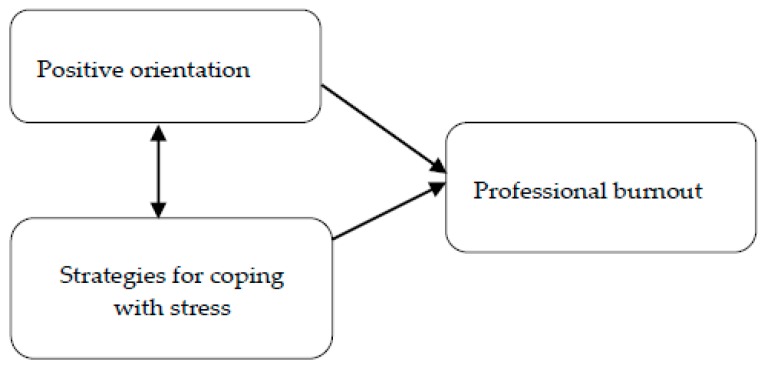
Background: A psychological resource, positive orientation, may moderate stress and protect nurses from burnout. The purpose of this study was to determine the role of positive orientation and stress-coping strategies in predicting professional burnout among Polish nurses. Methods: A total of 1806 nurses employed in 23 hospitals in northeastern Poland participated in the study. The study used a standardized Positive Orientation Scale, Mini-COPE, and the Copenhagen Burnout Inventory. Results: On the stenographic scale, 21.8% of nurses had high levels of positive orientation, 46.8% were average, and 31.9% had low positive orientation. A total of 21.1% of respondents reported personal burnout. Most nurses reported work-related burnout (27%) and burnout in contacts with patients (28.4%) With increasing levels of positive orientation, nurses more often used adaptive strategies that focus on a problem and emotions. Personal burnout accounted for 16% of the variance of the dependent variable (β = -0.32; R2 = 0.16), which was slightly lower than work-related burnout (10% (β = -0.23; R2 = 0.10)), and burnout in contacts with patients (9% (β = -0.22; R2 = 0.09)). Conclusion: The reduced level of positive orientation proved to be the main determinant of the professional burnout of Polish nurses. Burnout-prophylactic programs should be geared towards developing individual psychological resources, including positive orientation and the acquisition of effective stress-coping skills.
Keywords: burnout; nurses; positive orientation; stress.
Conflict of interest statement
The authors declare no conflict of interest.
Figures
References
-
- Walkiewicz M., Sowińska K., Tartas M. Wypalenie zawodowe wśród personelu medycznego-przegląd literatury. Burnout in the medical profession—A literature review. Przegląd Lek. 2014;71:263–269. - PubMed
MeSH terms
LinkOut - more resources
Full Text Sources
