. 2019 Nov 2;7(4):174.
doi: 10.3390/vaccines7040174.

Success and Limitation of Equine Influenza Vaccination: The First Incursion in a Decade of a Florida Clade 1 Equine Influenza Virus that Shakes Protection Despite High Vaccine Coverage

Affiliations

Success and Limitation of Equine Influenza Vaccination: The First Incursion in a Decade of a Florida Clade 1 Equine Influenza Virus that Shakes Protection Despite High Vaccine Coverage

Stéphanie Fougerolle et al. Vaccines (Basel). .

Abstract

Every year, several epizooties of equine influenza (EI) are reported worldwide. However, no EI case has been identified in France between 2015 and late 2018, despite an effective field surveillance of the pathogen and the disease. Vaccination against equine influenza virus (EIV) remains to this day one of the most effective methods to prevent or limit EI outbreaks and the lack of detection of the pathogen could be linked to vaccination coverage. The aim of this study was to evaluate EI immunity and vaccine coverage in France through a large-scale serological study. A total of 3004 archived surplus serums from French horses of all ages, breeds and sexes were selected from four different geographical regions and categories (i.e., sanitary check prior to exportation, sale, breeding protocol or illness diagnosis). EIV-specific antibody response was measured by single radial hemolysis (SRH) and an EIV-nucleoprotein (NP) ELISA (used as a DIVA test). Overall immunity coverage against EIV infection (i.e., titers induced by vaccination and/or natural infection above the clinical protection threshold) reached 87.6%. The EIV NP ELISA results showed that 83% of SRH positive serum samples from young horses (≤3 years old) did not have NP antibodies, which indicates that the SRH antibody response was likely induced by EI vaccination alone (the HA recombinant canarypoxvirus-based EI vaccine is mostly used in France) and supports the absence of EIV circulation in French horse populations between 2015 and late 2018, as reported by the French equine infectious diseases surveillance network (RESPE). Results from this study confirm a strong EI immunity in a large cohort of French horses, which provides an explanation to the lack of clinical EI in France in recent years and highlights the success of vaccination against this disease. However, such EI protection has been challenged since late 2018 by the incursion in the EU of a Florida Clade 1 sub-lineage EIV (undetected in France since 2009), which is also reported here.

Keywords: DIVA test; Florida Clade 1 (FC1); epizooty; equine influenza virus; horse; immune coverage; surveillance; vaccination.


Conflict of interest statement

Authors report no conflict of interest. The funders had no role in the design of the study; in the collection, analyses, or interpretation of data; in the writing of the manuscript, or in the decision to publish the results.

Figures
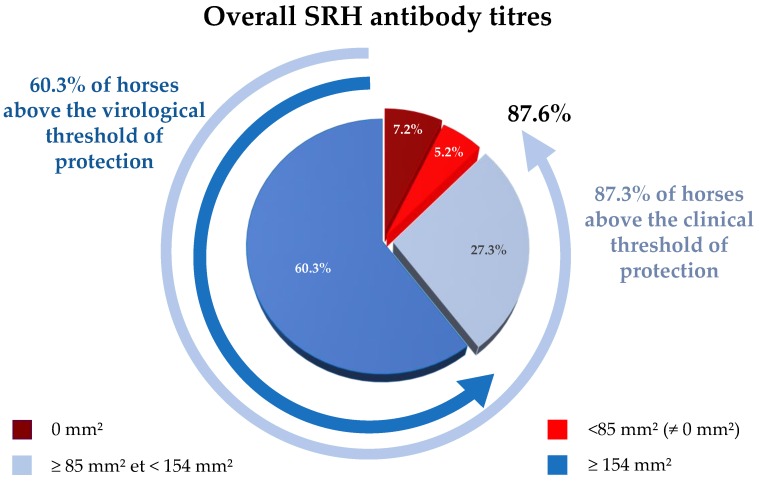
Figure 1
Figure 1
Overall single radial hemolysis (SRH) antibody response for serum samples collected between 2017 and 2018 (all four French regions combined). SRH titers below the clinical protection threshold (>85 mm2) are in red colors, titers above the clinical protection threshold are in light blue (85 mm2 and <154 mm2), titers above the clinical and virus shedding protection threshold (154 mm2 and above) are in blue.
Figure 2
Figure 2
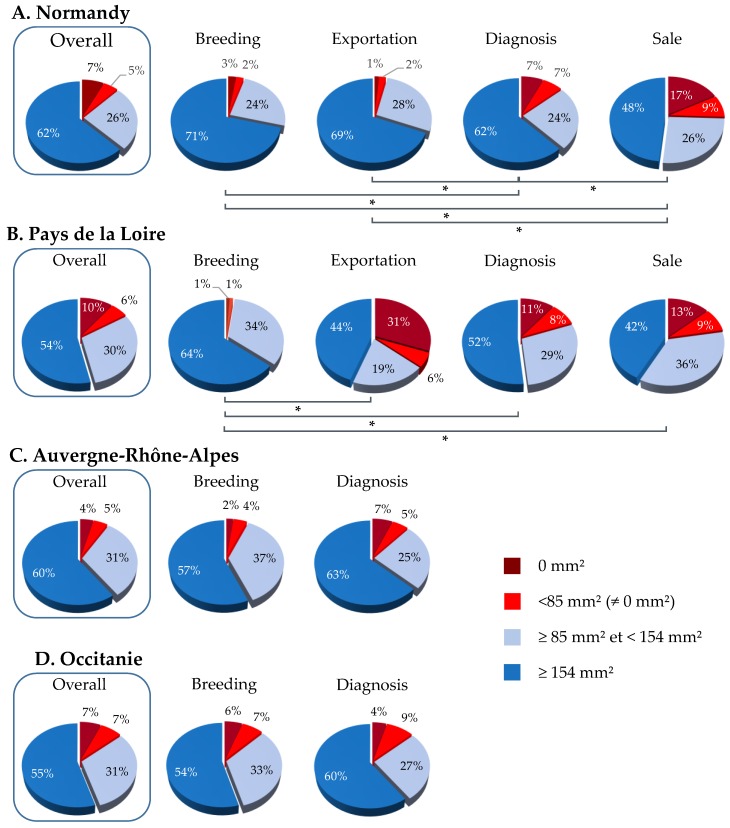
SRH antibody responses obtained from different geographical regions in France. Overall and categories analysis of immune coverage for Normandy (A), for Pays de la Loire (B), for Auvergne-Rhône-Alpes (C) and for Occitanie (D). SRH titers below the clinical protection threshold (>85 mm2) are in red colors, titers above the clinical protection threshold are in light blue (85 mm2 and >154 mm2), titers above the clinical and virus shedding protection threshold (154 mm2 and above) are in blue. (✻) p-value ≤ 0.0001.
Figure 3
Figure 3
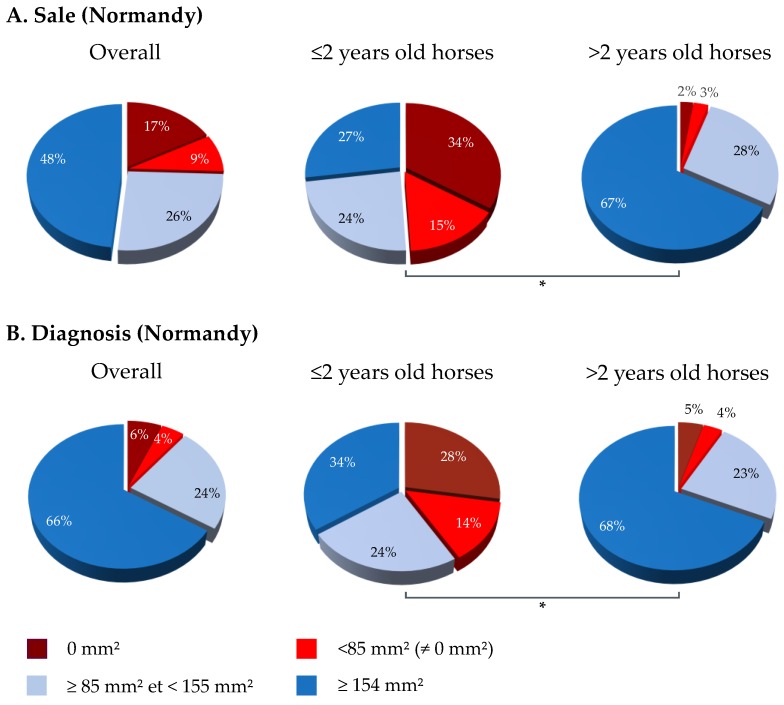
Analysis of “Sale” and “Diagnosis” categories in Normandy. SRH antibody response in ≤2 and >2 years old horses at the time of sample collection (horses born in 2016 and 2017). (A) Sale category and (B) Diagnosis category. (✻) p-value ≤ 0.00001.
Figure 4
Figure 4
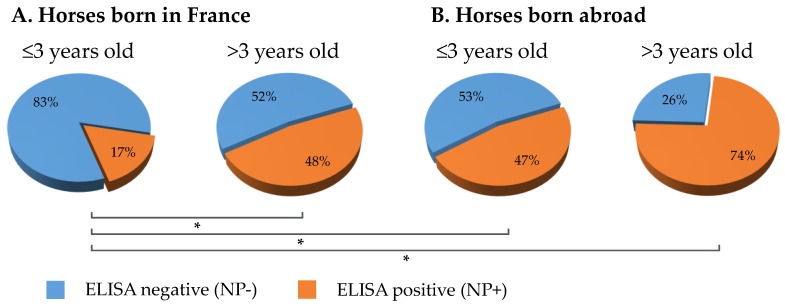
Comparison of equine influenza virus (EIV) nucleoprotein (NP) ELISA results between serum samples from young (≤3 years) and older (>3 years) horses at the time of sampling, which were seropositive by SRH test. Results for horses born in France (A) or abroad (B). (✻) p-value ≤ 0.006.
Figure 5
Figure 5
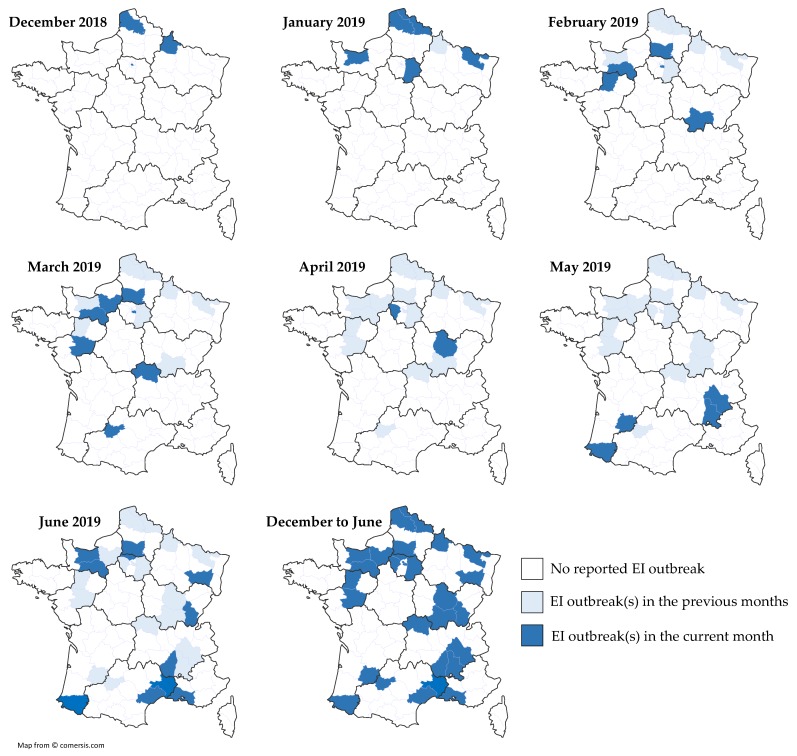
Localization of the French EI outbreaks at the county level, month by month. For each month, new EI cases are highlighted in dark blue, cases from previous months localized in the same county are highlighted in light blue.
Figure 6
Figure 6
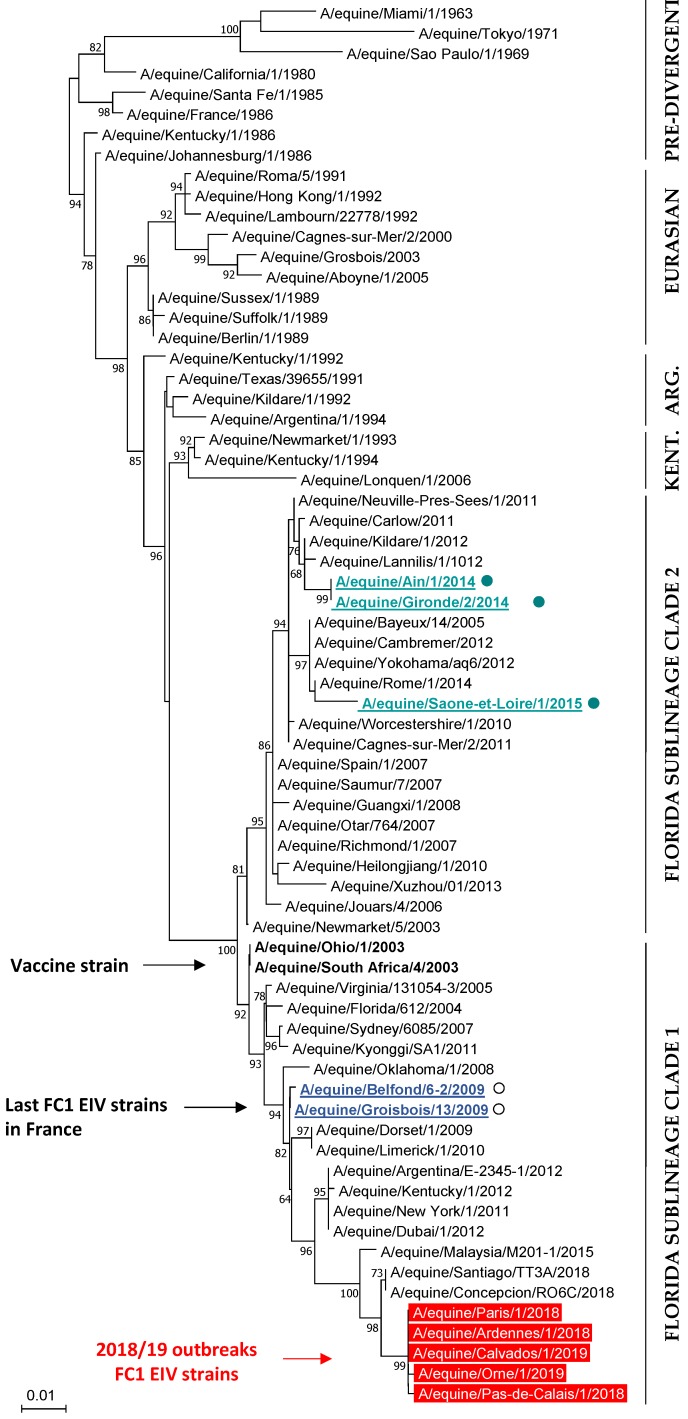
Phylogenetic analysis of the HA1 nucleotide sequence for 69 EIV strains, including representative strains of the main lineages and sub-lineages. The last French EIV strains belonging to the Florida sublineage clade 1 and clade 2 are underlined (open and closed circles, respectively). The FC1 EIV strains from the 2018 and 2019 French outbreaks are in red. The FC1 EIV vaccine strains are in bold text. Neighbor-Joining, Test phylogeny: Bootstrap method with 1000 bootstrap replication, Mode/method: Maximum composite Likelihood.
Figure 7
Figure 7
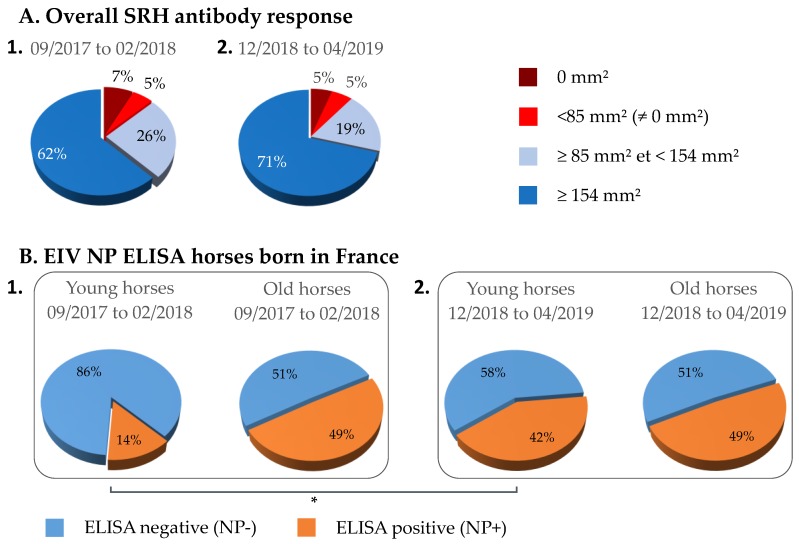
Comparison of overall SRH antibody response (A) and EIV NP ELISA (B) between two periods of sampling: September 2017 to February 2018 (1) and December 2018 to April 2019 (2). EIV NP ELISA results between serum samples from young (≤3 years; located in Normandy) and older (>3 years; located in the north of France) horses born in France and seropositive by SRH test. (✻) p-value ≤ 0.007.

References

    1. Paillot R., El-Hage C.M. The use of a recombinant canarypox-based equine influenza vaccine during the 2007 australian outbreak: A systematic review and summary. Pathogens. 2016;5:42. doi: 10.3390/pathogens5020042. - DOI - PMC - PubMed
    1. Heldens J.G., Pouwels H.G., Derks C.G., Van de Zande S.M., Hoeijmakers M.J. Duration of immunity induced by an equine influenza and tetanus combination vaccine formulation adjuvanted with iscom-matrix. Vaccine. 2010;28:6989–6996. doi: 10.1016/j.vaccine.2010.08.043. - DOI - PubMed
    1. Gildea S., Arkins S., Walsh C., Cullinane A. A comparison of antibody responses to commercial equine influenza vaccines following primary vaccination of thoroughbred weanlings—A randomised blind study. Vaccine. 2011;29:9214–9223. doi: 10.1016/j.vaccine.2011.09.101. - DOI - PubMed
    1. Gildea S., Arkins S., Walsh C., Cullinane A. A comparison of antibody responses to commercial equine influenza vaccines following annual booster vaccination of national hunt horses—A randomised blind study. Vaccine. 2011;29:3917–3922. doi: 10.1016/j.vaccine.2011.03.003. - DOI - PubMed
    1. Paillot R. A systematic review of recent advances in equine influenza vaccination. Vaccines. 2014;2:797–831. doi: 10.3390/vaccines2040797. - DOI - PMC - PubMed

LinkOut - more resources