


Epidemiology of echinococcosis in Iran: a systematic review and meta-analysis
- PMID: 31684882
- PMCID: PMC6830007
- DOI: 10.1186/s12879-019-4458-5
Epidemiology of echinococcosis in Iran: a systematic review and meta-analysis
Abstract
Background: Echinococcosis is a zoonotic disease caused by the larval stages of taeniid cestodes of the genus Echinococcus. The two major types of infection in humans are cystic echinococcosis (CE) or hydatidosis and alveolar echinococcosis (AE). It is endemic in some parts of the world, such as the Middle East, with Iran being a part of it. This systematic review and meta-analysis were conducted to determine the prevalence of CE and AE echinococcosis and their epidemiological and clinical aspects in Iran.
Methods: Electronic databases, including MEDLINE (via PubMed), SCOPUS, Web of Science, SID and Mag Iran (two Persian scientific search engines) were searched from 1 January 1990 to 8 August 2017. The prevalence of CE and AE echinococcosis was estimated using the random effects meta-analysis. Heterogeneity was evaluated by subgroup analysis. Data were analyzed by STATA version 12.
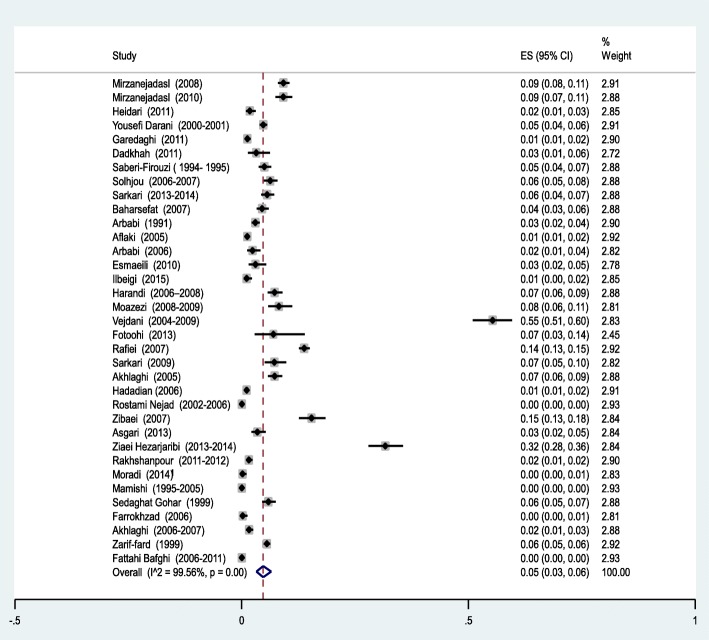
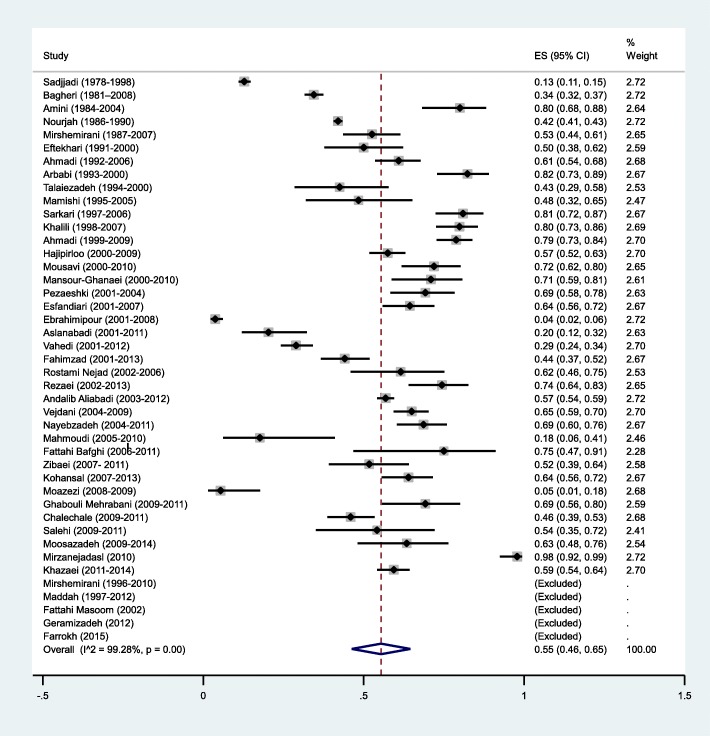
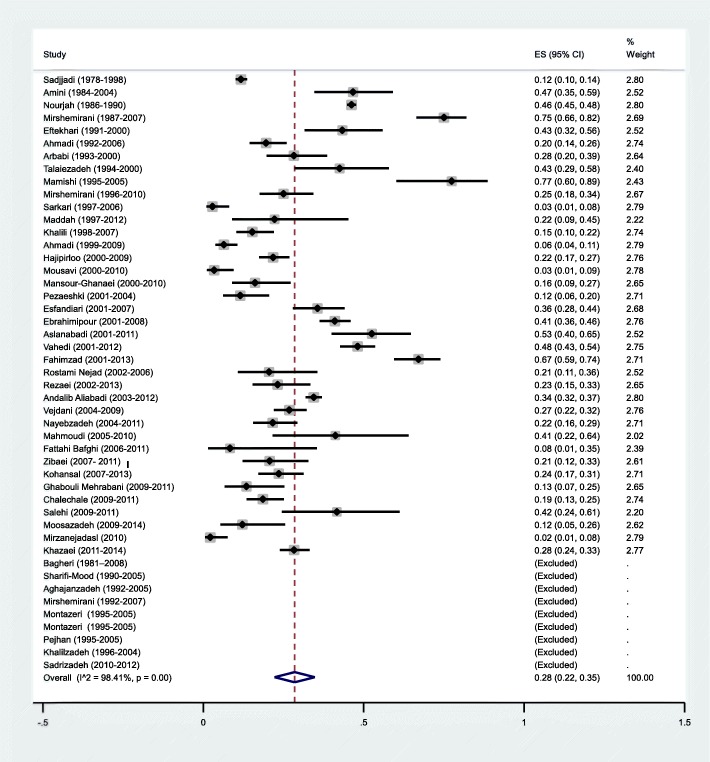
Results: Of the 2051 records identified in the mentioned electronic databases, Seventy-eight articles met our eligibility criteria, with a total of 214124individuals. The meta-analysis was performed on only 37 out of 78 included studies. The pooled prevalence of CE and AE in Iran was 5% [95% confidence interval )CI(: 3-6%] and 2% [95% CI: 0-5%], respectively. Subgroup meta-analysis revealed that the prevalence of CE was significantly higher in North [9%, 95% CI: 4-18%] and West of Iran [6%, 95% CI: 3-11%], patients younger than 40 years of age [7%, 95% CI: 4-12%], villagers and nomads [6%, 95% CI: 2-12%], and studies that used the combination of serological, clinical, and imaging diagnostic methods [7%, 95% CI: 5-9%]. There were no significant differences between the prevalence of CE among low and high-quality studies. Housewives were the most affected group by hydatidosis (n=24/77, 31%), followed by illiterate people (n=11/77, 14%) and farmers (n= 9/77, 12%). Liver [55%, 95% CI: 46-65%] and lung [28%, 95% CI, 22-35%] were the most common sites of cyst formation.
Conclusions: Given to the importance of echinococcosis on human health and domestic animals industry, it is necessary to implement monitoring and control measures in this regard.
Keywords: Alveolar echinococcosis; Cystic echinococcosis; Iran; Prevalence.
Conflict of interest statement
The authors declare that they have no competing interests.
Figures


References
-
- Rokni M. Echinococcosis/hydatidosis in Iran. Iran J Parasitol. 2009;4(2):1–16.
Publication types
MeSH terms
Supplementary concepts
Grants and funding
LinkOut - more resources
Full Text Sources
Research Materials
Miscellaneous
