


Effect of Nanosilica on Mechanical Properties and Microstructure of PVA Fiber-Reinforced Geopolymer Composite (PVA-FRGC)
- PMID: 31690006
- PMCID: PMC6862656
- DOI: 10.3390/ma12213624
Effect of Nanosilica on Mechanical Properties and Microstructure of PVA Fiber-Reinforced Geopolymer Composite (PVA-FRGC)
Abstract
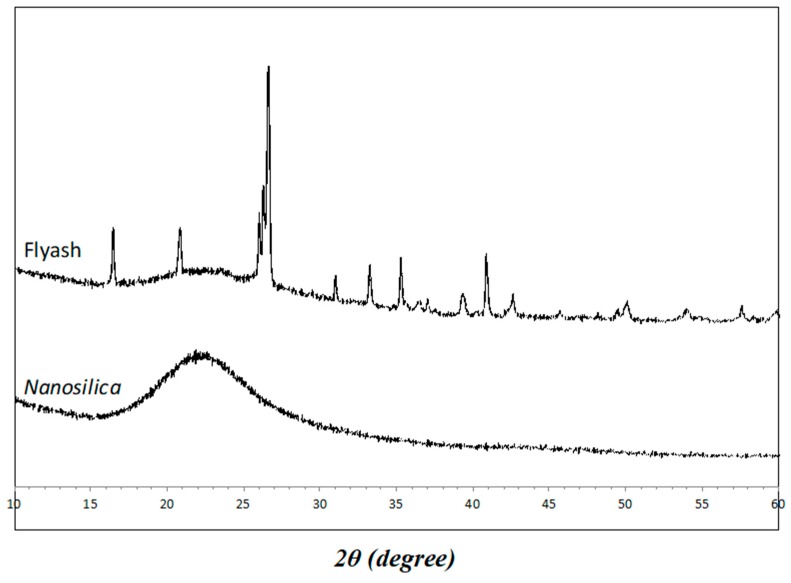
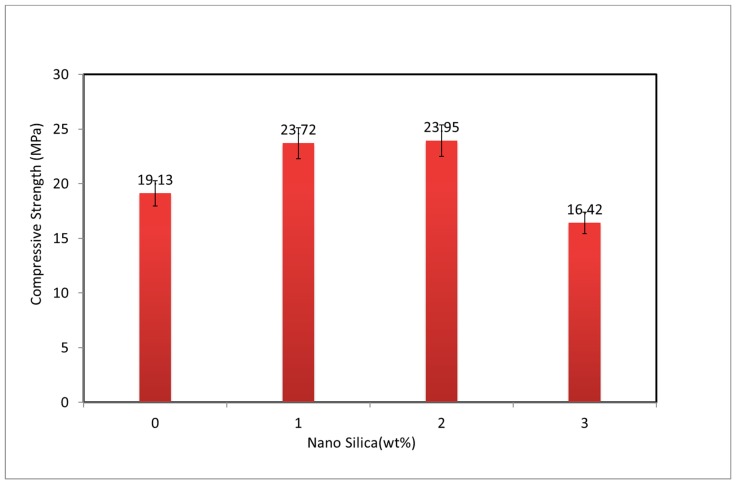
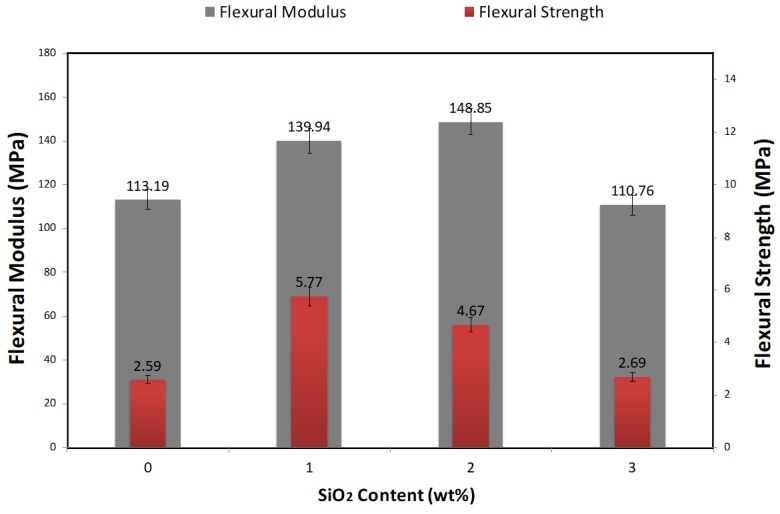
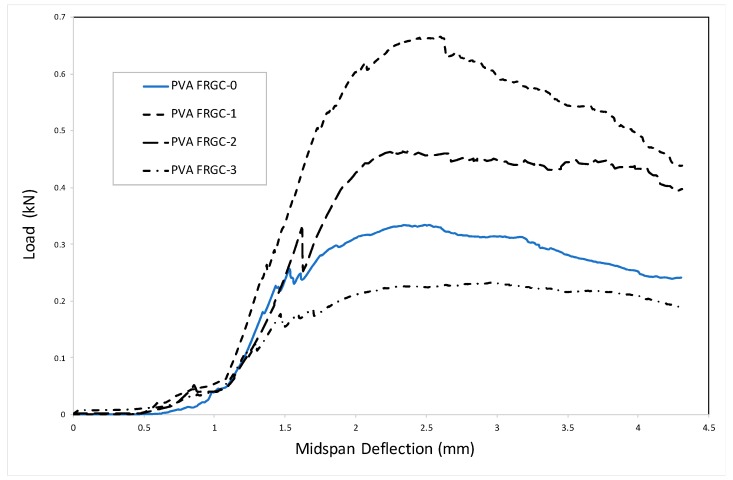
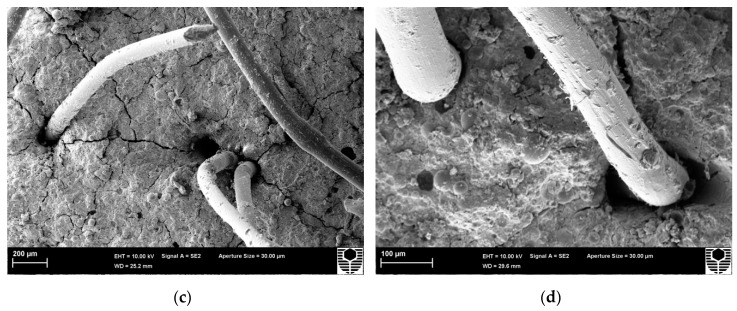
This paper presents the effects of various nanosilica (NS) contents on the mechanical properties of polyvinyl alcohol (PVA) fiber-reinforced geopolymer composites (PVA-FRGC). Microstructure analysis with X-ray diffraction (XRD) and scanning electron microscopy (SEM) was used to characterize the geopolymer composites. The results showed that the mechanical properties in terms of compressive strength, impact strength, and flexural behavior were improved due to the addition of NS to the PVA-FRGC. The optimum NS content was 1.0 to 2.0 wt%, which exhibited highest improvement in the above mechanical properties. Microstructure analysis showed that the addition of NS up to an optimum level densified the microstructure of the matrix as well as the PVA fiber-geopolymer matrix interface.
Keywords: PVA fibers; geopolymer; mechanical properties; nanosilica.
Conflict of interest statement
The authors declare no conflict of interest.
Figures
References
-
- Davidovits J. Geopolymers—Inorganic polymeric new materials. J. Therm. Anal. 1991;37:1633–1656. doi: 10.1007/BF01912193. - DOI
-
- Assaedi H., Shaikh F.U.A., Low I.M. Effect of nanoclay on durability and mechanical properties of flax fabric reinforced geopolymer composites. J. Asian Ceram. Soc. 2017;5:62–70. doi: 10.1016/j.jascer.2017.01.003. - DOI
-
- Alomayri T., Shaikh F.U.A., Low I.M. Synthesis and mechanical properties of cotton fabric reinforced geopolymer composites. Compos. Part B. 2014;60:36–42. doi: 10.1016/j.compositesb.2013.12.036. - DOI
-
- Alomayri T., Shaikh F.U.A., Low I.M. Characterization of cotton fibre-reinforced geopolymer composites. Compos. Part B. 2013;50:1–6. doi: 10.1016/j.compositesb.2013.01.013. - DOI
-
- Shaikh F.U.A. Deflection hardening behaviour of short fibre reinforced fly ash based geo-polymer composites. Mater. Des. 2013;50:674–680. doi: 10.1016/j.matdes.2013.03.063. - DOI
LinkOut - more resources
Full Text Sources
Miscellaneous
