


Meta-analysis of cortical thickness abnormalities in medication-free patients with major depressive disorder
- PMID: 31694045
- PMCID: PMC7021694
- DOI: 10.1038/s41386-019-0563-9
Meta-analysis of cortical thickness abnormalities in medication-free patients with major depressive disorder
Erratum in
-
Correction: Meta-analysis of cortical thickness abnormalities in medication-free patients with major depressive disorder.Neuropsychopharmacology. 2020 Mar;45(4):713. doi: 10.1038/s41386-019-0587-1. Neuropsychopharmacology. 2020. PMID: 31836827 Free PMC article.
Abstract
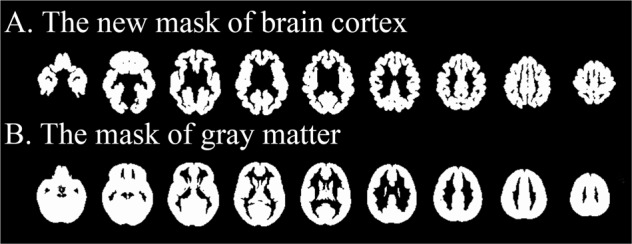
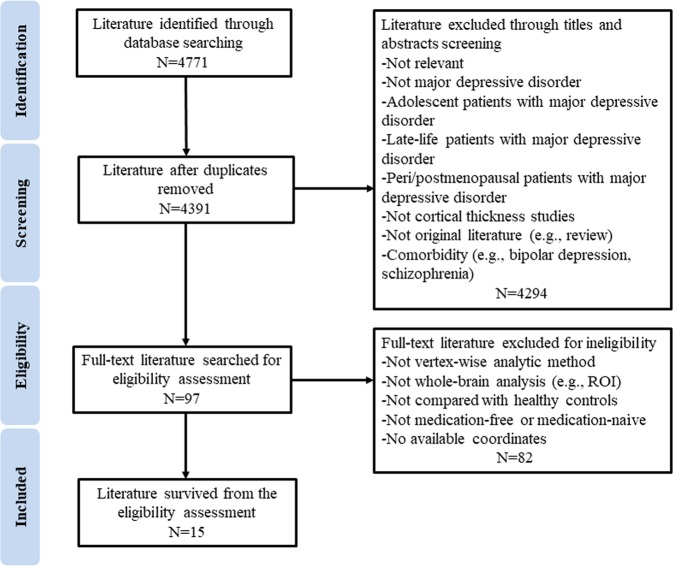
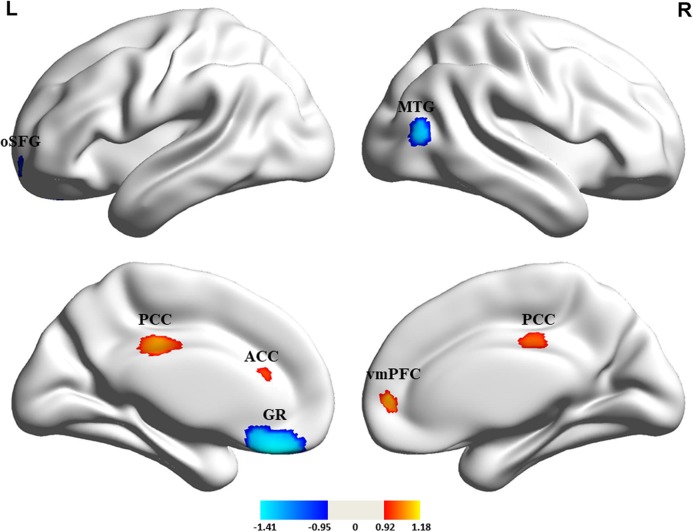
Alterations in cortical thickness have been identified in major depressive disorder (MDD), but findings have been variable and inconsistent. To date, no reliable tools have been available for the meta-analysis of surface-based morphometric (SBM) studies to effectively characterize what has been learned in previous studies, and drug treatments may have differentially impacted findings. We conducted a comprehensive meta-analysis of magnetic resonance imaging (MRI) studies that explored cortical thickness in medication-free patients with MDD, using a newly developed meta-analytic mask compatible with seed-based d mapping (SDM) meta-analytic software. We performed the meta-regression to explore the effects of demographics and clinical characteristics on variation in cortical thickness in MDD. Fifteen studies describing 529 patients and 586 healthy controls (HCs) were included. Medication-free patients with MDD, relative to HCs, showed a complex pattern of increased cortical thickness in some areas (posterior cingulate cortex, ventromedial prefrontal cortex, and anterior cingulate cortex) and decreased cortical thickness in others (gyrus rectus, orbital segment of the superior frontal gyrus, and middle temporal gyrus). Most findings in the whole sample analysis were confirmed in a meta-analysis of studies recruiting medication-naive patients. Using the new mask specifically developed for SBM studies, this SDM meta-analysis provides evidence for regional cortical thickness alterations in MDD, mainly involving increased cortical thickness in the default mode network and decreased cortical thickness in the orbitofrontal and temporal cortex.
Figures

References
-
- World Health Organization. Depression fact sheet. Genewa, Switzerland: WHO; 2014.
-
- Malhi GS, Mann JJ. Depression. Lancet. 2018;392:2299–312. - PubMed
