


Laparoscopic versus open major liver resection for hepatocellular carcinoma: systematic review and meta-analysis of comparative cohort studies
- PMID: 31694596
- PMCID: PMC6833163
- DOI: 10.1186/s12885-019-6240-x
Laparoscopic versus open major liver resection for hepatocellular carcinoma: systematic review and meta-analysis of comparative cohort studies
Abstract
Background: The application of laparoscopic liver resection (LLR) has expanded rapidly in recent decades. Although multiple authors have reported LLR shows improved safety and efficacy in treating hepatocellular carcinoma (HCC) compared with open liver resection (OLR), laparoscopic (LMLR) and open (OMLR) major liver resections for HCC treatment remain inadequately evaluated. This work aimed to test the hypothesis that LMLR is safer and more effective than OMLR for HCC.
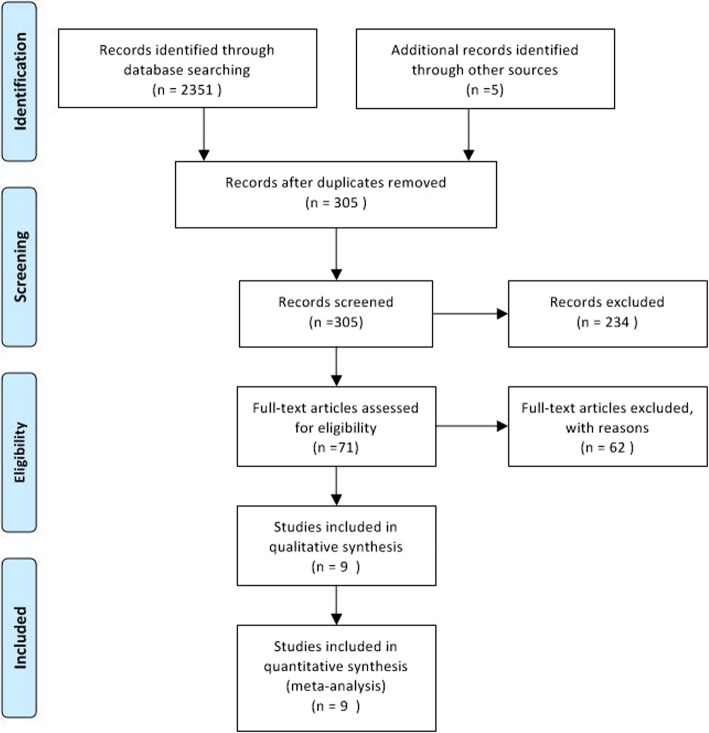
Methods: Comparative cohort and registry studies on LMLR and OMLR, searched in PubMed, the Science Citation Index, EMBASE, and the Cochrane Library, and published before March 31, 2018, were collected systematically and meta-analyzed. Fixed- and random-effects models were employed for generating pooled estimates. Heterogeneity was assessed by the Q-statistic.
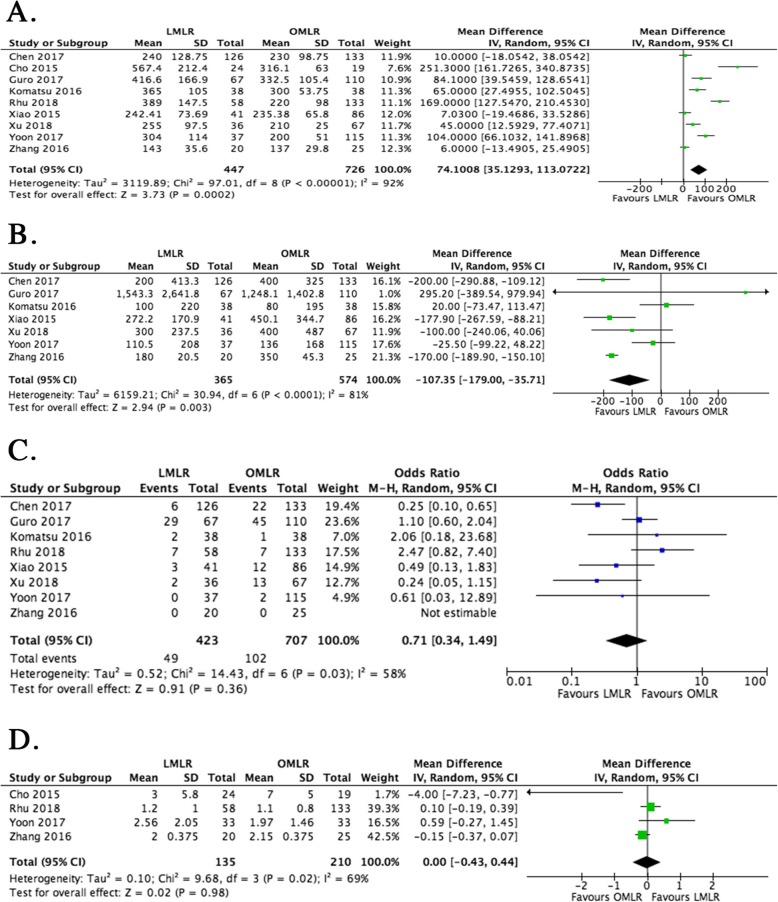
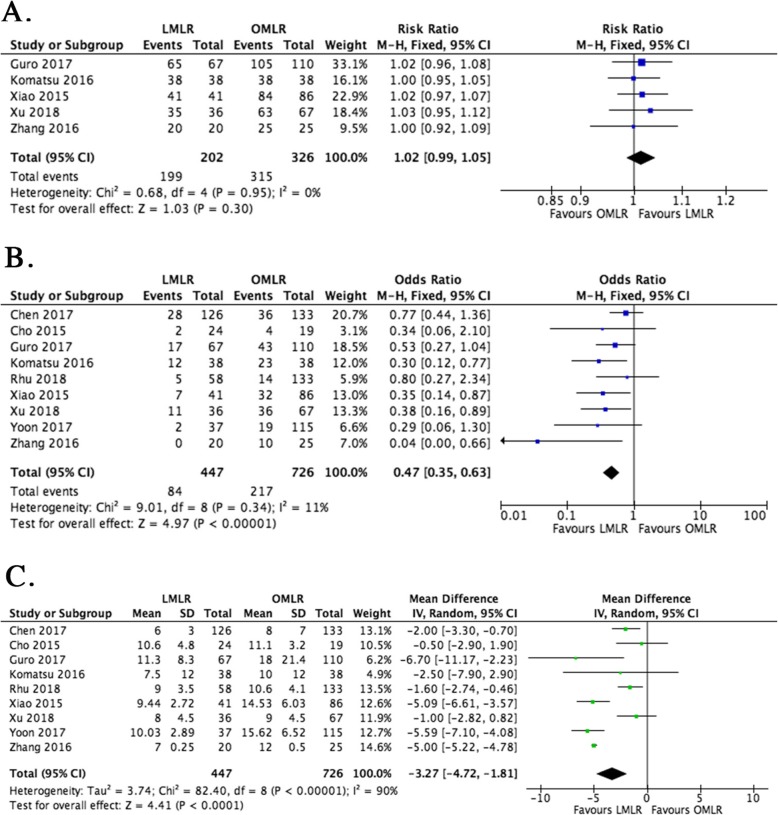
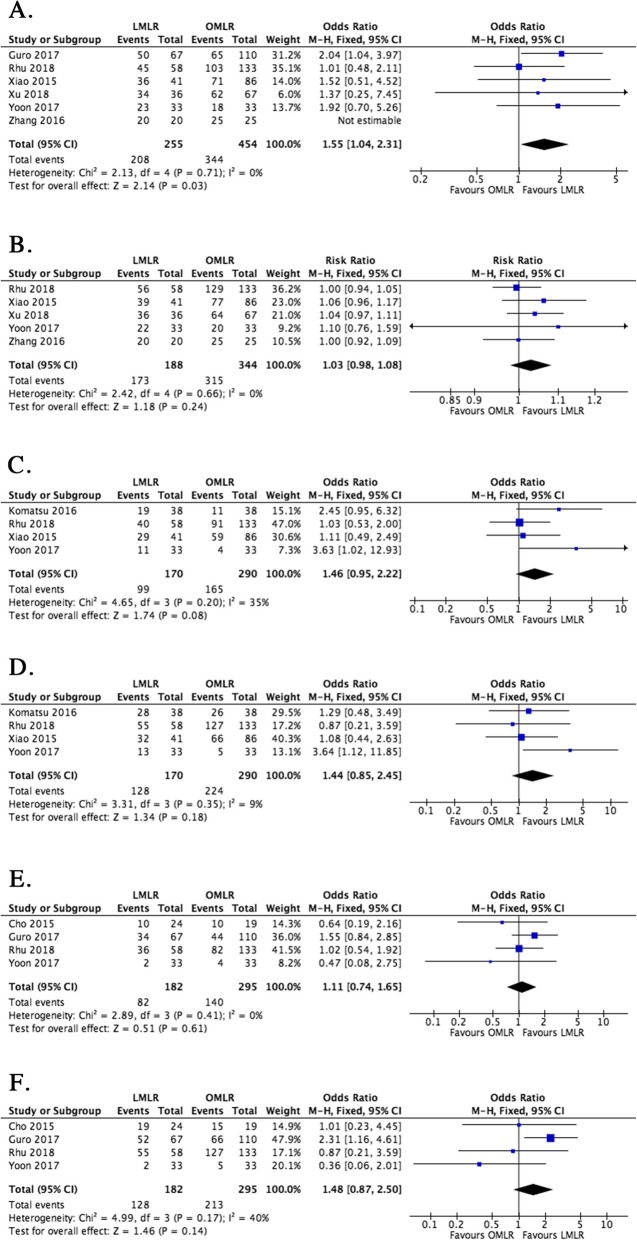
Results: Nine studies (1173 patients) were included. Although the pooled data showed operation time was markedly increased for LMLR in comparison with OMLR (weighted mean difference [WMD] 74.1, 95% CI 35.1 to 113.1, P = 0.0002), blood loss was reduced (WMD = - 107.4, 95% CI - 179.0 to - 35.7, P = 0.003), postoperative morbidity was lower (odds ratio [OR] 0.47, 95% CI 0.35 to 0.63, P < 0.0001), and hospital stay was shorter (WMD = - 3.27, 95% CI - 4.72 to - 1.81, P < 0.0001) in the LMLR group. Although 1-year disease-free survival (DFS) was increased in patients administered LMLR (OR = 1.55, 95% CI 1.04 to 2.31, P = 0.03), other 1-, 3-, and 5-year survival outcomes (overall survival [OS] and/or DFS) were comparable in both groups.
Conclusions: Compared with OMLR, LMLR has short-term clinical advantages, including reduced blood loss, lower postsurgical morbidity, and shorter hospital stay in HCC, despite its longer operative time. Long-term oncological outcomes were comparable in both groups.
Keywords: Hepatocellular carcinoma; Laparoscopic surgery; Major liver resection; Meta-analysis.
Conflict of interest statement
The authors declare that they have no competing interests.
Figures
References
-
- Ferlay J, Soerjomataram II, Dikshit R, et al. Cancer incidence and mortality worldwide: sources, methods and major patterns in GLOBOCAN 2012. Int J Cancer. 2015;136(5):E359–E386. - PubMed
-
- Bruix J, Reig M, Sherman M. Evidence-based diagnosis, staging, and treatment of patients with hepatocellular carcinoma. Gastroenterology. 2016;150(4):835–853. - PubMed
-
- Reich H, McGlynn F, DeCaprio J, et al. Laparoscopic excision of benign liver lesions. Obstet Gynecol. 1991;78(5 Pt 2):956–958. - PubMed
-
- Bryant R, Laurent A, Tayar C, et al. Laparoscopic liver resection-understanding its role in current practice: the Henri Mondor hospital experience. Ann Surg. 2009;250(1):103–111. - PubMed
Publication types
MeSH terms
Grants and funding
LinkOut - more resources
Full Text Sources
Medical
