


A transcriptomic study of Williams-Beuren syndrome associated genes in mouse embryonic stem cells
- PMID: 31695049
- PMCID: PMC6834640
- DOI: 10.1038/s41597-019-0281-5
A transcriptomic study of Williams-Beuren syndrome associated genes in mouse embryonic stem cells
Abstract
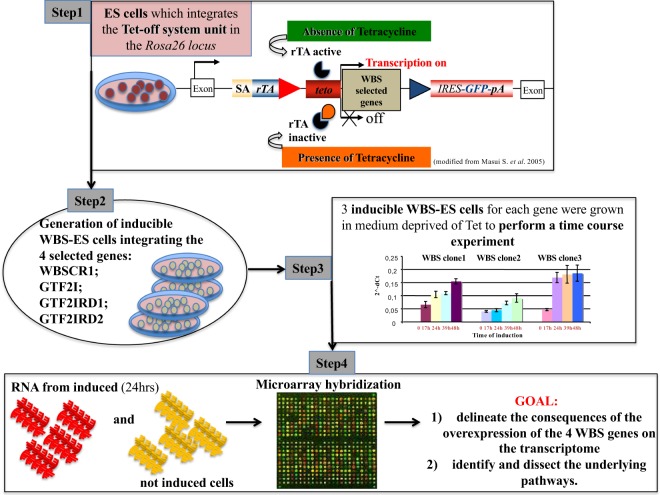
Williams-Beuren syndrome (WBS) is a relatively rare disease caused by the deletion of 1.5 to 1.8 Mb on chromosome 7 which contains approximately 28 genes. This multisystem disorder is mainly characterized by supravalvular aortic stenosis, mental retardation, and distinctive facial features. We generated mouse embryonic stem (ES) cells clones expressing each of the 4 human WBS genes (WBSCR1, GTF2I, GTF2IRD1 and GTF2IRD2) found in the specific delated region 7q11.23 causative of the WBS. We generated at least three stable clones for each gene with stable integration in the ROSA26 locus of a tetracycline-inducible upstream of the coding sequence of the genet tagged with a 3xFLAG epitope. Three clones for each gene were transcriptionally profiled in inducing versus non-inducing conditions for a total of 24 profiles. This small collection of human WBS-ES cell clones represents a resource to facilitate the study of the function of these genes during differentiation.
Conflict of interest statement
The authors declare no competing interests.
Figures
References
Publication types
MeSH terms
Substances
LinkOut - more resources
Full Text Sources
Molecular Biology Databases
Miscellaneous
