


Immune Responses to Gametocyte Antigens in a Malaria Endemic Population-The African falciparum Context: A Systematic Review and Meta-Analysis
- PMID: 31695697
- PMCID: PMC6817591
- DOI: 10.3389/fimmu.2019.02480
Immune Responses to Gametocyte Antigens in a Malaria Endemic Population-The African falciparum Context: A Systematic Review and Meta-Analysis
Erratum in
-
Corrigendum: Immune Responses to Gametocyte Antigens in a Malaria Endemic Population-The African falciparum Context: A Systematic Review and Meta-Analysis.Front Immunol. 2020 Mar 23;11:389. doi: 10.3389/fimmu.2020.00389. eCollection 2020. Front Immunol. 2020. PMID: 32265905 Free PMC article.
Abstract
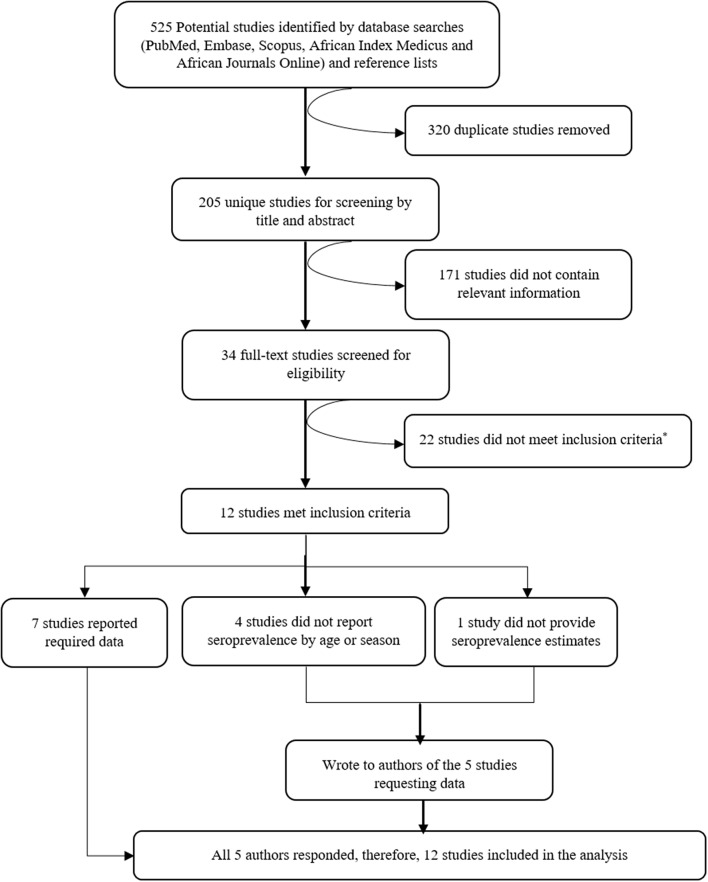
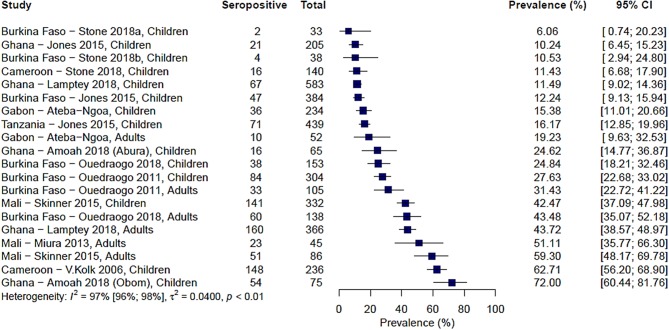
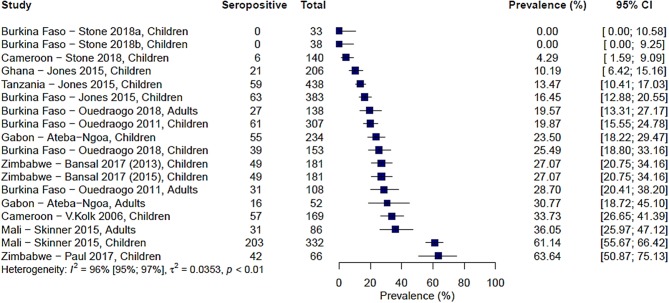
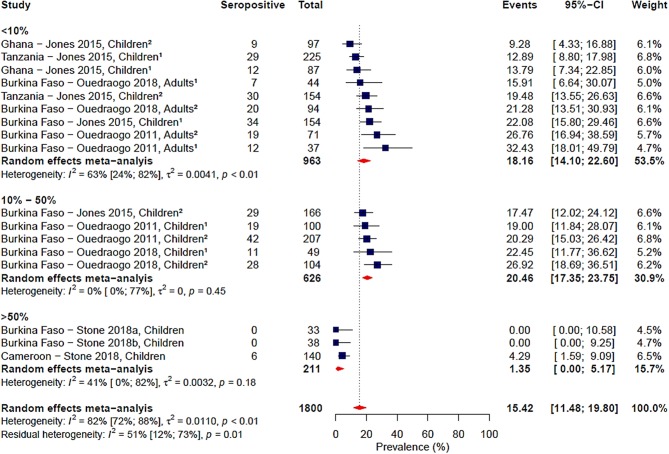
Background: Malaria elimination remains a priority research agenda with the need for interventions that reduce and/or block malaria transmission from humans to mosquitoes. Transmission-blocking vaccines (TBVs) are in development, most of which target the transmission stage (i.e., gametocyte) antigens Pfs230 and Pfs48/45. For these interventions to be implemented, there is a need to understand the naturally acquired immunity to gametocytes. Several studies have measured the prevalence of immune responses to Pfs230 and Pfs48/45 in populations in malaria-endemic areas. Methods: We conducted a systematic review of studies carried out in African populations that measured the prevalence of immune responses to the gametocyte antigens Pfs230 and Pfs48/45. We assessed seroprevalence of antibody responses to the two antigens and investigated the effects of covariates such as age, transmission intensity/endemicity, season, and parasite prevalence on the prevalence of these antibody responses by meta-regression. Results: We identified 12 studies covering 23 sites for inclusion in the analysis. We found that the range of reported seroprevalence to Pfs230 and Pfs48/45 varied widely across studies, from 0 to 64% for Pfs48/45 and from 6 to 72% for Pfs230. We also found a modest association between increased age and increased seroprevalence to Pfs230: adults were associated with higher seroprevalence estimates in comparison to children (β coefficient 0.21, 95% CI: 0.05-0.38, p = 0.042). Methodological factors were the most significant contributors to heterogeneity between studies which prevented calculation of pooled prevalence estimates. Conclusions: Naturally acquired sexual stage immunity, as detected by antibodies to Pfs230 and Pfs48/45, was present in most studies analyzed. Significant between-study heterogeneity was seen, and methodological factors were a major contributor to this, and prevented further analysis of epidemiological and biological factors. This demonstrates a need for standardized protocols for conducting and reporting seroepidemiological analyses.
Keywords: Pfs230; Pfs48/45; Plasmodium falciparum; gametocytes; immunity.
Copyright © 2019 Muthui, Kamau, Bousema, Blagborough, Bejon and Kapulu.
Figures
References
-
- Doumbo OK, Niaré K, Healy SA, Sagara I, Duffy PE. Malaria transmission-blocking vaccines: present status and future perspectives. In: Manguin S, Dev V, editors. Towards Malaria Elimination - A Leap Forward. London: IntechOpen; (2018). p. 363–85.
Publication types
MeSH terms
Substances
Associated data
Grants and funding
LinkOut - more resources
Full Text Sources
