


Bacillus strains as human probiotics: characterization, safety, microbiome, and probiotic carrier
- PMID: 31695928
- PMCID: PMC6811671
- DOI: 10.1007/s10068-019-00691-9
Bacillus strains as human probiotics: characterization, safety, microbiome, and probiotic carrier
Abstract
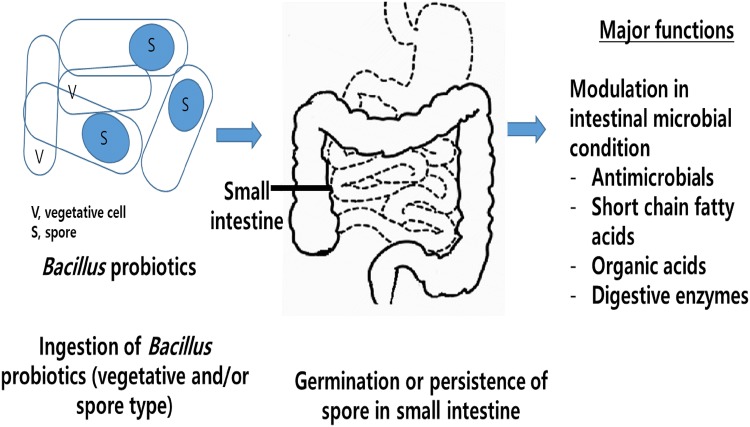
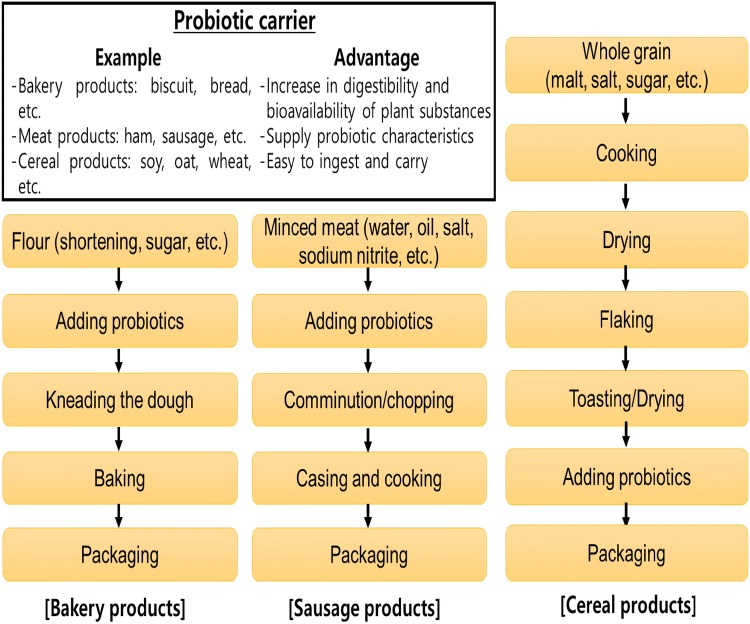
Both spore and vegetative forms of Bacillus species have been used as probiotics, and they have high stability to the surrounding atmospheric conditions such as heat, gastric conditions, and moisture. The commercial Bacillus probiotic strains in use are B. cereus, B. clausii, B. coagulans, B. licheniformis, B. polyfermenticus, B. pumilus, and B. subtilis. These strains have antimicrobial, anticancer, antioxidant, and vitamin production properties. However, Bacillus probiotics can also produce toxins and biogenic amines and transfer antibiotic resistance genes; therefore, their safety is a concern. Studies on the microbiome using probiotic Bacillus strains are limited in humans. Most microbiome research has been conducted in chicken, mouse, and pig. Some Bacillus probiotics are used as fermentation starters in plant and soybean and dietary supplement of baking foods as a probiotic carrier. This review summarizes the characterization of Bacillus species as probiotics for human use and their safety, microbiome, and probiotic carrier.
Keywords: Bacillus probiotic; Characterization; Microbiome; Probiotic carrier; Safety.
© The Korean Society of Food Science and Technology 2019.
Figures
References
-
- Abbrescia A, Palese LL, Papa S, Gaballo A, Alifano P, Sardanelli AM. Antibiotic sensitivity of Bacillus clausii strains in commercial preparation. Curr. Med. Chem. 2014;1:102–110.
Publication types
LinkOut - more resources
Full Text Sources
Other Literature Sources
Medical
Molecular Biology Databases