


Transmembrane 163 (TMEM163) protein effluxes zinc
- PMID: 31697912
- PMCID: PMC6864316
- DOI: 10.1016/j.abb.2019.108166
Transmembrane 163 (TMEM163) protein effluxes zinc
Abstract
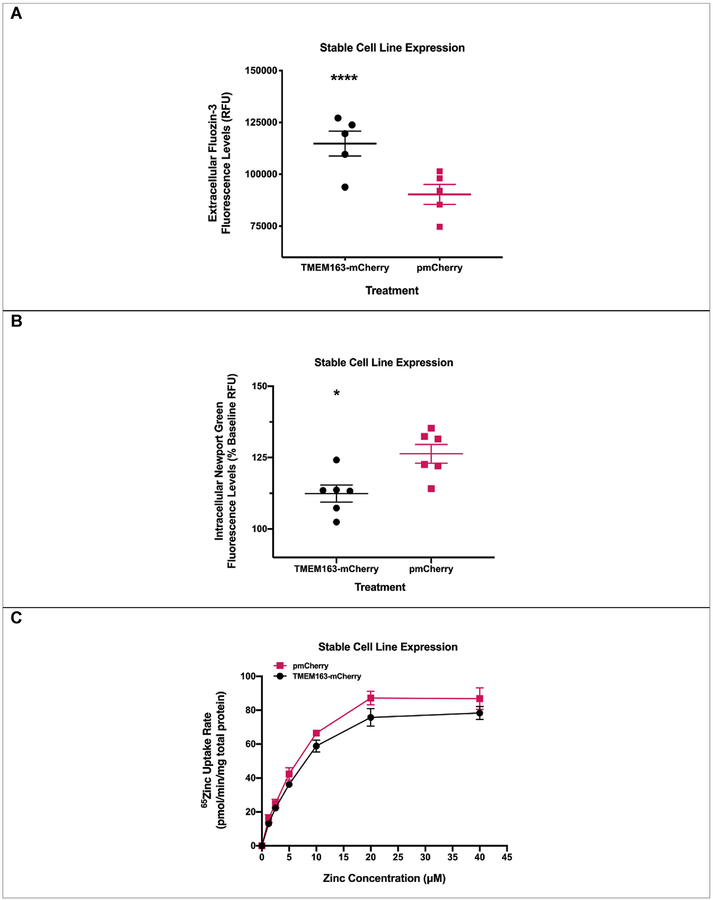
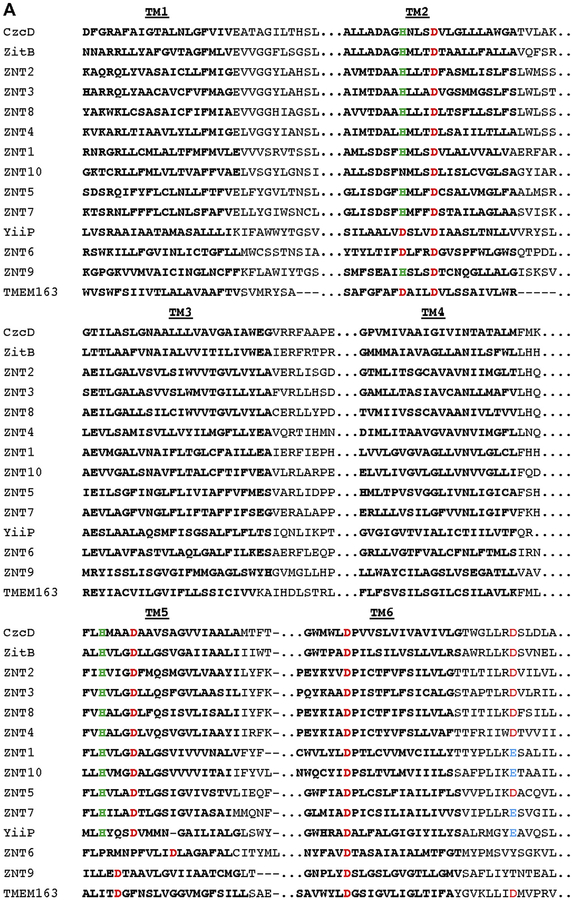
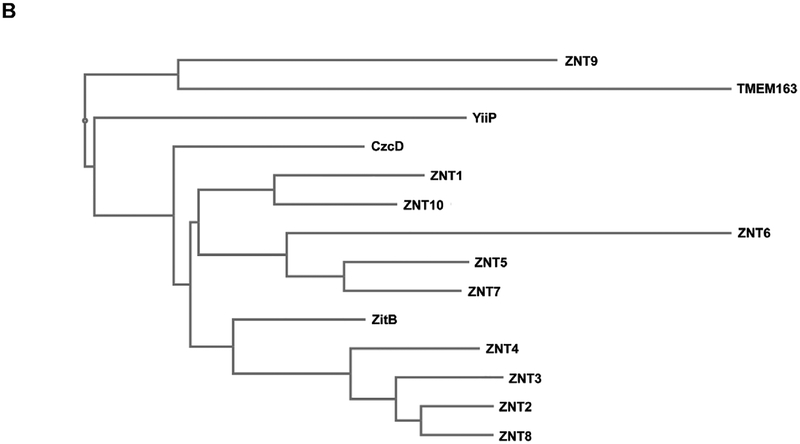
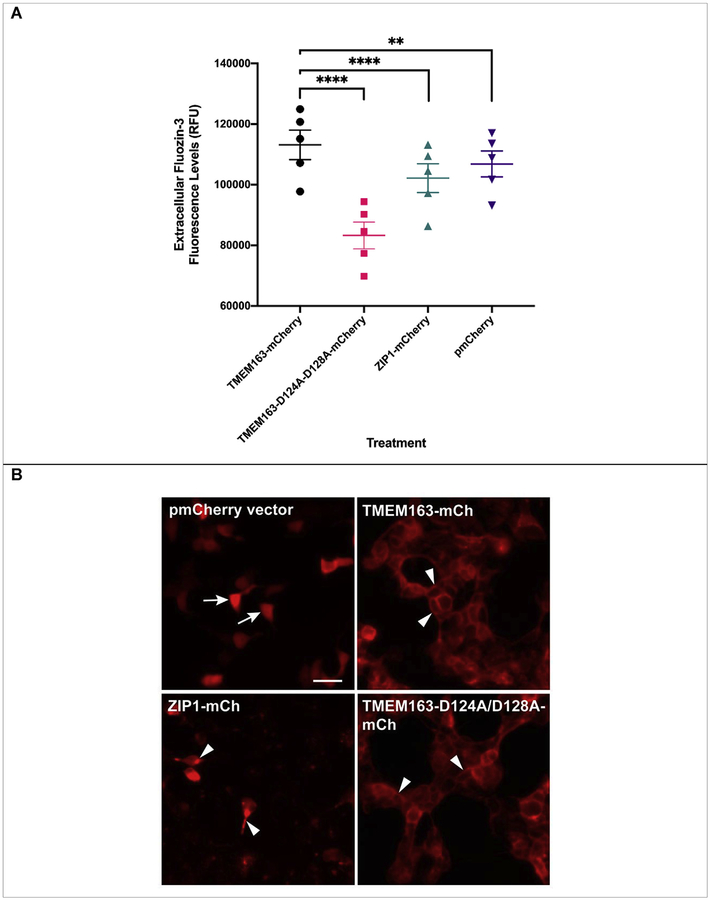
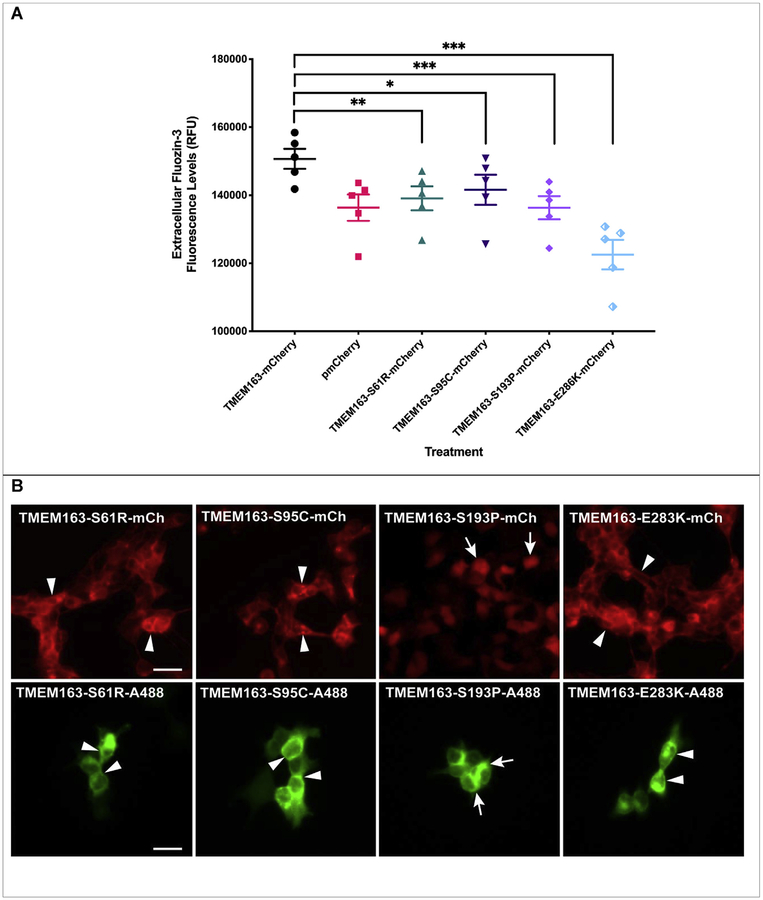
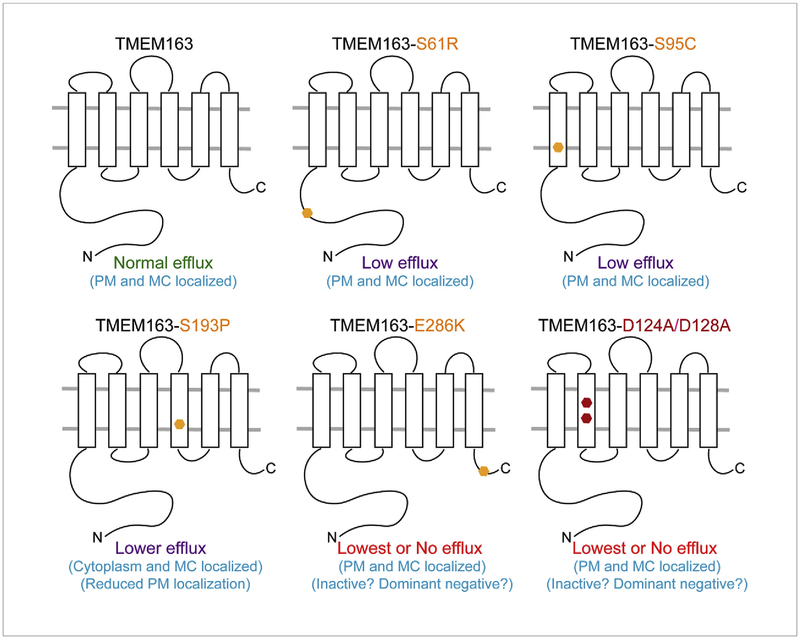
Recent investigations of rodent Tmem163 suggest that it binds to and transports zinc as a dimer, and that alanine mutagenesis of its two species-conserved aspartate (D123A/D127A) residues proposed to bind zinc, perturbs protein function. Direct corroboration, however, is lacking whether it is an influx or efflux transporter in cells. We hypothesized that human TMEM163 is a zinc effluxer based on its predicted protein characteristics. We used cultured human cell lines that either stably or transiently expressed TMEM163, and pre-loaded the cells with zinc to determine transport activity. We found that TMEM163-expressing cells exhibited significant reduction of intracellular zinc levels as evidenced by two zinc-specific fluorescent dyes and radionuclide zinc-65. The specificity of the fluorescence signal was confirmed upon treatment with TPEN, a high-affinity zinc chelator. Multiple sequence alignment and phylogenetic analyses showed that TMEM163 is related to distinct members of the cation diffusion facilitator (CDF) protein family. To further characterize the efflux function of TMEM163, we substituted alanine in two homologous aspartate residues (D124A/D128A) and performed site-directed mutagenesis of several conserved amino acid residues identified as non-synonymous single nucleotide polymorphism (S61R, S95C, S193P, and E286K). We found a significant reduction of zinc efflux upon cellular expression of D124A/D128A or E286K protein variant when compared with wild-type, suggesting that these particular amino acids are important for normal protein function. Taken together, our findings demonstrate that TMEM163 effluxes zinc, and it should now be designated ZNT11 as a new member of the mammalian CDF family of zinc efflux transporters.
Keywords: Cation diffusion facilitator; SV31; Single nucleotide polymorphism; Zinc transporter; ZnT protein.
Copyright © 2019 The Authors. Published by Elsevier Inc. All rights reserved.
Conflict of interest statement
Declaration of competing interest
The authors declare no conflicts of interest with the contents of this article.
Figures
References
-
- Choi DW, Yokoyama M, Koh J, Zinc neurotoxicity in cortical cell culture, Neuroscience 24 (1988) 67–79. - PubMed
-
- Koh JY, Choi DW, Zinc toxicity on cultured cortical neurons: involvement of N-methyl-D-aspartate receptors, Neuroscience 60 (1994) 1049–1057. - PubMed
-
- Cuajungco MP, Lees GJ, Prevention of zinc neurotoxicity in vivo by N,N,N’,N’-tetrakis (2-pyridylmethyl) ethylene-diamine (TPEN), Neuroreport 7 (1996) 1301–1304. - PubMed
-
- Koh JY, Suh SW, Gwag BJ, He YY, Hsu CY, Choi DW, The role of zinc in selective neuronal death after transient global cerebral ischemia, Science 272 (1996) 1013–1016. - PubMed
-
- Cuajungco MP, Lees GJ, Diverse effects of metal chelating agents on the neuronal cytotoxicity of zinc in the hippocampus, Brain Res. 799 (1998) 97–107. - PubMed
Publication types
MeSH terms
Substances
Grants and funding
LinkOut - more resources
Full Text Sources
Molecular Biology Databases
