Review
. 2020 Jan;31(1):53-66.
doi: 10.1016/j.tem.2019.09.007. Epub 2019 Nov 4.

Pros and Cons of Chaperone-Mediated Autophagy in Cancer Biology

Affiliations
Review

Pros and Cons of Chaperone-Mediated Autophagy in Cancer Biology

Esperanza Arias et al. Trends Endocrinol Metab. 2020 Jan.

Abstract

Autophagy contributes to cellular quality control and energetics through lysosomal breakdown and recycling of essential cellular components. Chaperone-mediated autophagy (CMA) adds to these autophagic functions the ability to timely and selectively degrade single tagged proteins to terminate their cellular function and, in this way, participate in the regulation of multiple cellular processes. Many cancer cells upregulate CMA for protumorigenic and prosurvival purposes. However, growing evidence supports a physiological role for CMA in limiting malignant transformation. Understanding the mechanisms behind this functional switch of CMA from antioncogenic to pro-oncogenic is fundamental for targeting CMA in cancer treatment. We summarize current understanding of CMA functions in cancer biology and discuss the basis for its context-dependent dual role in oncogenesis.

Keywords: chaperones; lysosomes; metabolism; oncogenes; protein degradation; tumorigenesis.


Figures

Figure 1.
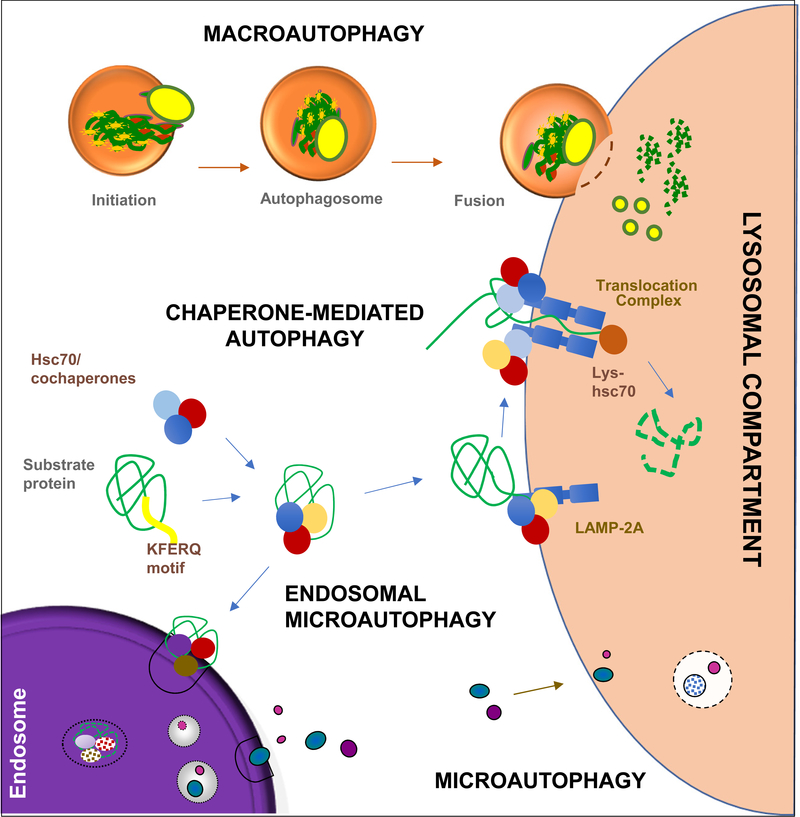
Figure 1.. CMA in the context of mammalian autophagic pathways.
Macroautophagy starts with sequestration of cargo by a limiting membrane that seals into a double-membrane vesicle named autophagosome. Guided by microtubules autophagosome fuses with lysosomes, where degradation occurs. Chaperone-mediated autophagy (CMA) degrades proteins selected by the chaperone Hsc70 that binds a KFERQ-like sequence. Internalization of substrate proteins into lysosomes occurs upon multimerization of LAMP2A. Microautophagy entraps cytosolic cargo in small vesicles formed by invagination of the lysosomal membrane. In endosomal microautophagy KFERQ-proteins recognized by hsc70 are targeted for degradation in late endosomes through invaginations in the membrane,
Figure 2.
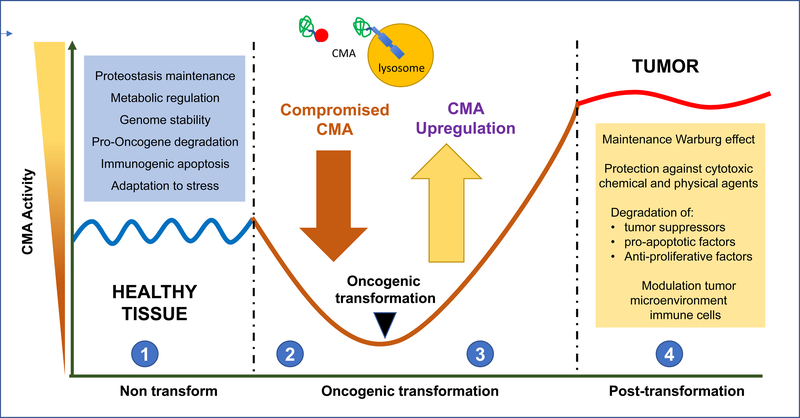
Figure 2.. (Key figure). Anti-oncogenic function of CMA turns pro-oncogenic in cancer cells.
Studies in vitro and in vivo support an anti-oncogenic function for CMA in normal cells (1) through a variety of mechanism (blue box). This could explain why conditions in which CMA activity is reduced (2) such as aging or disease favor malignant transformation. Right after transformation CMA activity is upregulated (3) and remains constitutively active in most tumor cells (4). High CMA activity in cancer cells sustains different pro-oncogenic functions (yellow box).
Figure 3.
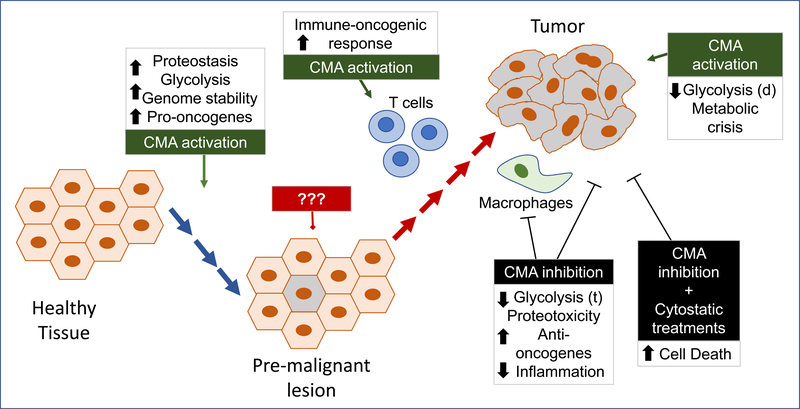
Figure 3.. CMA targeting in cancer prevention and treatment.
Before malignant transformation maintaining fully functional CMA should help preserving its anti-oncogenic function. ??? denotes that experimental evidence is lacking to support value of targeting CMA in the pre-malignant lesion (before or at the moment that CMA gets upregulated), but systemic activation of CMA may help boosting the T cell mediated immune-oncogenic response. Once the tumor is formed, inhibition of CMA in tumor cells and tumor-associated macrophages has been shown to reduce tumor growth and to induced tumor death both alone or in combination with other anti-oncogenic interventions to prevent cancer cell resistance. Active upregulation of CMA has also shown effective in inducing cancer cell death in specific conditions combining inhibition of macroautophagy and metabolic stress. Boxes summarize the main cellular processes affected by the CMA-targeting intervention at each stage. (t): transcription; (d): degradation.

References

    1. Levine B and Klionsky DJ (2017) Autophagy wins the 2016 Nobel Prize in Physiology or Medicine: Breakthroughs in baker’s yeast fuel advances in biomedical research. Proc Natl Acad Sci U S A 114 (2), 201–205. - PMC - PubMed
    1. Mizushima N. et al. (2004) In vivo analysis of autophagy in response to nutrient starvation using transgenic mice expressing a fluorescent autophagosome marker. Mol Biol Cell 15 (3), 1101–11. - PMC - PubMed
    1. Kaushik S and Cuervo AM (2018) The coming of age of chaperone-mediated autophagy. Nat Rev Mol Cell Biol 19, 365–381. - PMC - PubMed
    1. Stolz A. et al. (2014) Cargo recognition and trafficking in selective autophagy. Nat Cell Biol 16 (6), 495–501. - PubMed
    1. White E (2012) Deconvoluting the context-dependent role for autophagy in cancer. Nat Rev Cancer 12 (6), 401–10. - PMC - PubMed

References unique to Boxes

    1. Zhang J. et al. (2017) Cystinosin, the small GTPase Rab11, and the Rab7 effector RILP regulate intracellular trafficking of the chaperone-mediated autophagy receptor LAMP2A. J Biol Chem 291 (25), 10328–46. - PMC - PubMed
    1. Pajares M. et al. (2018) Transcription factor NFE2L2/NRF2 modulates chaperone-mediated autophagy through the regulation of LAMP2A. Autophagy 14 (8), 1310–1322. - PMC - PubMed
    1. Chava S. et al. (2017) Chaperone-mediated autophagy compensates for impaired macroautophagy in the cirrhotic liver to promote hepatocellular carcinoma. Oncotarget 8 (25), 40019–40036. - PMC - PubMed
    1. Quintavalle C. et al. (2014) Phosphorylation-regulated degradation of the tumorsuppressor form of PED by chaperone-mediated autophagy in lung cancer cells. J Cell Physiol 229 (10), 1359–68. - PMC - PubMed
    1. Vakifahmetoglu-Norberg H. et al. (2013) Chaperone-mediated autophagy degrades mutant p53. Genes Dev 27 (15), 1718–30. - PMC - PubMed