


Glutamine blockade induces divergent metabolic programs to overcome tumor immune evasion
- PMID: 31699883
- PMCID: PMC7023461
- DOI: 10.1126/science.aav2588
Glutamine blockade induces divergent metabolic programs to overcome tumor immune evasion
Abstract
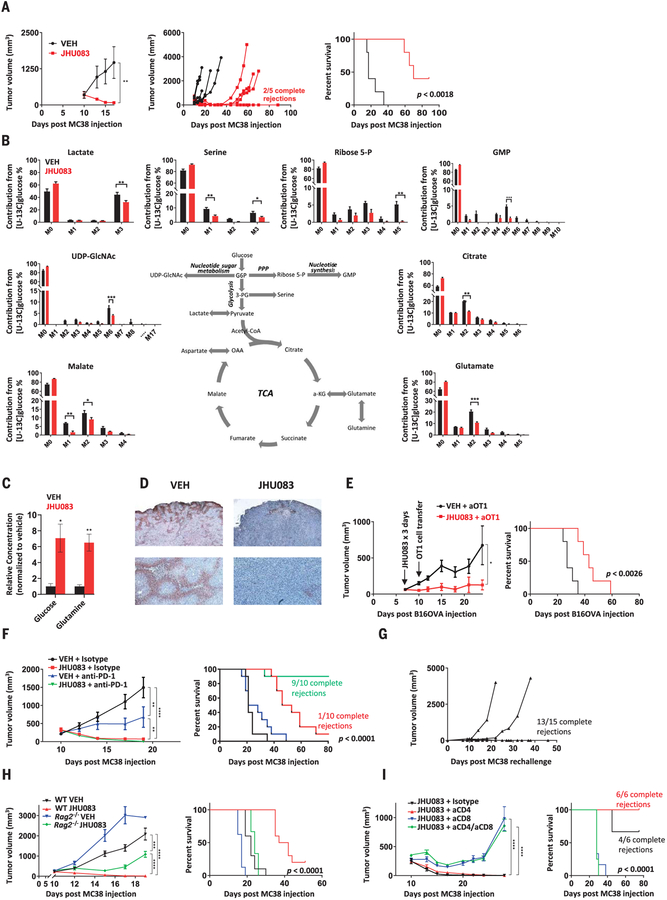
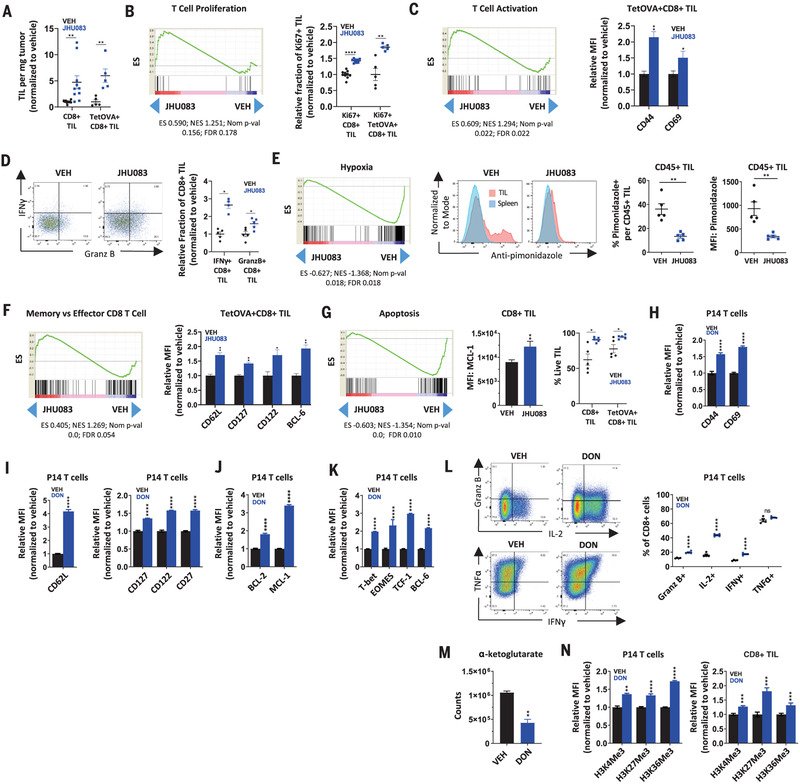
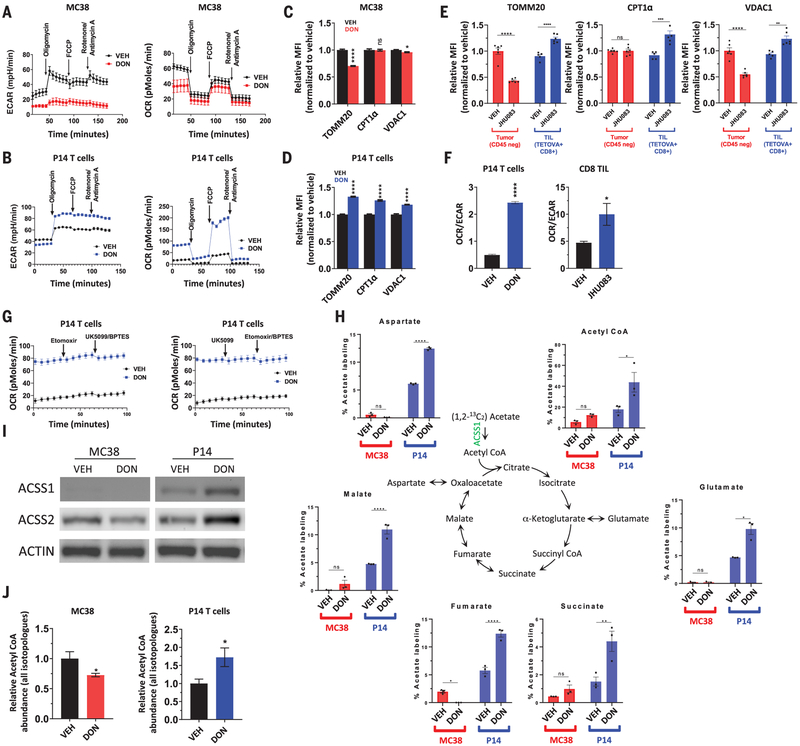
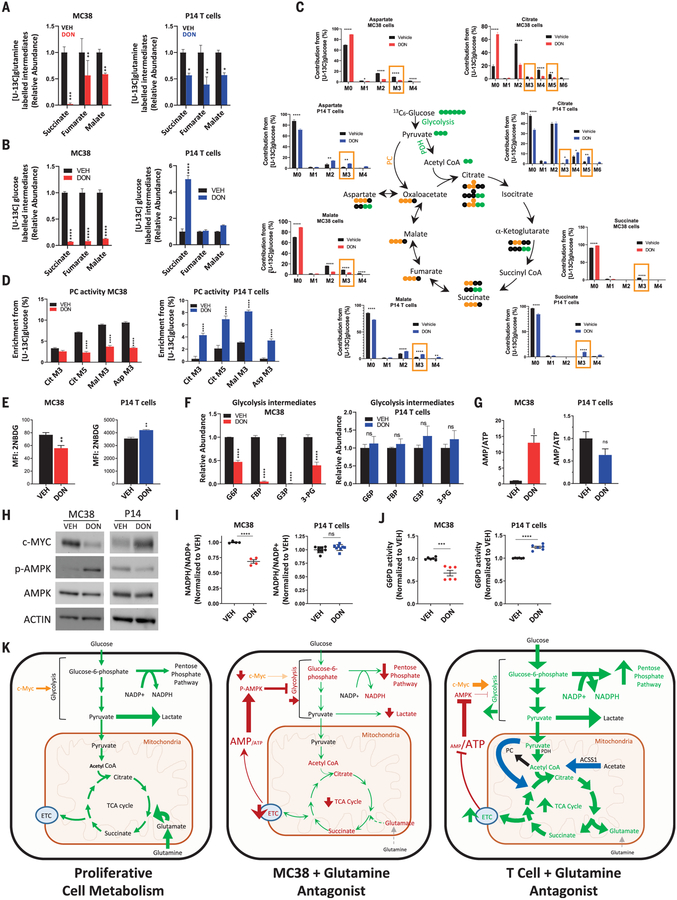
The metabolic characteristics of tumors present considerable hurdles to immune cell function and cancer immunotherapy. Using a glutamine antagonist, we metabolically dismantled the immunosuppressive microenvironment of tumors. We demonstrate that glutamine blockade in tumor-bearing mice suppresses oxidative and glycolytic metabolism of cancer cells, leading to decreased hypoxia, acidosis, and nutrient depletion. By contrast, effector T cells responded to glutamine antagonism by markedly up-regulating oxidative metabolism and adopting a long-lived, highly activated phenotype. These divergent changes in cellular metabolism and programming form the basis for potent antitumor responses. Glutamine antagonism therefore exposes a previously undefined difference in metabolic plasticity between cancer cells and effector T cells that can be exploited as a "metabolic checkpoint" for tumor immunotherapy.
Copyright © 2019 The Authors, some rights reserved; exclusive licensee American Association for the Advancement of Science. No claim to original U.S. Government Works.
Conflict of interest statement
Figures
Comment in
-
T cell flexibility points to a metabolic checkpoint for cancer therapy.Nat Rev Immunol. 2020 Jan;20(1):2-3. doi: 10.1038/s41577-019-0256-y. Nat Rev Immunol. 2020. PMID: 31784671 No abstract available.
-
Cancer cells' loss is T cells' gain.Nat Rev Drug Discov. 2020 Jan;19(1):21. doi: 10.1038/d41573-019-00203-8. Nat Rev Drug Discov. 2020. PMID: 31907424 No abstract available.
References
-
- Frauwirth KA et al. , Immunity 16, 769–777 (2002). - PubMed
Publication types
MeSH terms
Substances
Grants and funding
LinkOut - more resources
Full Text Sources
Other Literature Sources
Molecular Biology Databases
