


Isolation and structural characterization of a Zn2+-bound single-domain antibody against NorC, a putative multidrug efflux transporter in bacteria
- PMID: 31699895
- PMCID: PMC6952597
- DOI: 10.1074/jbc.RA119.010902
Isolation and structural characterization of a Zn2+-bound single-domain antibody against NorC, a putative multidrug efflux transporter in bacteria
Abstract
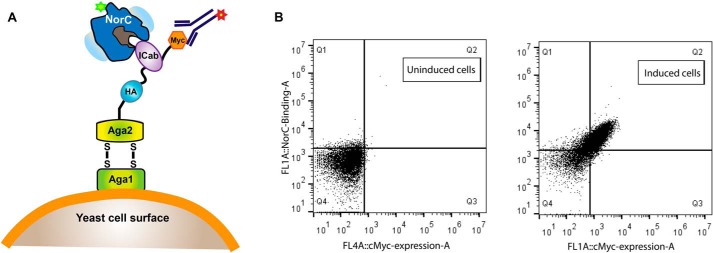
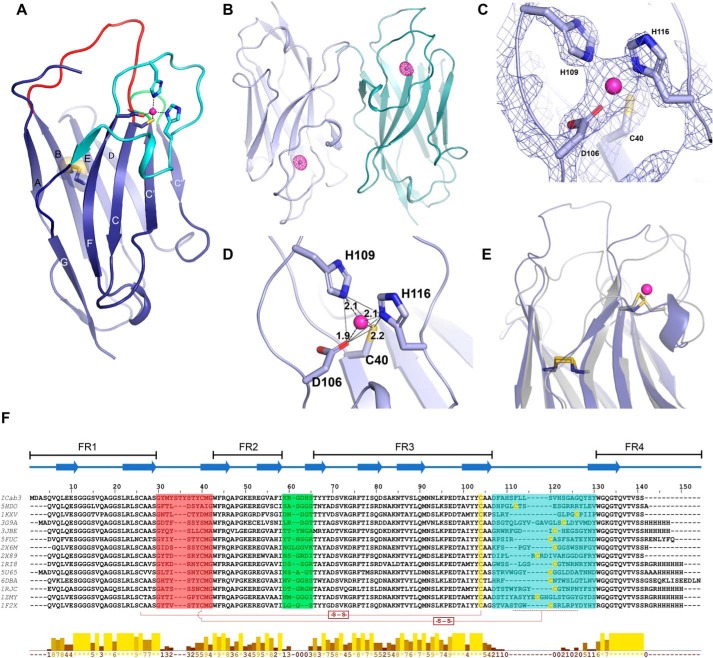
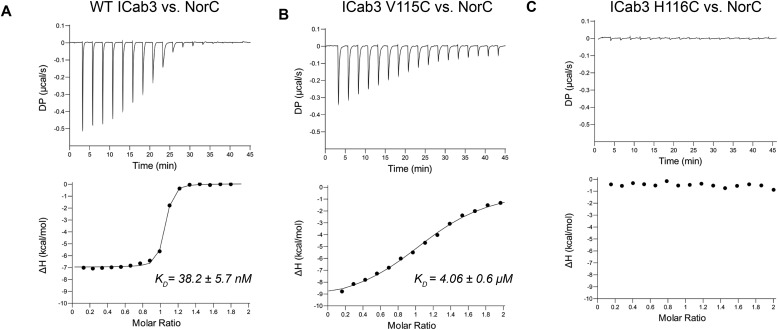
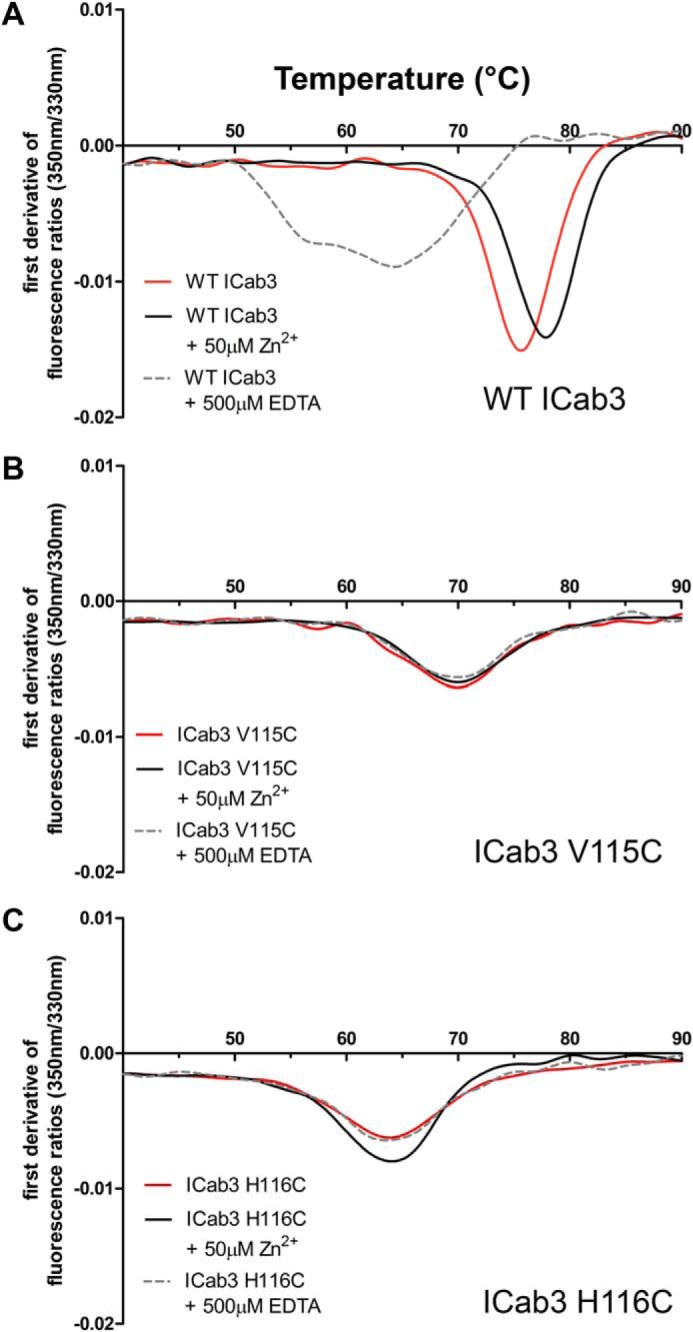
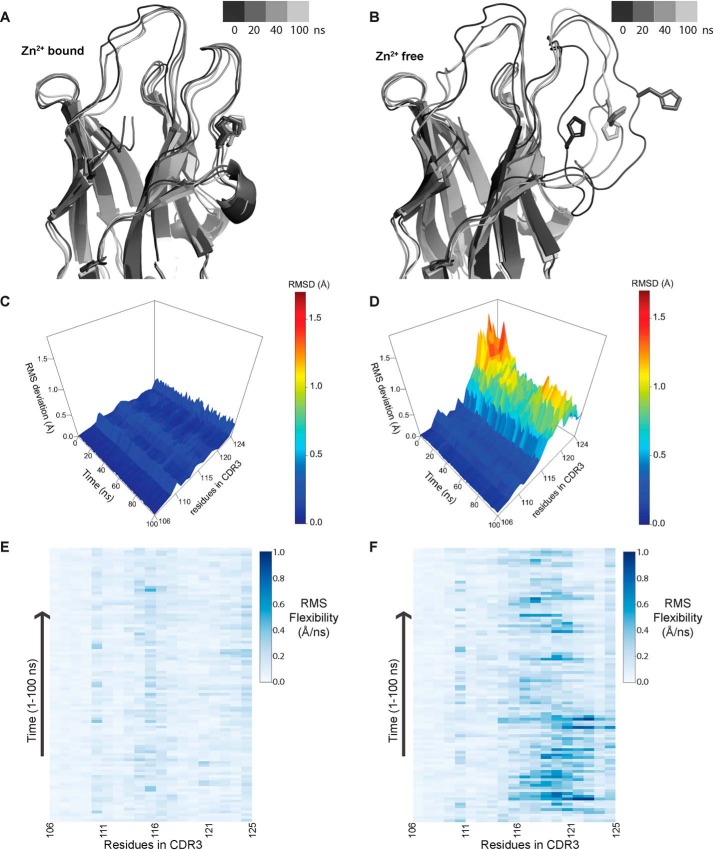
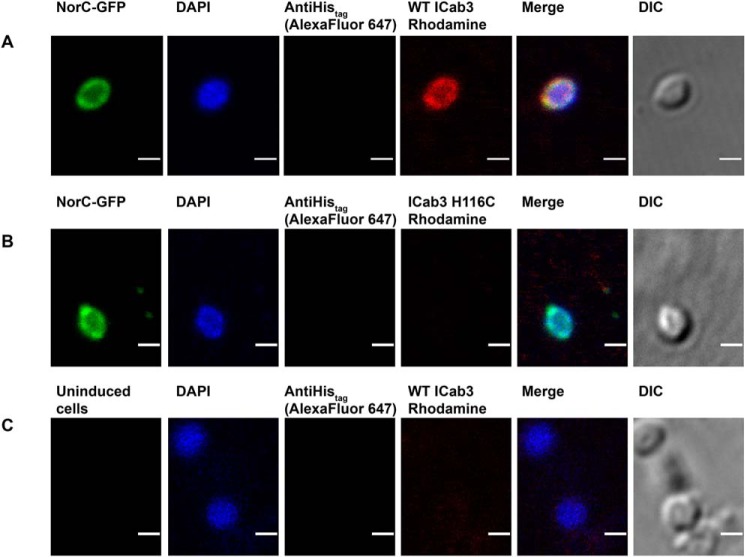
Single-chain antibodies from camelids have served as powerful tools ranging from diagnostics and therapeutics to crystallization chaperones meant to study protein structure and function. In this study, we isolated a single-chain antibody from an Indian dromedary camel (ICab) immunized against a bacterial 14TM helix transporter, NorC, from Staphylococcus aureus We identified this antibody in a yeast display screen built from mononuclear cells isolated from the immunized camel and purified the antibody from Escherichia coli after refolding it from inclusion bodies. The X-ray structure of the antibody at 2.15 Å resolution revealed a unique feature within its CDR3 loop, which harbors a Zn2+-binding site that substitutes for a loop-stabilizing disulfide bond. We performed mutagenesis to compromise the Zn2+-binding site and observed that this change severely hampered antibody stability and its ability to interact with the antigen. The lack of bound Zn2+ also made the CDR3 loop highly flexible, as observed in all-atom simulations. Using confocal imaging of NorC-expressing E. coli spheroplasts, we found that the ICab interacts with the extracellular surface of NorC. This suggests that the ICab could be a valuable tool for detecting methicillin-resistant S. aureus strains that express efflux transporters such as NorC in hospital and community settings.
Keywords: MRSA diagnosis; NorC; X-ray crystallography; antimicrobial efflux; camelid antibody; drug resistance; efflux pump; isothermal titration calorimetry (ITC); major facilitator superfamily (MFS); multidrug transporter; single-domain antibody (sdAb, nanobody); zinc.
© 2020 Kumar et al.
Conflict of interest statement
The authors declare that they have no conflicts of interest with the contents of this article
Figures
References
Publication types
MeSH terms
Substances
Associated data
- Actions
- Actions
- Actions
- Actions
Grants and funding
LinkOut - more resources
Full Text Sources
