


Global mycorrhizal plant distribution linked to terrestrial carbon stocks
- PMID: 31700000
- PMCID: PMC6838125
- DOI: 10.1038/s41467-019-13019-2
Global mycorrhizal plant distribution linked to terrestrial carbon stocks
Abstract
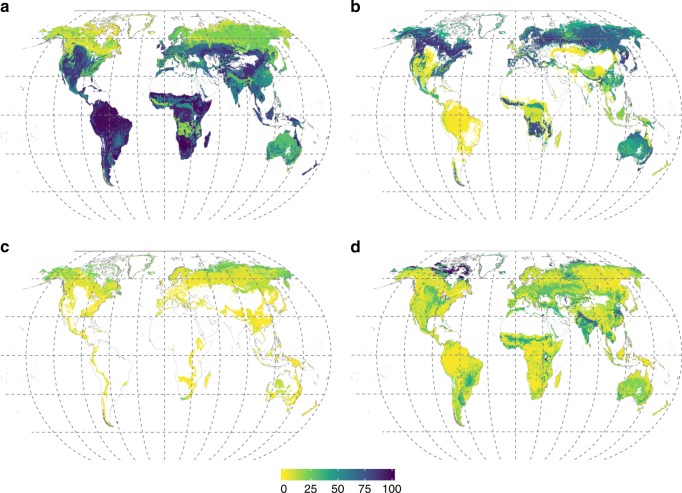
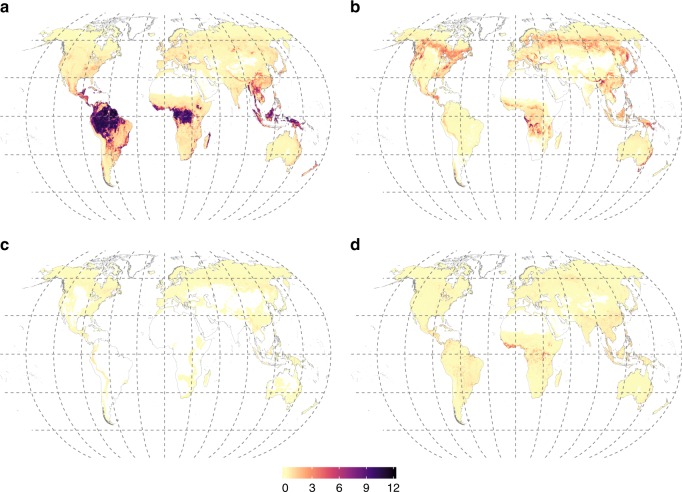
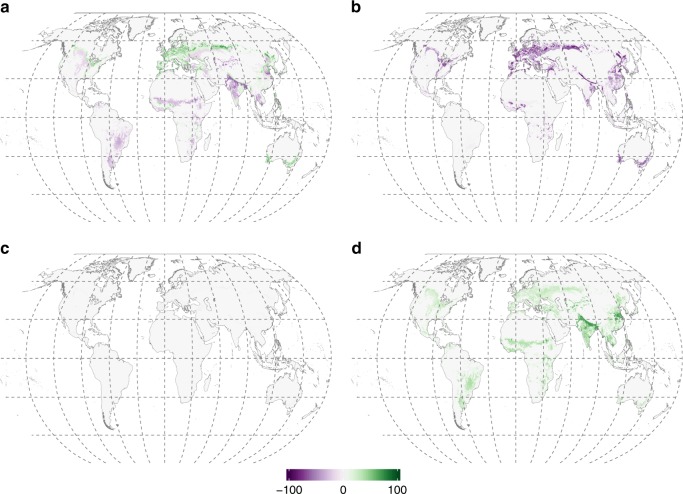
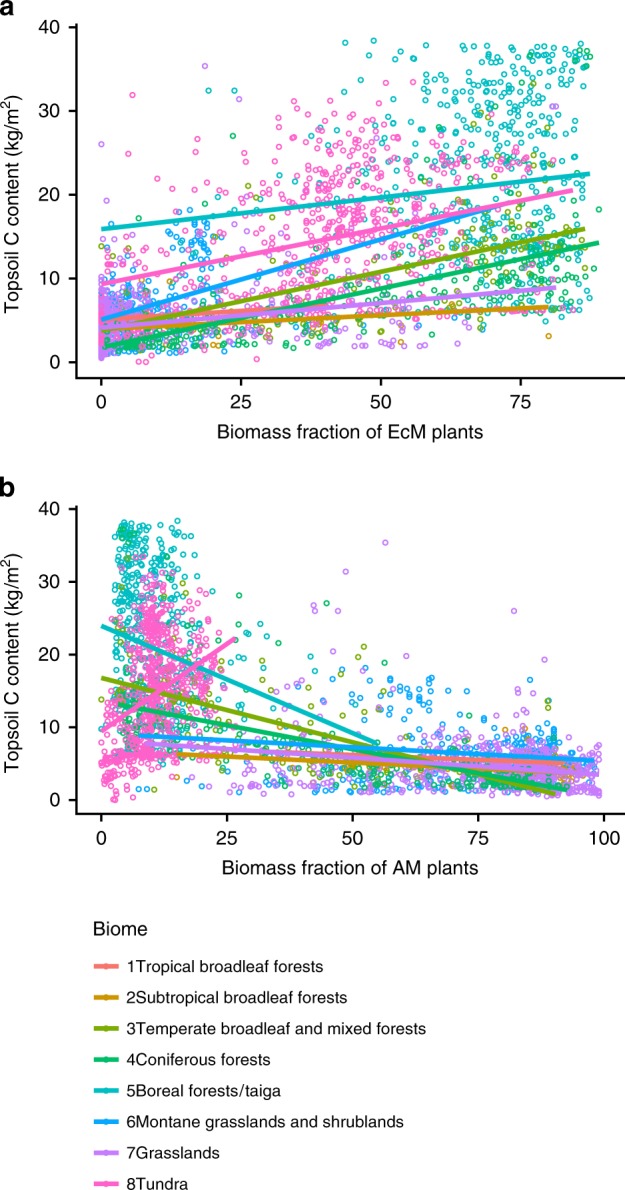
Vegetation impacts on ecosystem functioning are mediated by mycorrhizas, plant-fungal associations formed by most plant species. Ecosystems dominated by distinct mycorrhizal types differ strongly in their biogeochemistry. Quantitative analyses of mycorrhizal impacts on ecosystem functioning are hindered by the scarcity of information on mycorrhizal distributions. Here we present global, high-resolution maps of vegetation biomass distribution by dominant mycorrhizal associations. Arbuscular, ectomycorrhizal, and ericoid mycorrhizal vegetation store, respectively, 241 ± 15, 100 ± 17, and 7 ± 1.8 GT carbon in aboveground biomass, whereas non-mycorrhizal vegetation stores 29 ± 5.5 GT carbon. Soil carbon stocks in both topsoil and subsoil are positively related to the community-level biomass fraction of ectomycorrhizal plants, though the strength of this relationship varies across biomes. We show that human-induced transformations of Earth's ecosystems have reduced ectomycorrhizal vegetation, with potential ramifications to terrestrial carbon stocks. Our work provides a benchmark for spatially explicit and globally quantitative assessments of mycorrhizal impacts on ecosystem functioning and biogeochemical cycling.
Conflict of interest statement
The authors declare no competing interests.
Figures
References
-
- Smith, S. E. & Read, D. J. Mycorrhizal Symbiosis (Academic Press, 2008).
-
- Brundrett MC. Mycorrhizal associations and other means of nutrition of vascular plants: understanding the global diversity of host plants by resolving conflicting information and developing reliable means of diagnosis. Plant Soil. 2009;320:37–77. doi: 10.1007/s11104-008-9877-9. - DOI
-
- Read DJ. Mycorrhizas in ecosystems. Experientia. 1991;47:376–391. doi: 10.1007/BF01972080. - DOI
-
- Brundrett MC. Mycorrhizas in natural ecosystems. Adv. Ecol. Res. 1991;21:171–313. doi: 10.1016/S0065-2504(08)60099-9. - DOI
-
- Leake JR, et al. Networks of power and influence: the role of mycorrhizal mycelium in controlling plant communities and agroecosystem functioning. Can. J. Bot. 2004;82:1016–1045. doi: 10.1139/b04-060. - DOI
Publication types
MeSH terms
Substances
LinkOut - more resources
Full Text Sources
Other Literature Sources
Medical
Miscellaneous
