


Outcome of biological therapies in chronic antibiotic-refractory pouchitis: A retrospective single-centre experience
- PMID: 31700634
- PMCID: PMC6826521
- DOI: 10.1177/2050640619871797
Outcome of biological therapies in chronic antibiotic-refractory pouchitis: A retrospective single-centre experience
Abstract
Background: In limited retrospective series, infliximab, adalimumab and vedolizumab have demonstrated efficacy in chronic antibiotic-refractory pouchitis. Here, we report single-centre data of all biological therapies in refractory pouchitis.
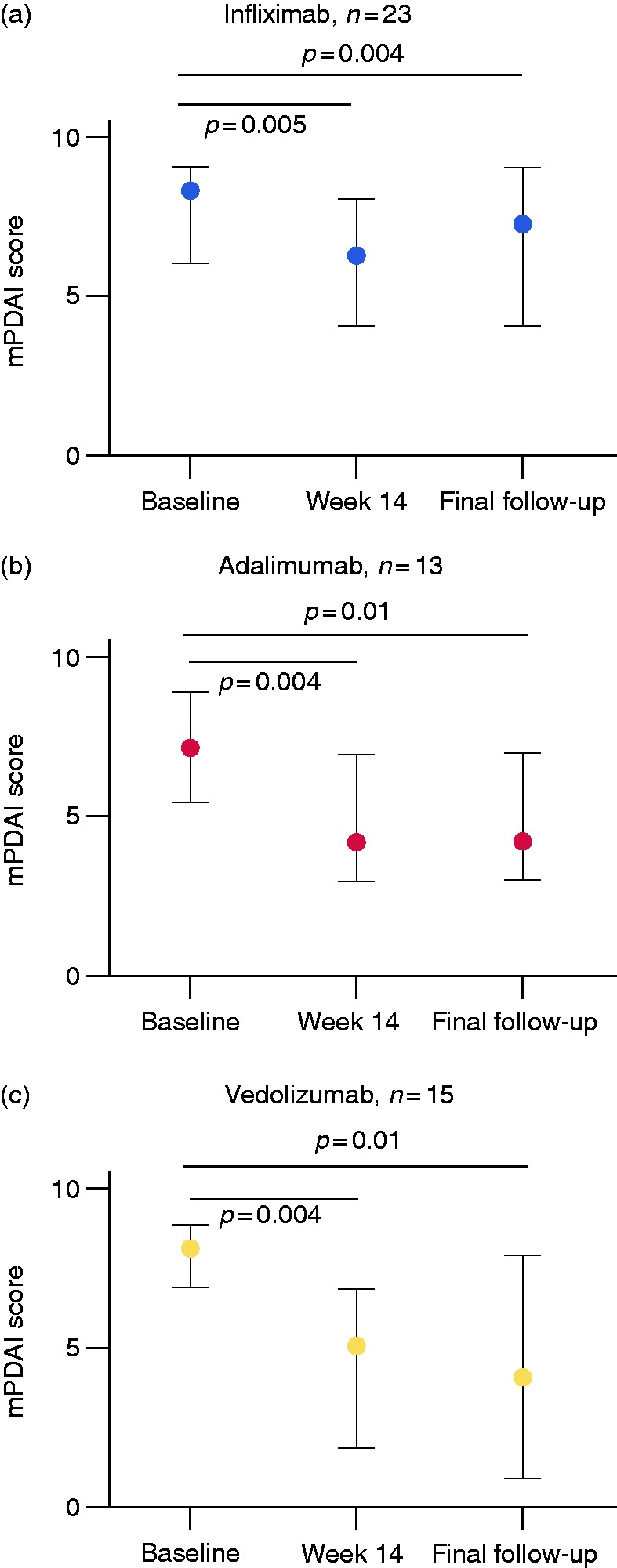
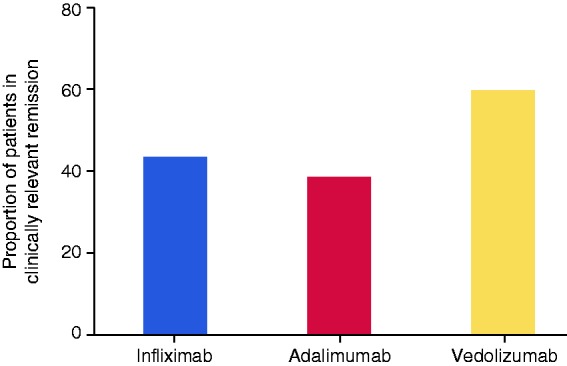
Methods: We retrospectively assessed all records from patients with ulcerative colitis and ileal pouch -anal anastomosis who received infliximab, adalimumab or vedolizumab for pouchitis. Clinically relevant remission, defined as a modified Pouchitis Disease Activity Index <5 and a reduction of modified Pouchitis Disease Activity Index ≥2 points from baseline, was assessed at week 14.
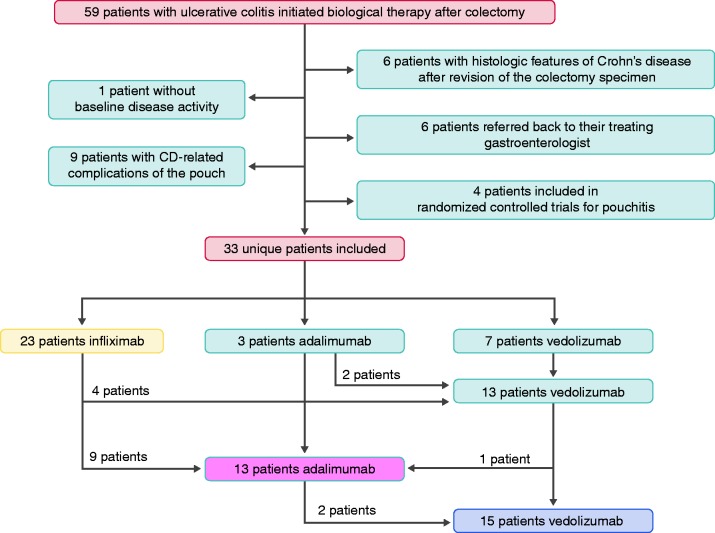
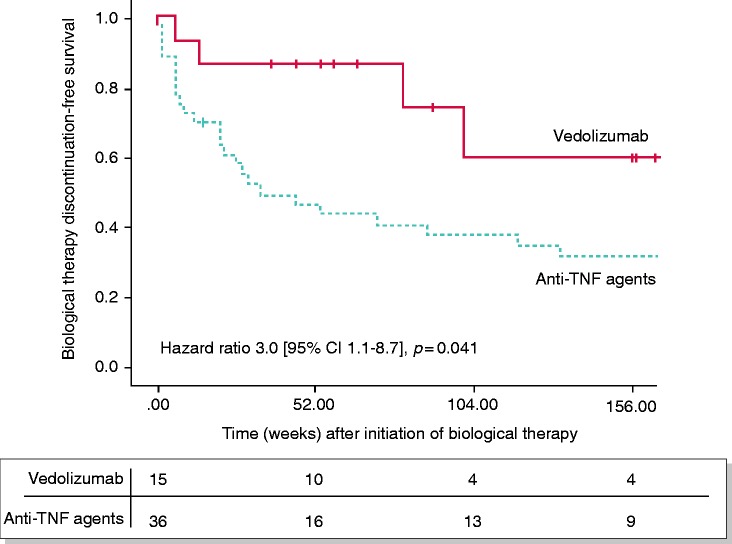
Results: Thirty-three unique patients were identified. Prior to colectomy, patients had been exposed to cyclosporine (n = 14), infliximab (n = 12), adalimumab (n = 3), and/or vedolizumab (n = 3). All developed chronic antibiotic-refractory pouchitis, for which they received infliximab (n = 23), adalimumab (n = 13) or vedolizumab (n = 15). Clinically relevant remission was observed in 43.5% of patients in the infliximab group, and in 38.5% and 60.0% in the adalimumab and vedolizumab group, respectively. In the long-term, significantly more patients continued vedolizumab compared to anti-tumour necrosis factor (anti-TNF) therapy (hazard ratio 3.0, p = 0.04). Adverse events (mainly infusion reactions) explained 40.7% of the patients discontinuing anti-TNF therapy, whereas discontinuation of vedolizumab was only related to insufficient efficacy. Four patients eventually required a permanent ileostomy.
Conclusion: In this case series of chronic antibiotic-refractory pouchitis, biological therapy was effective in the majority of patients and only a minority eventually required a permanent ileostomy. The use of anti-TNF agents was hampered by a high rate of adverse events, partly related to immunogenicity as some patients had been exposed to anti-TNF prior to colectomy. Vedolizumab was also efficacious and may provide a safe alternative in these chronic antibiotic-refractory pouchitis patients.
Keywords: Chronic pouchitis; adalimumab; biological therapy; infliximab; ulcerative colitis; vedolizumab.
© Author(s) 2019.
Figures
References
-
- Shen B. Acute and chronic pouchitis–pathogenesis, diagnosis and treatment. Nat Rev Gastroenterol Hepatol 2012; 9: 323–333. - PubMed
-
- Magro F, Gionchetti P, Eliakim R, et al. Third European Evidence-Based Consensus on Diagnosis and Management of Ulcerative Colitis. Part 1: Definitions, diagnosis, extra-intestinal manifestations, pregnancy, cancer surveillance, surgery, and ileo-anal pouch disorders. J Crohns Colitis 2017. Jun 1; 1(6): 649–670. doi: 10.1093/ecco-jcc/jjx008. - PubMed
-
- Zittan E, Wong-Chong N, Ma GW, et al. Modified two-stage ileal pouch-anal anastomosis results in lower rate of anastomotic leak compared with traditional two-stage surgery for ulcerative colitis. J Crohns Colitis 2016; 10: 766–772. - PubMed
-
- Germain A, de Buck van Overstraeten A, Wolthuis A, et al. Outcome of restorative proctocolectomy with an ileo-anal pouch for ulcerative colitis: Effect of changes in clinical practice. Colorectal Dis 2018; 20: O30–O38. - PubMed
-
- de Buck van Overstraeten A, Wolthuis AM, Vermeire S, et al. Long-term functional outcome after ileal pouch anal anastomosis in 191 patients with ulcerative colitis. J Crohns Colitis 2014; 8: 1261–1266. - PubMed
MeSH terms
Substances
LinkOut - more resources
Full Text Sources
