


The chemical constituents and diverse pharmacological importance of Tinospora cordifolia
- PMID: 31701036
- PMCID: PMC6827274
- DOI: 10.1016/j.heliyon.2019.e02437
The chemical constituents and diverse pharmacological importance of Tinospora cordifolia
Abstract
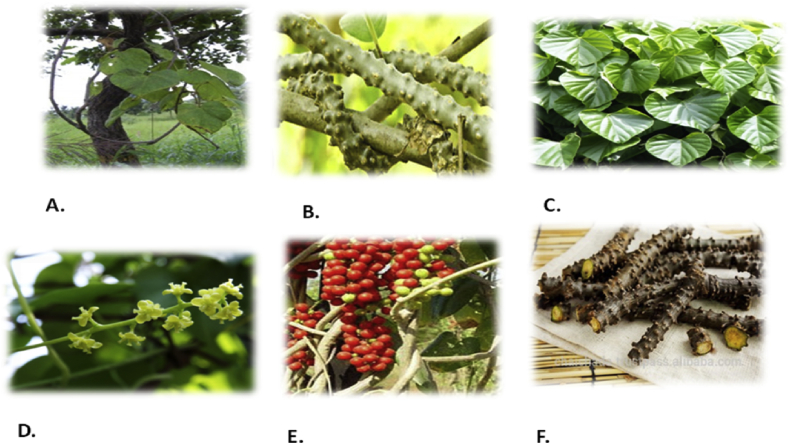
Tinospora cordifolia is a popular medicinal plant which is used in several traditional medicines to cure various diseases. The common names are Amrita and Guduchi and belong to the family of Menispermaceae. It is considered an essential herbal plant of Indian system of medicine (ISM) and has been used in the treatment of fever, urinary problem, dysentery, skin diseases leprosy, diabetes, and many more diseases. The plant reported containing chemical compound including Alkaloids, Terpenoids, Lignans, Steroids and others that establish the phytochemistry and pharmacological activity of Tinospora cordifolia. The present review highlights the pharmacological importance viz antioxidant activity, antimicrobial activity, antibacterial activity, antifungal activity, anti-diabetic activity, antistress activity, hypolipidaemic effect, hepatic disorder, anticancer anti HIV potential, antiosteoporotic effects, antitoxic effects, wound healing, anticomplementary activity, and immunomodulating activity, systemic infection and Parkinson's disease.
Keywords: Chemical constituent; Menispermaceae; Natural product chemistry; Pharmaceutical chemistry; Pharmaceutical science; Pharmacognostic description; Pharmacological activity; Tinospora cordifolia.
© 2019 Published by Elsevier Ltd.
Figures


References
-
- Olabiyi A.S., Nkemehule F.E., Odukoya O.A., Samuel T.A., Ogbonnia S.O. Inhibition of glycosylation as an index of activity in plants with antidiabetic potentials. Biochem. Pharmacol. 2013;2:181.
-
- Singletary K. Turmeric: an overview of potential health benefits. Nutr. Today. 2010;45:216–225.
-
- Pooja A., Nagesh L. Murlikrishnan, Evaluation of the antimicrobial activity of various concentrations of tulsi (Ocimum sanctum) extracts against Streptococcus mutans: an in-vitro study. Indian J. Dent. Res. 2010;21:357–359. - PubMed
Publication types
LinkOut - more resources
Full Text Sources
Other Literature Sources
