


Incisional negative pressure wound therapy for the prevention of surgical site infection after open lower limb revascularization - Rationale and design of a multi-center randomized controlled trial
- PMID: 31701043
- PMCID: PMC6831708
- DOI: 10.1016/j.conctc.2019.100469
Incisional negative pressure wound therapy for the prevention of surgical site infection after open lower limb revascularization - Rationale and design of a multi-center randomized controlled trial
Abstract
Introduction: Lower limb revascularization with inguinal incisions is a common vascular surgical procedure. Due to risk of injury to lymphatic vessels and a diverse bacterial flora in the groin, surgical site infections (SSI) represent a common and sometimes life-threatening complication. While transverse incisions in endovascular aneurysm repair has a low SSI rate, vertical incisions in thrombendarterectomy (TEA) has a higher risk and bypass the highest risk. This randomized controlled trial (RCT) will investigate the protective role of negative pressure wound therapy (NPWT) on closed inguinal incisions in elective vascular surgery undergoing TEA and bypass procedures, respectively, to prevent SSI.
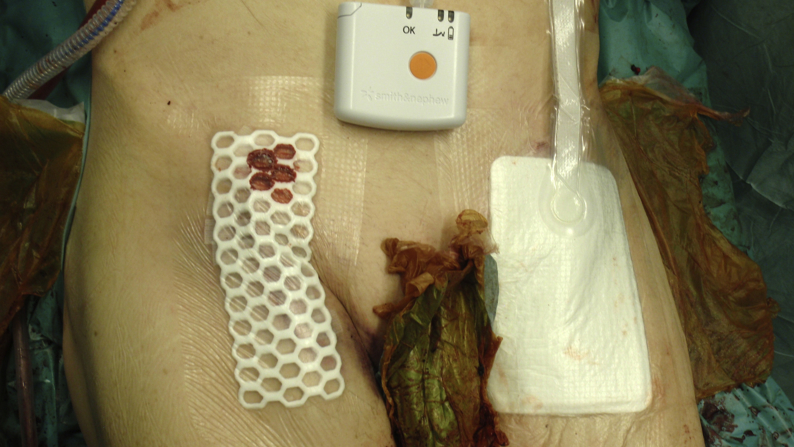
Methods: This RCT registered at ClinicalTrials.gov (Identifier: NCT01913132) compares the effects of a NPWT dressing (PICO™, Smith & Nephew, UK) to standard wound dressing on postoperative SSI. The multi-center study includes two distinct vascular procedures with different SSI risk profiles: TEA and lower limb bypass. Three hundred and fifty-eight groin incisions are anticipated to be included in the TEA group and 133 inguinal incisions in the bypass group. Bilateral inguinal incisions will be randomized to NPWT in one groin and control dressing in the contralateral groin, and this dependency was accounted for in sample size calculation and will be addressed in data analysis.
Discussion: This RCT attempts to evaluate the potential benefit of NPWT on closed inguinal incisions after two distinct vascular procedures at high risk of SSI. Outcome of this trial could have implications on postoperative wound care in both vascular and non-vascular surgical patients.
Keywords: Bypass; Lower limb revascularization; Negative pressure wound therapy; Study protocol; Surgical site infection; Thrombendarterectomy.
© 2019 The Author(s).
Conflict of interest statement
None.
Figures
References
-
- Sandmann W. How to avoid lymphatic wound complications after vascular groin surgery. Eur. J. Vasc. Endovasc. Surg. 2016;52:263. - PubMed
-
- Bandyk D. Vascular surgical site infection: risk factors and preventive measures. Semin. Vasc. Surg. 2008;21:119–123. - PubMed
-
- Turtiainen J., Saimanen E., Partio T. Surgical wound infections after vascular surgery: prospective multicenter observational study. Scand. J. Surg. 2010;99:167–172. - PubMed
Associated data
LinkOut - more resources
Full Text Sources
Medical
