. 2019 Nov 8;9(1):16303.
doi: 10.1038/s41598-019-52791-5.

Long-distance transmission of pathogenic Vibrio species by migratory waterbirds: a potential threat to the public health

Affiliations

Long-distance transmission of pathogenic Vibrio species by migratory waterbirds: a potential threat to the public health

Songzhe Fu et al. Sci Rep. .

Abstract

A potential mechanism for the global distribution of waterborne pathogens is through carriage by the migratory waterbirds. However, this mode of transmission has yet been confirmed epidemiologically. Here, we conducted whole genome sequencing of Vibrio spp. collected from waterbirds, sediments, and mollusks in the estuary of the Liaohe River in China to investigate this transmission mode. We found that a V. parahaemolyticus strain isolated from a waterbird was clonally related to the other V. parahaemolyticus strains obtained from the sediments and mollusks, and three V. mimicus strains isolated from bird feces were genomically related to those found in the mollusks and upstream groundwater, suggesting that the bird-carried Vibrio strains were acquired through the direct predation of the local mollusks. Surprisingly, two bird-carried V. parahaemolyticus strains belonging to the same clone were identified in Panjin and Shanghai, which are over 1,150 km apart, and another two were found at two locations 50 km apart, further supporting that waterbirds are capable of carrying and disseminating these pathogens over long distances. Our results provide the first evidence of direct transmission from mollusks to waterbirds and confirm that waterbirds act as disseminating vehicles of waterborne pathogens. Effective surveillance of migratory waterbirds along their routes will be valuable for predicting future epidemics of infectious diseases.


Conflict of interest statement

The authors declare no competing interests.

Figures
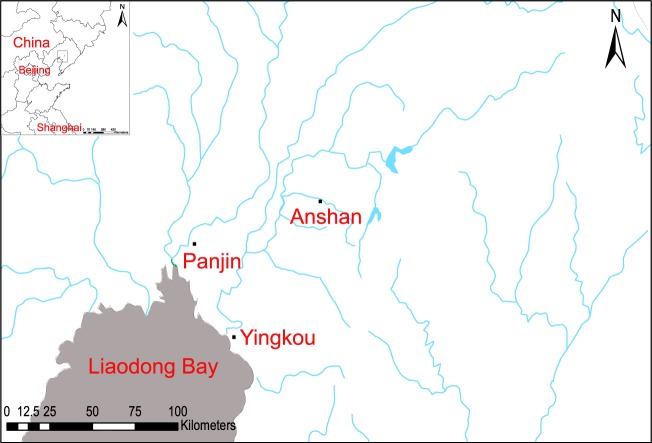
Figure 1
Figure 1
Sampling sites in this study. The sampling positions in Anshan, Panjin, and Yingkou are indicated in the square. The sampling sites were mapped by the ArcGIS Desktop 10.2 software (http://desktop.arcgis.com/).
Figure 2
Figure 2
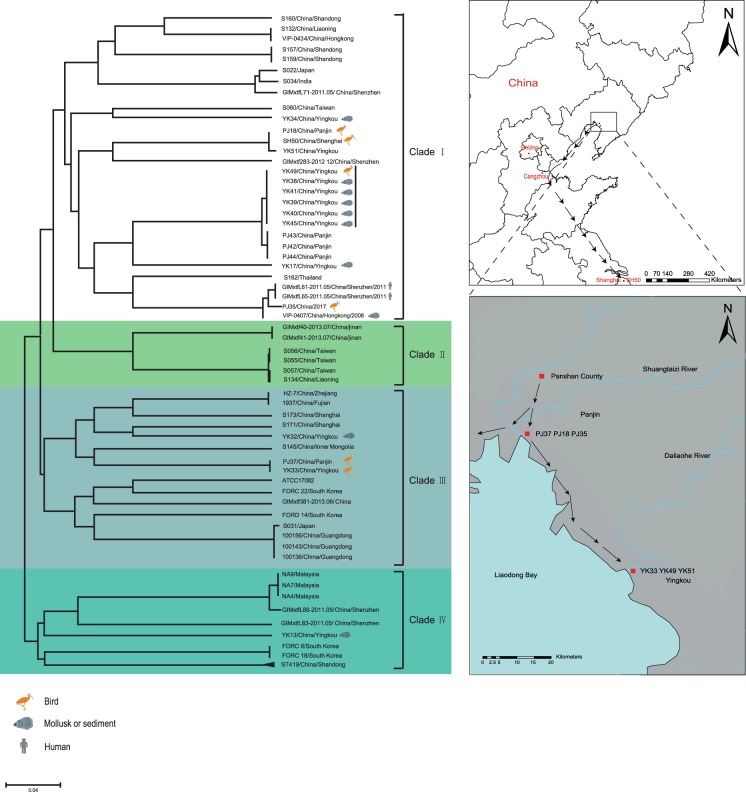
Geophylogeny of V. parahaemolyticus genomes and the migration route of the common greenshank from Panjin to Yingkou in autumn. left: maximum likelihood phylogenies of 66 V. parahaemolyticus genomes. Bootstrapping was performed with 1,000 replicates. Right: The isolation sites of bird-carried V. parahaemolyticus. The sampling sites were mapped by the ArcGIS Desktop 10.2 software (http://desktop.arcgis.com/). Precise migration route of the common greenshank from Panjin to Yingkou in autumn 2017 is indicated in arrows.
Figure 3
Figure 3
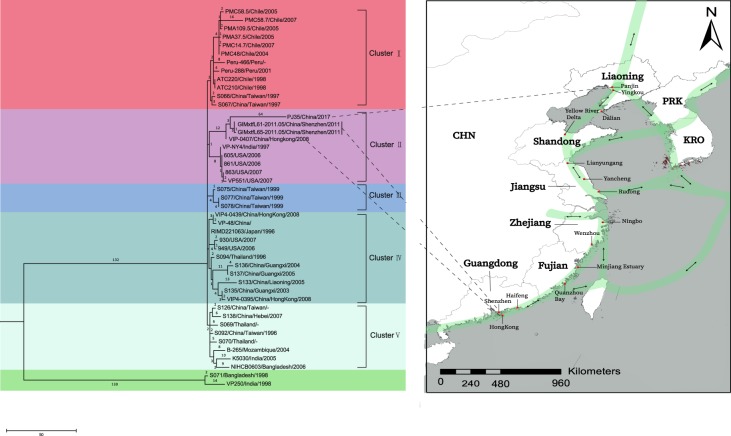
The divergence of 44 ST3 V. parahaemolyticus genomes. Left: maximum parsimony tree of 44 ST3 V. parahaemolyticus genomes. Homoplasy index (HI) was 0.0 for the maximum parsimony tree. The numbers above the branches indicate the numbers of SNPs. Right: migration route of the common greenshank, with stopovers at Shenzhen, Haifeng, Quanzhou Bay, Minjiang Estuary, Rudong, Yancheng, Lianyungang, Yellow River Delta, Yingkou, and Panjin. The sampling sites were mapped by the ArcGIS Desktop 10.2 software (http://desktop.arcgis.com/).
Figure 4
Figure 4
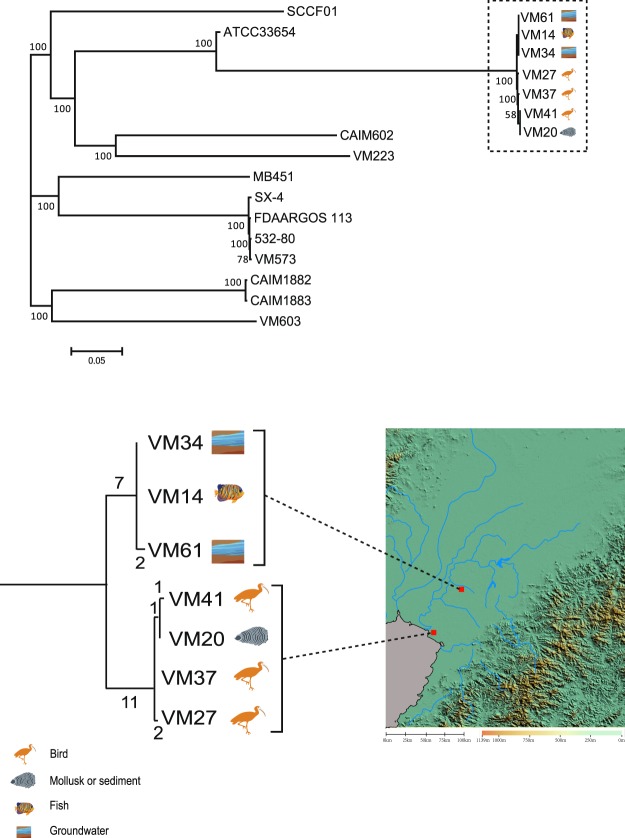
Phylogenetic relationships of V. mimicus strains. Top: Maximum-likelihood phylogenies of 24 V. mimicus strains. The bootstrap was performed with 1000 replicates. The unit of the scale bar indicates the evolutionary distance in substitutions per nucleotide. Down: Geophylogeny of seven sequenced V. mimicus strains. The numbers above the branches indicate the numbers of SNPs. Locations of the strains obtained from Anshan and Yingkou are indicated on the right side. The satellite imagery of the investigated region was created by Global Mapper v20 (http://www.bluemarblegeo.com/products/global-mapper.php).
Figure 5
Figure 5
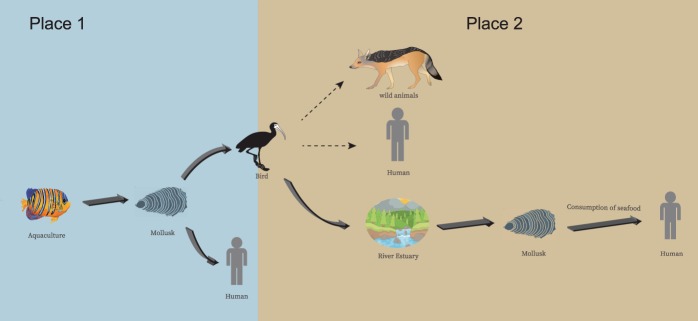
Possible spread of Vibrio species from mollusks to migratory waterbird.

References

    1. Bonninjusserand M, et al. Vibrio species involved in seafood-borne outbreaks (Vibrio cholerae, V. parahaemolyticus and V. vulnificus): review of microbiological versus recent molecular detection methods in seafood products. Crit. Rev. Food. Sci. Nutr. 2017;28:1–14. - PubMed
    1. Letchumanan V, Yin WF, Lee LH, Chan KG. Prevalence and antimicrobial susceptibility of Vibrio parahaemolyticus isolated from retail shrimps in Malaysia. Front. Microbiol. 2015;6:33. - PMC - PubMed
    1. Scallan E, et al. Foodborne illness acquired in the United States—major pathogens. Emerg. Infect. Dis. 2011;17:7–15. doi: 10.3201/eid1701.P11101. - DOI - PMC - PubMed
    1. Nair GB, et al. Global dissemination of Vibrio parahaemolyticus serotype O3:K6 and its serovariants. Clin. Microbiol. Rev. 2007;20:39. doi: 10.1128/CMR.00025-06. - DOI - PMC - PubMed
    1. Gil AI, et al. O3:K6 serotype of Vibrio parahaemolyticus identical to the global pandemic clone associated with diarrhea in Peru. Int. J. Infect. Dis. 2007;11:324–8. doi: 10.1016/j.ijid.2006.08.003. - DOI - PubMed

Publication types

LinkOut - more resources