


Appeal of JUUL among adolescents
- PMID: 31706249
- PMCID: PMC7307218
- DOI: 10.1016/j.drugalcdep.2019.107691
Appeal of JUUL among adolescents
Abstract
Introduction: JUUL is a closed-system e-cigarette that uses disposable pods with high concentrations of nicotine. JUUL use among youth arose exponentially since 2015, thus, it is essential to understand youths' reasons for liking/disliking JUUL to inform the regulation of the product.
Methods: A cross-sectional survey was conducted in 4 high schools in Connecticut in 2018 (N = 3170). The survey assessed JUUL use in the past month and reasons for liking/disliking JUUL, which included pharmacological effects (e.g., subjective nicotine and/or flavor effects), product characteristics (e.g., flavors, nicotine, shape), peer influence (e.g., friends' use), comparisons to other e-cigarettes (e.g., lower harm), and concealability (e.g., hide from authority).
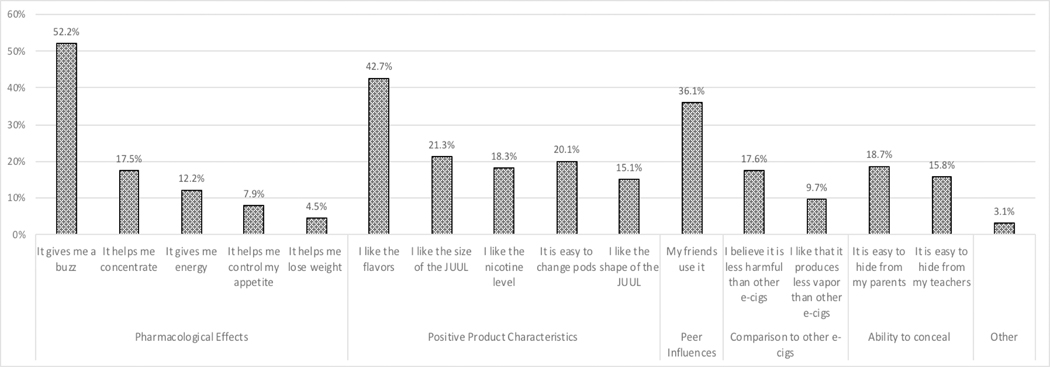
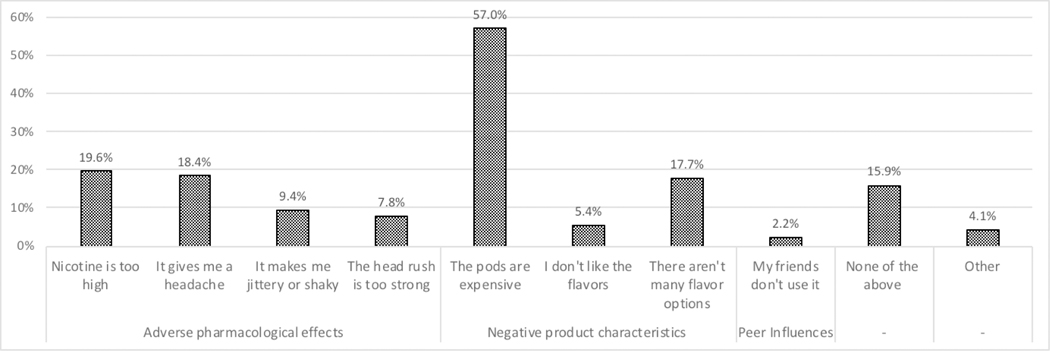
Results: 30.2% (N = 956) were past-month users who used a JUUL on an average of 13.6 days (SD = 11.7; 25% reported daily use). The top reasons for liking JUUL were: "it gives me a buzz" (52%), "I like the flavors" (43%), and "my friends use it" (36%). The top reasons for disliking JUUL were: "the pods are expensive" (57%), "nicotine is too high" (20%), and "it gives me a headache" (18%). Regression models indicated that liking JUUL because of the buzz, ability to help concentrate, nicotine level, and ease of hiding it from teachers were associated with more days of use in the past month, while peer influence was negatively associated. Furthermore, disliking the high cost of pods was associated with more frequent use.
Conclusions: Comprehensive policies that regulate device characteristics that appeal to youth (e.g., nicotine level, flavors) are needed to prevent JUUL use among youth.
Keywords: Appeal; E-cigarettes; Prevention; Regulation; Youth.
Copyright © 2019 Elsevier B.V. All rights reserved.
Conflict of interest statement
Conflict of Interest
Dr. Morean consults for Gofire, Inc with a restricted stock agreement. All other co-authors have no financial relationships relevant to this article to disclose.
Figures
References
-
- Carpenter C, Cook PJ, 2008. Cigarette taxes and youth smoking: New evidence from national, state, and local Youth Risk Behavior Surveys. J Health Econ 27, 287–299. - PubMed
-
- Connecticut School Finance Project, 2016. http://ctschoolfinance.org/assets/uploads/files/DRGOne-Pager-FINAL.pdf.accessed on 5/15/19.
Publication types
MeSH terms
Substances
Grants and funding
LinkOut - more resources
Full Text Sources
Medical
Miscellaneous
