


TRIDENT-2: National Implementation of Genome-wide Non-invasive Prenatal Testing as a First-Tier Screening Test in the Netherlands
- PMID: 31708118
- PMCID: PMC6904791
- DOI: 10.1016/j.ajhg.2019.10.005
TRIDENT-2: National Implementation of Genome-wide Non-invasive Prenatal Testing as a First-Tier Screening Test in the Netherlands
Abstract
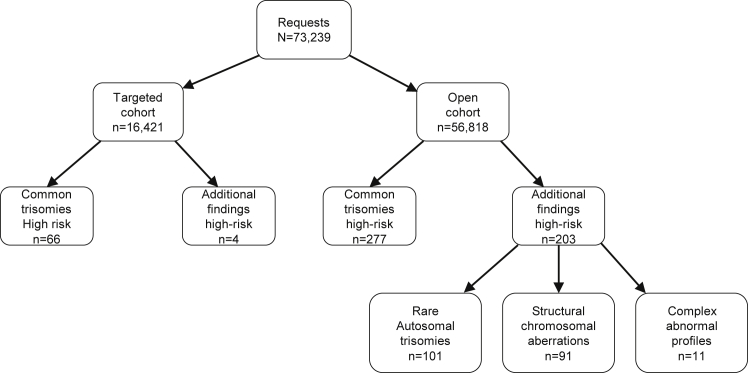
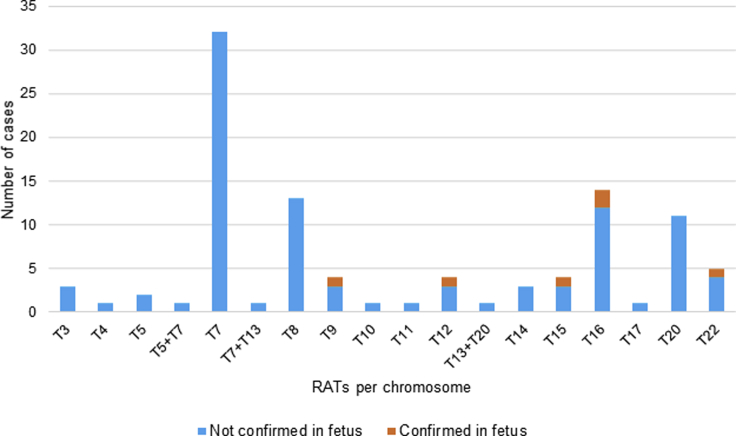
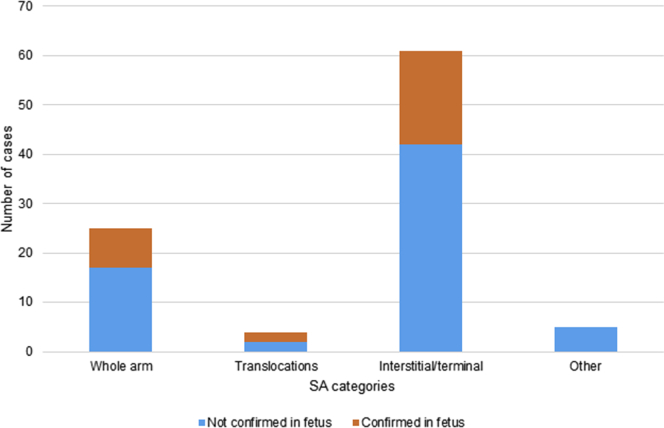
The Netherlands launched a nationwide implementation study on non-invasive prenatal testing (NIPT) as a first-tier test offered to all pregnant women. This started on April 1, 2017 as the TRIDENT-2 study, licensed by the Dutch Ministry of Health. In the first year, NIPT was performed in 73,239 pregnancies (42% of all pregnancies), 7,239 (4%) chose first-trimester combined testing, and 54% did not participate. The number of trisomies 21 (239, 0.33%), 18 (49, 0.07%), and 13 (55, 0.08%) found in this study is comparable to earlier studies, but the Positive Predictive Values (PPV)-96% for trisomy 21, 98% for trisomy 18, and 53% for trisomy 13-were higher than expected. Findings other than trisomy 21, 18, or 13 were reported on request of the pregnant women; 78% of women chose to have these reported. The number of additional findings was 207 (0.36%); these included other trisomies (101, 0.18%, PPV 6%, many of the remaining 94% of cases are likely confined placental mosaics and possibly clinically significant), structural chromosomal aberrations (95, 0.16%, PPV 32%,) and complex abnormal profiles indicative of maternal malignancies (11, 0.02%, PPV 64%). The implementation of genome-wide NIPT is under debate because the benefits of detecting other fetal chromosomal aberrations must be balanced against the risks of discordant positives, parental anxiety, and a potential increase in (invasive) diagnostic procedures. Our first-year data, including clinical data and laboratory follow-up data, will fuel this debate. Furthermore, we describe how NIPT can successfully be embedded into a national screening program with a single chain for prenatal care including counseling, testing, and follow-up.
Keywords: NIPS; NIPT; cfDNA; common trisomies; fetal trisomy; first tier test; genome-wide; implementation study; prenatal screening; rare autosomal trisomies.
Copyright © 2019 American Society of Human Genetics. Published by Elsevier Inc. All rights reserved.
Conflict of interest statement
The authors declare no competing interests.
Figures
References
Publication types
MeSH terms
LinkOut - more resources
Full Text Sources
Medical
Miscellaneous
