


Using teeth as tools: Investigating the mother-infant dyad and developmental origins of health and disease hypothesis using vitamin D deficiency
- PMID: 31709512
- PMCID: PMC7004071
- DOI: 10.1002/ajpa.23947
Using teeth as tools: Investigating the mother-infant dyad and developmental origins of health and disease hypothesis using vitamin D deficiency
Erratum in
-
Corrigendum: Using Teeth as Tools: Investigating the Mother-Infant Dyad and Developmental Origins of Health and Disease Hypothesis using Vitamin D Deficiency.Am J Phys Anthropol. 2021 Aug;175(4):948. doi: 10.1002/ajpa.24292. Epub 2021 May 11. Am J Phys Anthropol. 2021. PMID: 33973226 Free PMC article. No abstract available.
Abstract
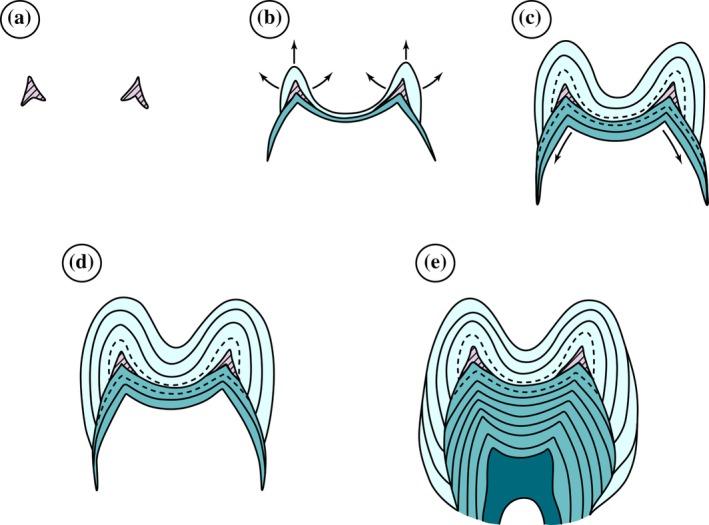
Objectives: With a growing interest in the mother-infant dyad and the Developmental Origins of Health and Disease hypothesis among biological and medical anthropologists, this study set out to provide all the information required to evaluate if mineralization defects in dentine might be caused by vitamin D deficiency in the critical first 1000 days of life.
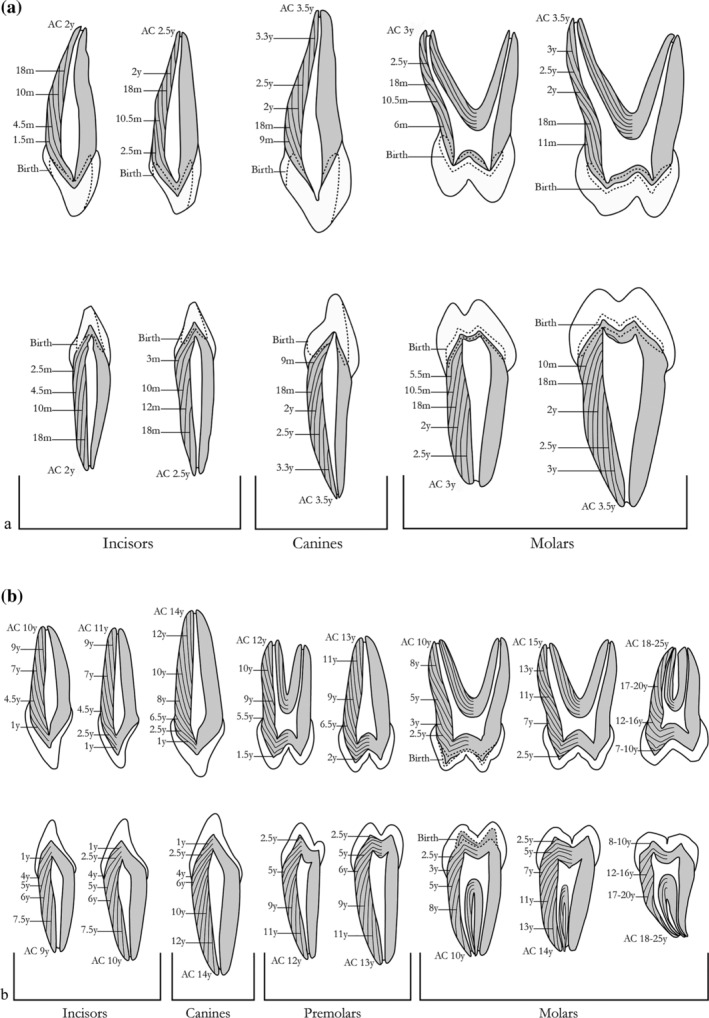
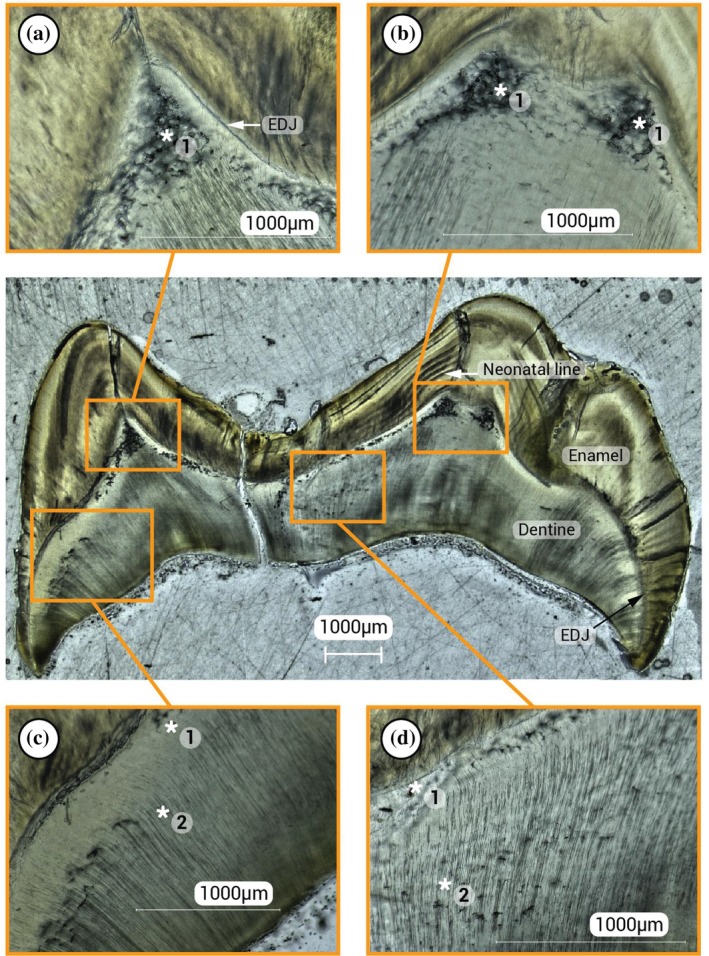
Materials and methods: Information was compiled on dentine formation in utero to approximately 18 years, and a method for determining the location of the neonatal line in dentine was devised, allowing the assessment of the prenatal and early life period. Re-evaluation of previously analyzed teeth (n = 61) was undertaken with detailed examination of n = 5/22 first permanent molars forming in the prenatal and critical early life periods.
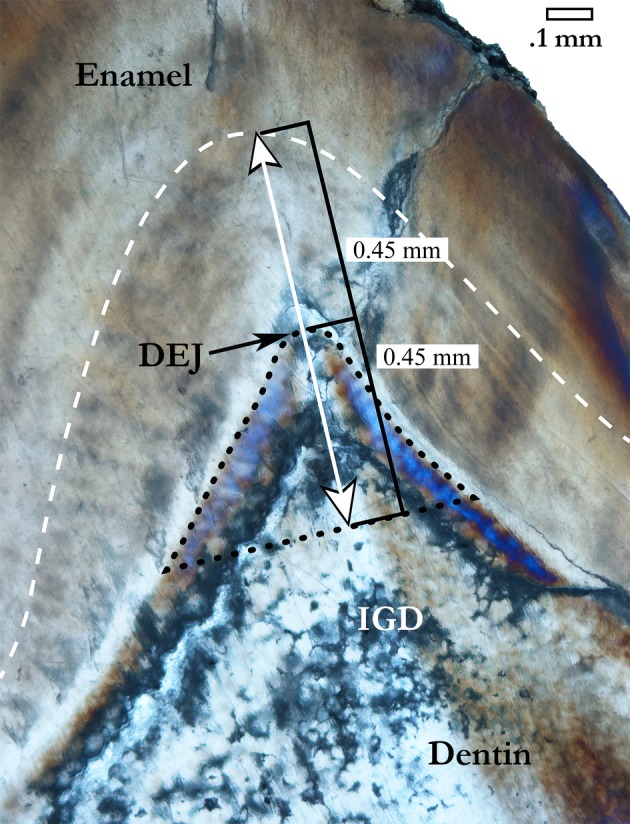
Results: First permanent molars and all deciduous teeth give information on intrauterine development and on the first 1000 days postnatally providing a direct window on maternal and fetal health. Three archaeological individuals had interglobular dentine that formed prenatally suggesting that their mothers experienced vitamin D deficiency at the time dentine was forming and all other individuals had a deficiency during the first 1000 days of life. Conditions that could cause systemic mineralization defects were determined, and in each, case they were found to be consistent with vitamin D deficiency.
Discussion: The neonatal line serves as a clear baseline for determining prenatal and postnatal events, particularly those related to vitamin D, calcium, and phosphate metabolism, and can be used to investigate the maternal-infant dyad for both past and present communities.
Keywords: interglobular dentine; maternal health; neonatal line; prenatal vitamin D deficiency.
© 2019 The Authors. American Journal of Physical Anthropology published by Wiley Periodicals, Inc.
Figures
References
-
- AlQahtani, S. J. (2008). Atlas of tooth development and eruption In Barts and the London School of Medicine and Dentistry. London, England: Queen Mary University of London.
-
- Ardissino, G. , Dacco, V. , Testa, S. , Bonaudo, R. , Claris‐Appiani, A. , Taioli, E. , … Sereni, F. (2003). Epidemiology of chronic renal failure in children: data from the ItalKid project. Pediatrics, 111(4), e382–e387. - PubMed
-
- Avery, J. K. (2002). Development of teeth and supporting structures In Oral Development and Histology (4th ed., pp. 95–106). New York, NY: Thieme Medical Publishers.
Publication types
MeSH terms
Grants and funding
- #29497/Ontario Research Fund Research Infrastructure (ORF-RI)/International
- Canada Foundation for Innovation John R. Evans Leaders Fund (CFI-JELF)/International
- N/A/Ontario Graduate Scholarship/International
- 767-2013-2678/SSHRC-CGS/International
- 231563/The Canada Research Chairs program/International
LinkOut - more resources
Full Text Sources
Medical
Miscellaneous
