


doi: 10.1016/j.burns.2019.10.017.
Epub 2019 Nov 9.
Recognizing the long-term sequelae of burns as a chronic medical condition
Affiliations
- PMID: 31711801
- PMCID: PMC9201554
- DOI: 10.1016/j.burns.2019.10.017
Item in Clipboard
Recognizing the long-term sequelae of burns as a chronic medical condition
Burns.
2020 Mar.
Abstract
As medicine continues to advance, many individuals are living longer with injuries previously considered life threatening. These individuals often face numerous long-term physical and psychological sequelae associated with their injury that persist through the course of their lives. Recently, other injury populations have begun to think of their condition as "chronic". Using data collected from the Burn Model System National Database, a framework for the reconsideration of burn injury as a chronic condition is proposed.
Copyright © 2019 Elsevier Ltd and ISBI. All rights reserved.
Conflict of interest statement
Conflicts of interest
No authors have any conflicts of interest to disclose.
Figures
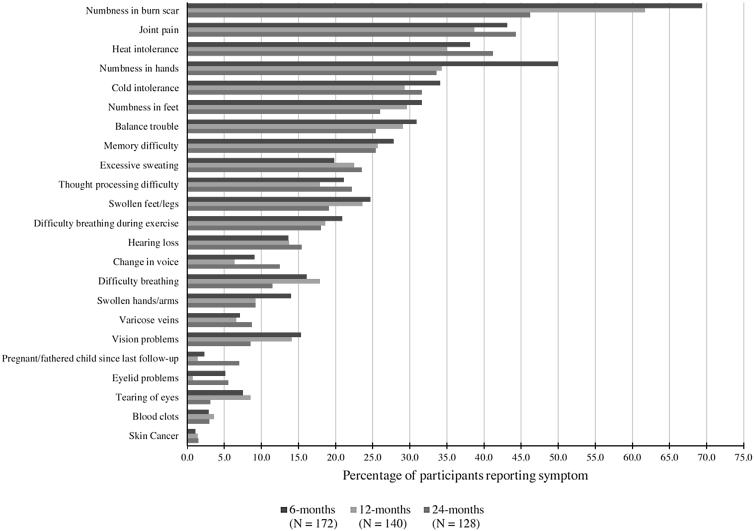
Percentage of Burn Model System Database participants reporting burn-related symptoms over time.
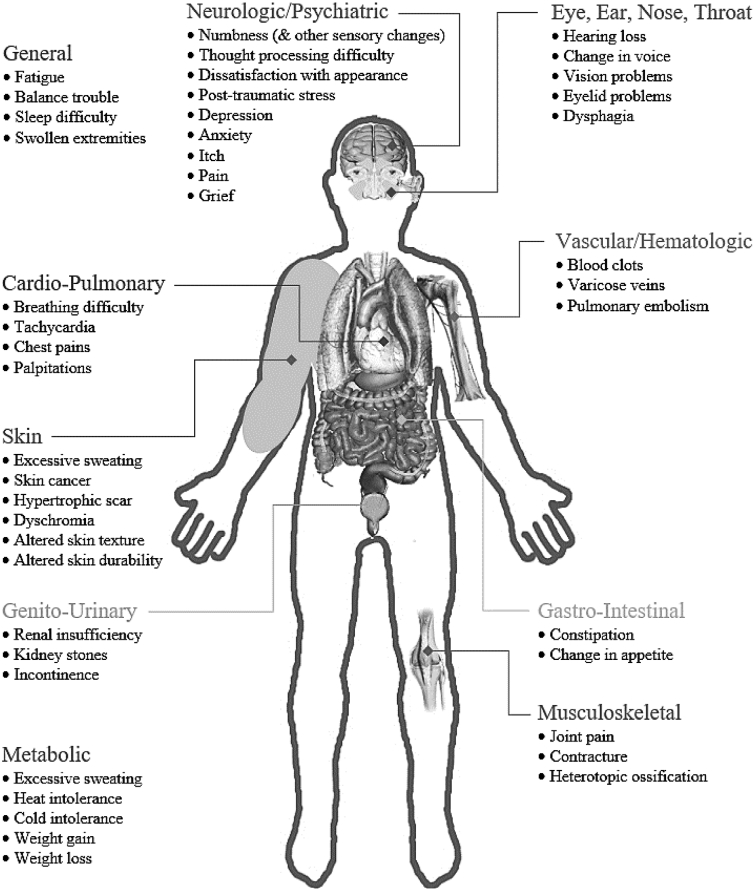
Potential long-term symptoms and other sequelae experienced by burn survivors.
References
-
- Rees S, Williams A. Promoting and supporting self-management for adults living in the community with physical chronic illness: a systematic review of the effectiveness and meaningfulness of the patient-practitioner encounter. JBI Libr Syst Rev 2009;7(13):492–582. - PubMed
Publication types
MeSH terms
Grants and funding
LinkOut - more resources
Full Text Sources
Medical
Research Materials
