


Effect of smoking cessation on tooth loss: a systematic review with meta-analysis
- PMID: 31718636
- PMCID: PMC6852780
- DOI: 10.1186/s12903-019-0930-2
Effect of smoking cessation on tooth loss: a systematic review with meta-analysis
Abstract
Background: Smoking is a major risk factor for periodontitis and tooth loss. Smoking cessation has a positive impact in periodontal treatment. However, so far, no systematic review has evaluated the effect of smoking cessation on tooth loss. Therefore, this review aimed to evaluate if smoking cessation reduces the risk of tooth loss.
Methods: Observational (cross-sectional and longitudinal) studies that investigated the association between smoking cessation and tooth loss were included. MEDLINE, EMBASE and LILACS databases were searched for articles published up to November 2018. Pooled results for subgroups of current and former smokers were compared in meta-analysis. Meta-regression was used to test the influence of smoking status on estimates and explore the heterogeneity.
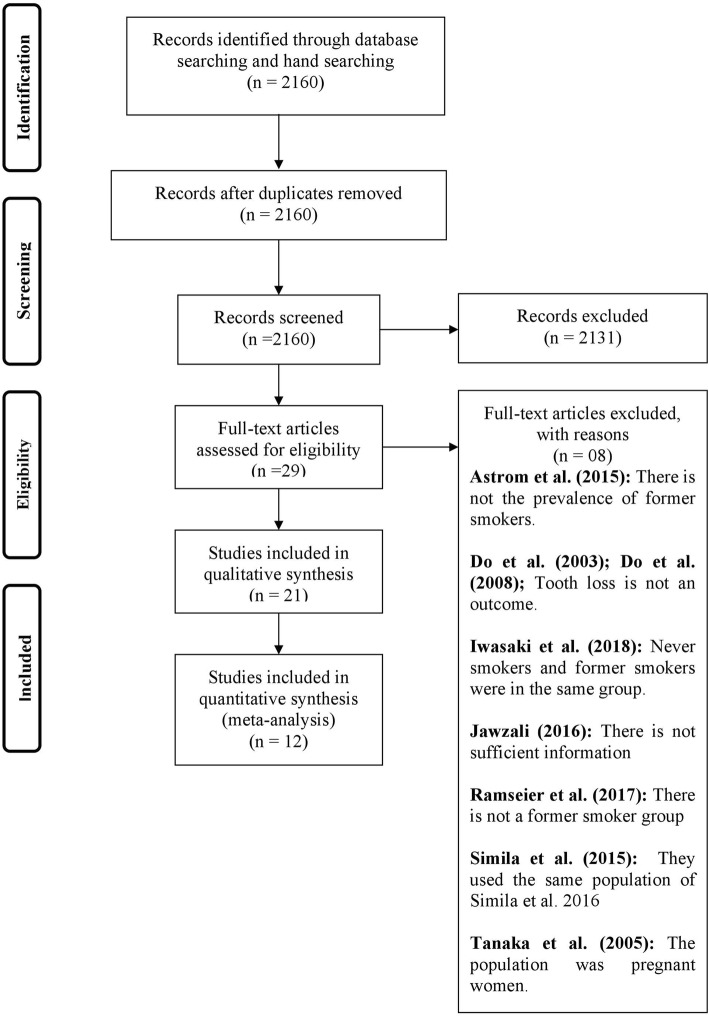
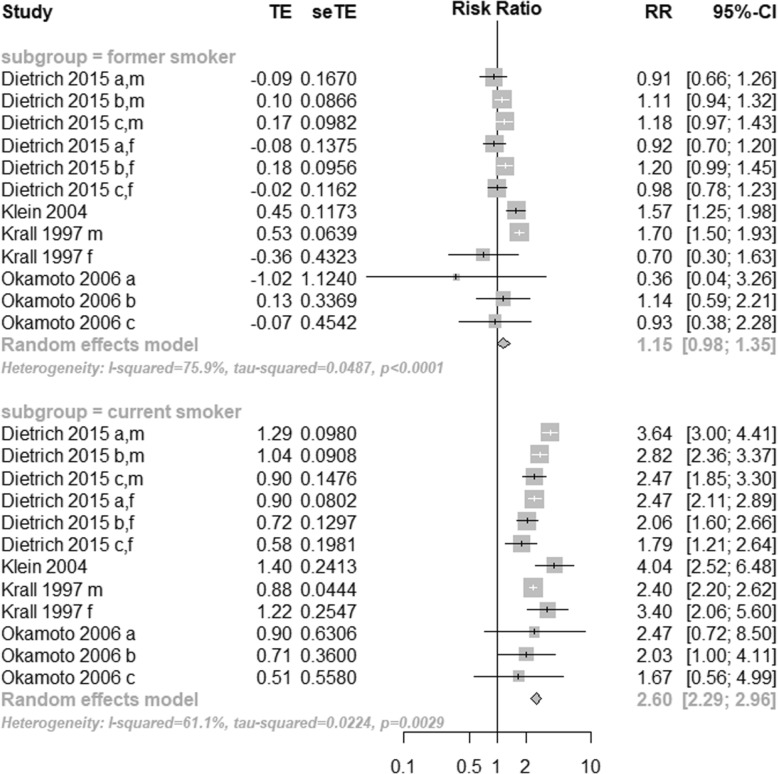
Results: Of 230 potentially relevant publications, 21 studies were included in the qualitative review and 12 in the quantitative analysis. Meta-analysis of cross-sectional studies did not show any differences between former and current smokers in the chance of losing 1 or more teeth (OR = 1.00; 95% CI = 0.80 to 1.24, I2 = 80%), losing more than 8 teeth (OR = 1.02; 95% CI = 0.78 to 1.32, I2 = 0%) or being edentulous (OR = 1.37; 95% CI = 0.94 to 1.99, I2 = 98%). Meta-analysis from longitudinal studies showed that, when compared to never smokers, former smokers presented no increased risk of tooth loss (RR = 1.15; 95% CI = 0.98 to 1.35, I2 = 76%), while current smokers presented an increased risk of tooth loss (RR = 2.60; 95% CI = 2.29 to 2.96, I2 = 61%). Meta-regression showed that, among former smokers, the time of cessation was the variable that better explained heterogeneity (approximately 60%).
Conclusions: Risk for tooth loss in former smokers is comparable to that of never smokers. Moreover, former smokers have a reduced risk of tooth loss, when compared to current smokers.
Keywords: Cigarette smoking; Tobacco; Tobacco use cessation, smoking cessation; Tooth loss, periodontitis, Meta-analysis.
Conflict of interest statement
Claudio Mendes Pannuti is one of the editorial board members for BMC Oral Health.
Figures



Comment in
-
Evidence regarding effects of smoking cessation on tooth loss is low quality and insufficient to support the presence of a benefit.J Am Dent Assoc. 2020 Jun;151(6):e46. doi: 10.1016/j.adaj.2020.01.005. Epub 2020 Mar 31. J Am Dent Assoc. 2020. PMID: 32245572 No abstract available.
-
Smoking cessation is effective in reducing the risk of tooth loss.Evid Based Dent. 2020 Dec;21(4):120-121. doi: 10.1038/s41432-020-0130-6. Evid Based Dent. 2020. PMID: 33339967
References
Publication types
MeSH terms
LinkOut - more resources
Full Text Sources
Medical
