


Takotsubo syndrome and cardiac implantable electronic device therapy
- PMID: 31719584
- PMCID: PMC6851377
- DOI: 10.1038/s41598-019-52929-5
Takotsubo syndrome and cardiac implantable electronic device therapy
Abstract
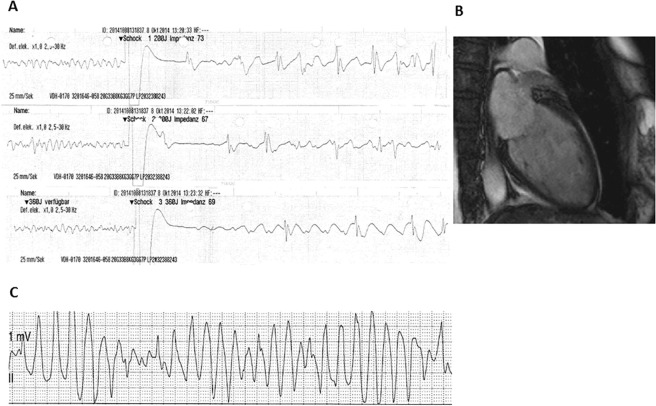
Recent studies have reported that takotsubo syndrome (TTS) patients are suffering from life-threatening arrhythmias. The aim of our study was to understand the short and long-term usefulness of cardiac implantable electronic devices in TTS patients.We constituted a collective of 142 patients in a bi-centric study diagnosed with TTS between 2003 and 2017. The patient groups, divided according to the treatment with (n = 9, 6.3%) or without cardiac devices (n = 133, 93.7%), were followed-up to determine the importance of devices and its complications. One patient was treated with a permanent pacemaker, five patients with a wearable cardioverter defibrillator, two patients with a subcutaneous defibrillator and one patient with a transvenous defibrillator. Regular device check-up was documented in all patients, presenting an ongoing high-degree AV-block. Neither device complications nor life-threatening tachyarrhythmias were documented after acute TTS event. However, patients comprising the device group suffered significantly more often from a highly reduced EF (30 ± 7.7% versus 39.1 ± 9.7%; p < 0.05), cardiogenic shock with use of inotropic agents (66.6% versus 16.6%; p < 0.05) and cardiopulmonary resuscitation (44.4% versus 5.3%; p < 0.05). Our data confirm the usefulness of pacemaker in TTS patients. However, the cardioverter defibrillator including wearable cardioverter defibrillator may not be recommended.
Conflict of interest statement
Julia W. Erath reports receiving consultant fees, travel support and lecture fees from ZOLL Medical, travel grants from Bayer Vital, St. Jude Medical/Abbott, Novartis and lecture fees from Servier and Bayer and was a fellow of the Boston Scientific heart rhythm fellowship program.
Figures
References
-
- Dote K, Sato H, Tateishi H, Uchida T, Ishihara M. [Myocardial stunning due to simultaneous multivessel coronary spasms: a review of 5 cases] J Cardiol. 1991;21:203–214. - PubMed
MeSH terms
LinkOut - more resources
Full Text Sources
Medical
