


The role of epigenetics and immunological imbalance in the etiopathogenesis of psoriasis and psoriatic arthritis
- PMID: 31723358
- PMCID: PMC6836300
- DOI: 10.1177/1759720X19886505
The role of epigenetics and immunological imbalance in the etiopathogenesis of psoriasis and psoriatic arthritis
Abstract
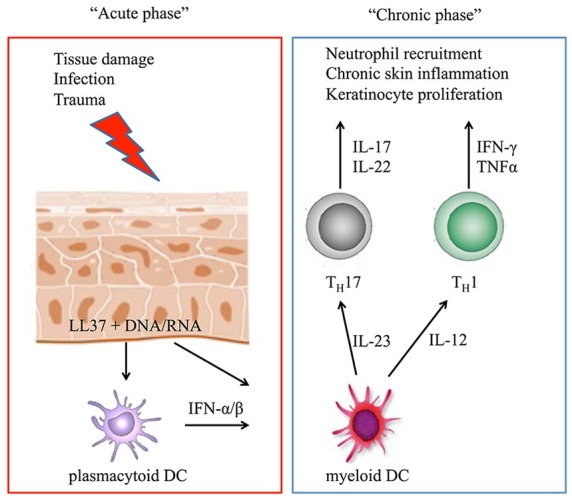
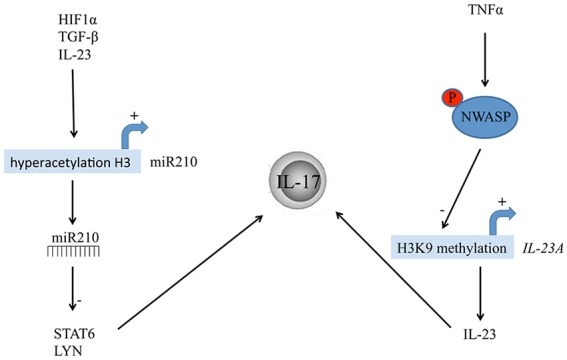
Psoriasis (Ps) and psoriatic arthritis (PsA) represent a clinical and immunopathogenic continuum, called psoriatic disease, cumulatively affecting approximately 3% of the general population. Psoriatic disease is a chronic inflammatory disorder affecting the skin and musculoskeletal system. The immuno-pathogenesis is characterized by an activation of the TNF/IL-23/IL-17 cytokine axis, leading to an immunologic imbalance of T-cells resident in all affected tissues, mainly entheses. In the majority of cases, skin Ps predates rheumatological manifestations. Secondary to the higher incidence and the availability of mouse models, there is stronger data available on skin Ps, and data are, in most cases, relevant also to PsA. In a widely accepted model, environmental trigger factors like infections or trauma are capable of initiating an inflammatory cascade, ultimately creating a sustained state of chronic inflammation in genetically susceptible individuals. Besides well-known genetic susceptibility loci, epigenetic DNA modifications, which are associated with Ps development have been characterized recently and will be discussed in this article. The current evidence is promising in the possibility to provide new therapeutic avenues and fill the unmet need of patients, for whom current treatments either do not allow the disease to be controlled or must be continued for life.
Keywords: DNA methylation; IL17; IL23; Th17; chronic inflammation; histone modification; psoriasis; psoriatic arthritis.
© The Author(s), 2019.
Conflict of interest statement
Conflict of interest statement: The authors declare that there is no conflict of interest.
Figures
References
-
- Becher B, Pantelyushin S. Hiding under the skin: interleukin-17-producing γδ T cells go under the skin? Nat Med 2012; 18: 1748–1750. - PubMed
-
- Nestle FO, Kaplan DH, Barker J. Psoriasis. N Engl J Med 2009; 361: 496–509. - PubMed
-
- Perera GK, Di Meglio P, Nestle FO. Psoriasis. Annu Rev Pathol 2012; 7: 385–422. - PubMed
-
- Duffy DL, Spelman LS, Martin NG. Psoriasis in Australian twins. J Am Acad Dermatol 1993; 29: 428–434. - PubMed
Publication types
Grants and funding
LinkOut - more resources
Full Text Sources
Research Materials
Miscellaneous
