. 2019 Nov 8:6:122.
doi: 10.1038/s41438-019-0204-9. eCollection 2019.

Low temperature upregulates cwp expression and modifies alternative splicing patterns, increasing the severity of cwp-induced tomato fruit cuticular microfissures

Affiliations

Low temperature upregulates cwp expression and modifies alternative splicing patterns, increasing the severity of cwp-induced tomato fruit cuticular microfissures

Noam Chechanovsky et al. Hortic Res. .

Abstract

The cwp (cuticular water permeability) gene controls the development of cuticular microfissuring and subsequent fruit dehydration in tomato. The gene underwent silencing in the evolution of the fleshy cultivated tomato but is expressed in the primitive wild tomato relatives. The introgression of the expressed allele from the wild S. habrochaites (cwp h ) into the cultivated tomato (Solanum lycopersicum) leads to the phenotype of fruit water loss during and following ripening. In this report, we show that low temperature impacts on the severity of the cuticular microfissure phenotype via a combination of effects on both expression and alternative splicing of cwp h . The cwp gene, comprising four exons and three introns, undergoes post-transcriptional alternative splicing processes, leading to seven alternative transcripts that differ in reading-frame lengths. Transgenic plants expressing each of the alternative transcripts identified the longest reading frame (VAR1) as the functional splice variant. Low temperature led to a strong upregulation of cwp h expression, compounded by an increase in the relative proportion of the functional VAR1 transcript, leading to increased severity of microfissuring of the cuticle. In summary, we demonstrate the molecular mechanism behind the horticultural phenomenon of the low-temperature effect on cuticular microfissures in the dehydrating tomato.

Keywords: Gene regulation; Plant molecular biology.


Conflict of interest statement

Conflict of interestThe authors declare that they have no conflict of interest.

Figures

Fig. 1
Fig. 1. Effect of temperature at IG stage on microfissuring of mature fruit.
Plants of genotype cwph in the MT background were grown in two ambient temperature ranges: low (10/15 °C night/day) and high (20/30 °C night/day) and tested for microcracking phenotype on the fruit cuticle. a Flowers were marked prior to the 2-week incubation (top), and the fruits continued to develop after the differential temperature incubation (bottom) in the greenhouse. b Representative ripe fruit from the temperature treatments (top, low temperature; bottom, high temperature). Incubation in low temperatures led to severer phenotype and deep cuticular “scars” (b, right top, arrow points to suberized scar) compared with high temperatures (b, right bottom)
Fig. 2
Fig. 2. Expression level of cwph after incubation in two temperatures, low (10/15 °C) and high (20/30 °C).
The left portion of the graph represents the expression level in IG fruitlets of whole plants following 21 days of temperature treatment. The right side of the graph indicates the expression of detached IG fruitlets treated for 72 h. Expression values are presented as relative to the high-temperature treatment in each experiment. Expression of cwpe fruitlets was nil
Fig. 3
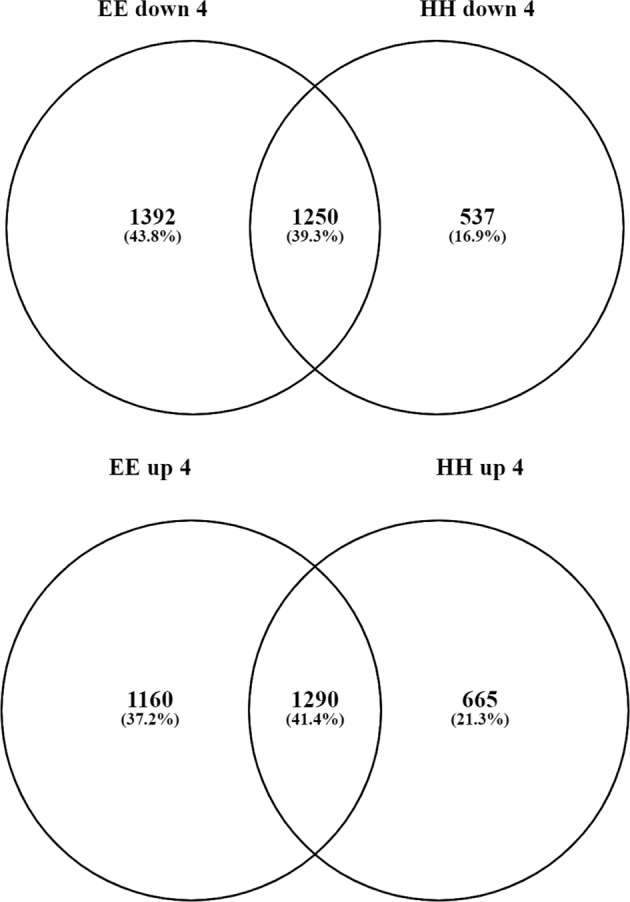
Fig. 3. Differential gene expression due to low temperature.
Venn diagrams indicating the overlap between the two cwp genotypes for the differentially downregulated (upper diagram) and upregulated (lower diagram) genes in response to 4 °C treatment
Fig. 4
Fig. 4. A schematic view of the seven cwp alternative splicing variants.
a Genomic DNA alignments indicating the splicing variants. Wide black lines represent exons, narrow black lines represent introns. b Clustal multiple alignment of the amino acids of the proteins of the seven alternative transcripts
Fig. 5
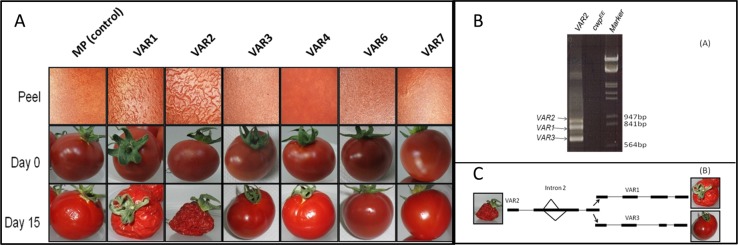
Fig. 5. Ripe fruits of transgenic tomatoes for the cwp alternative splicing variants.
a Microfissures were observed on the fruit peel of variants VAR1 and VAR2 only (upper row), and VAR1 and VAR2 were the only variants exhibiting dehydration after 15 days. b VAR2 itself undergoes alternative splicing, and PCR on VAR2 transgenic tomato results in three bands, VAR1, VAR2, and VAR3. c A schematic illustration of the alternative splicing events in intron 2 that leads to the production of VAR1 and VAR3 from VAR2
Fig. 6
Fig. 6. Alternative transcripts in correlation with temperature.
a Products of PCR reaction performed on cwp cDNA after incubation in 10 (lanes 1–3), 20 (lanes 4–6), and 30 °C (lanes 7–9). Lane 10 is a non-template control, lane 11 is a size marker. The arrows point to PCR products significantly affected by temperature. b The relative ratio of the alternative transcripts after incubation in the three temperatures
Fig. 7
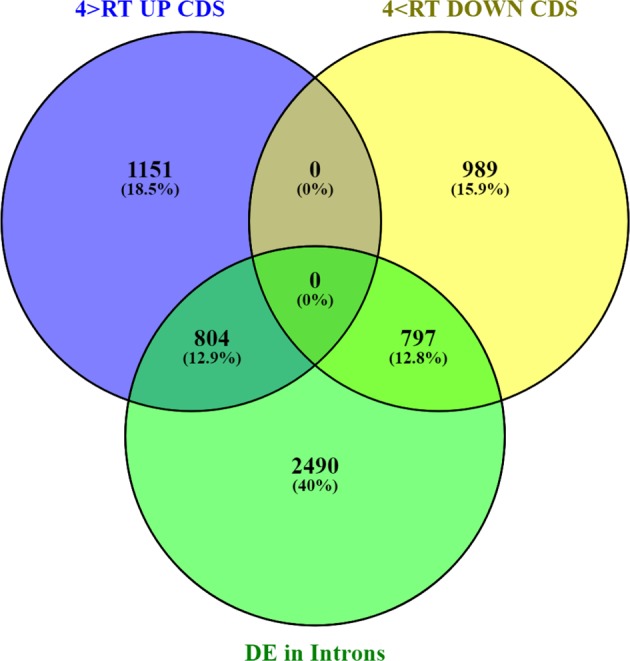
Fig. 7. Differential gene expression of coding sequences and of introns in response to low- temperature treatment.
The lower circle represents the genes with differential expression of intronic sequences, while the two upper circles indicate the number of differentially upregulated (left) and downregulated (right) genes
Fig. 8
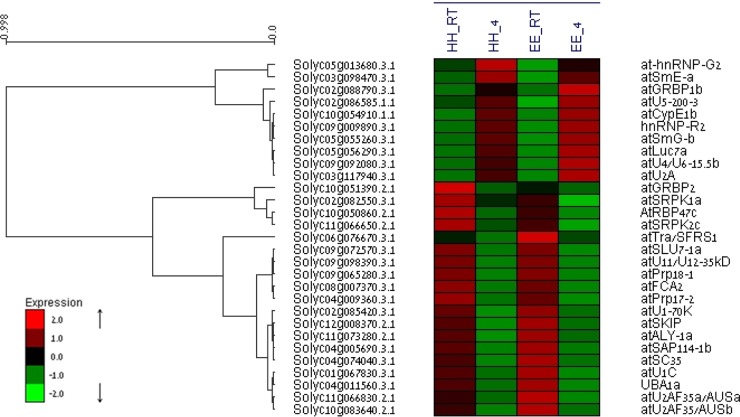
Fig. 8. Differential expression of tomato splicing-related genes.
Heat map of the 29 splicing-related genes differentially expressed (>2-fold, padj <0.05) in response to temperature. List of the tomato homologs of the Arabidopsis splicing-related genes are listed in Supplementary Excel file 2. Fruitlets of the two genotypes (cwph, HH; cwpe, EE) were subjected to either 4 or 20 °C for 10 h

References

    1. Jeffree, C. E. in Biology of the Plant Cuticle (eds Riederer, M. and Muller, C.) 11–125 (Blackwell Publishing Ltd, Oxford, UK, 2006).
    1. Nawrath C. Unraveling the complex network of cuticular structure and function. Curr. Opin. Plant Biol. 2006;9:281–287. doi: 10.1016/j.pbi.2006.03.001. - DOI - PubMed
    1. Hovav R, Chehanovsky N, Moy M, Jetter R, Schaffer AA. The identification of a gene (Cwp1), silenced during solanum evolution, which causes cuticle microfissuring and dehydration when expressed in tomato fruit. Plant J. 2007;52:627–639. doi: 10.1111/j.1365-313X.2007.03265.x. - DOI - PubMed
    1. Bargel H, Neinhuis C. J. Exp. Bot. 2005;56:1049–1060. doi: 10.1093/jxb/eri098. - DOI - PubMed
    1. Wilson LA, Sterlin C. Studies on the cuticle of tomato fruit, I. fine structure of the cuticle. Zeit Pflanz. 1976;77:359–371. doi: 10.1016/S0044-328X(76)80009-8. - DOI