


Plant-Based Diets for Personal, Population, and Planetary Health
- PMID: 31728495
- PMCID: PMC6855934
- DOI: 10.1093/advances/nmy117
Plant-Based Diets for Personal, Population, and Planetary Health
Abstract
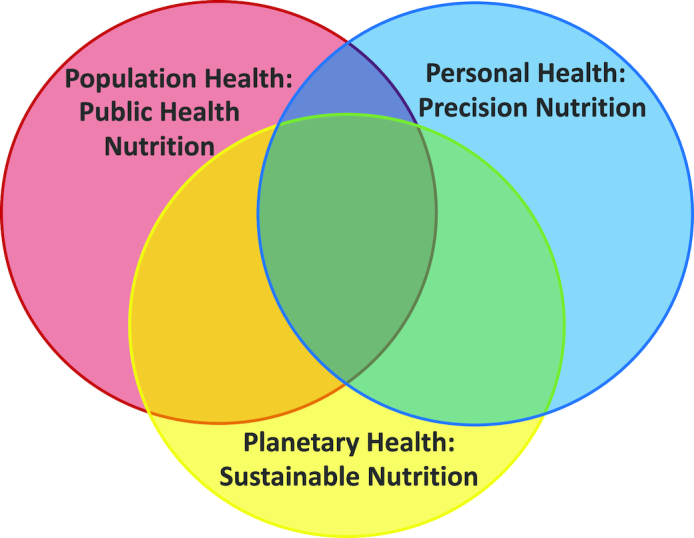
Worldwide, the burden of morbidity and mortality from diet-related chronic diseases is increasing, driven by poor diet quality and overconsumption of calories. At the same time, the global food production system is draining our planet's resources, jeopardizing the environment and future food security. Personal, population, and planetary health are closely intertwined and will all continue to be vulnerable to these threats unless action is taken. Fortunately, shifting current global dietary patterns towards high-quality, plant-based diets could alleviate these health and environmental burdens. Compared with typical Western diets with high amounts of animal products, healthy plant-based diets are not only more sustainable, but have also been associated with lower risk of chronic diseases such as obesity, type 2 diabetes, cardiovascular disease, and some cancers. For personalized disease management and prevention, precision nutrition has the potential to offer more effective approaches tailored to individual characteristics such as the genome, metabolome, and microbiome. However, this area of research is in the early stages and is not yet ready for widespread clinical use. Therefore, it must not overshadow public health nutrition strategies, which have the power to improve health and sustainability on a larger scale. If widely implemented, interventions and policy changes that shift the globe towards healthy plant-based dietary patterns could be instrumental in ensuring future personal, population, and planetary health.
Keywords: cardiovascular disease; obesity; plant-based diets; precision nutrition; public health nutrition; sustainable nutrition; type 2 diabetes.
Copyright © The Author(s) 2019.
Figures
References
-
- World Health Organization. Obesity and overweight fact sheet. [updated October; cited 27 November, 2017] WHO; 2017.; Available from: http://www.who.int/mediacentre/factsheets/fs311/en/.
-
- Malik VS, Willett WC, Hu FB. Global obesity: trends, risk factors and policy implications. Nat Rev Endocrinol. 2013;9(1):13–27. - PubMed
-
- World Health Organization. Cardiovascular diseases. [cited 17 November 2017] WHO; 2017.; Available from: http://www.who.int/cardiovascular_diseases/en/.
-
- World Health Organization. Diabetes. [updated November, cited 17 November 2017] WHO; 2017.; Available from: http://www.who.int/mediacentre/factsheets/fs312/en/.
-
- Marczak L, O'Rourke K, Shepard D, for the Institute for Health Metrics and Evaluation . When and why people die in the United States, 1990–2013. JAMA. 2016;315(3):241.
Publication types
MeSH terms
LinkOut - more resources
Full Text Sources
Medical
