


Recurrent Collection of Drosophila melanogaster from Wild African Environments and Genomic Insights into Species History
- PMID: 31730190
- PMCID: PMC7038662
- DOI: 10.1093/molbev/msz271
Recurrent Collection of Drosophila melanogaster from Wild African Environments and Genomic Insights into Species History
Erratum in
-
Corrigendum to: Recurrent Collection of Drosophila melanogaster from Wild African Environments and Genomic Insights into Species History.Mol Biol Evol. 2020 Sep 1;37(9):2775. doi: 10.1093/molbev/msaa074. Mol Biol Evol. 2020. PMID: 32594182 Free PMC article. No abstract available.
Abstract
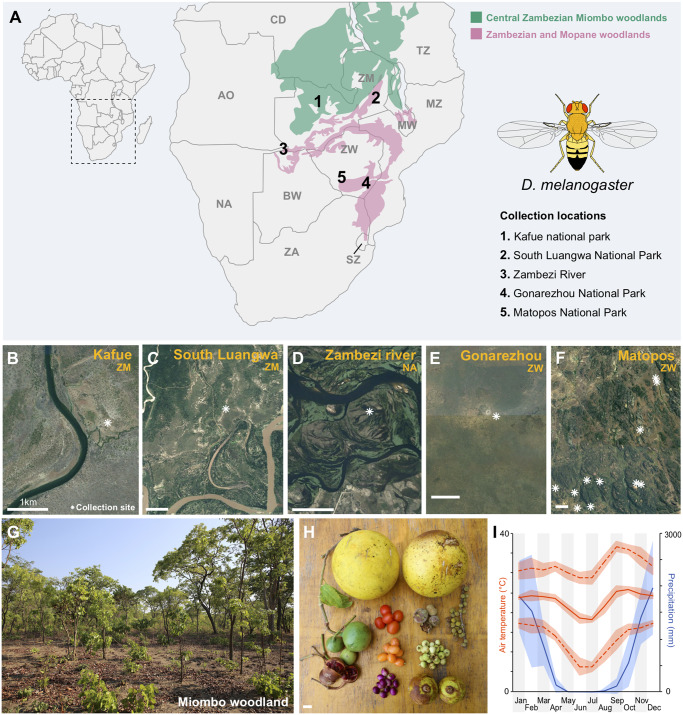
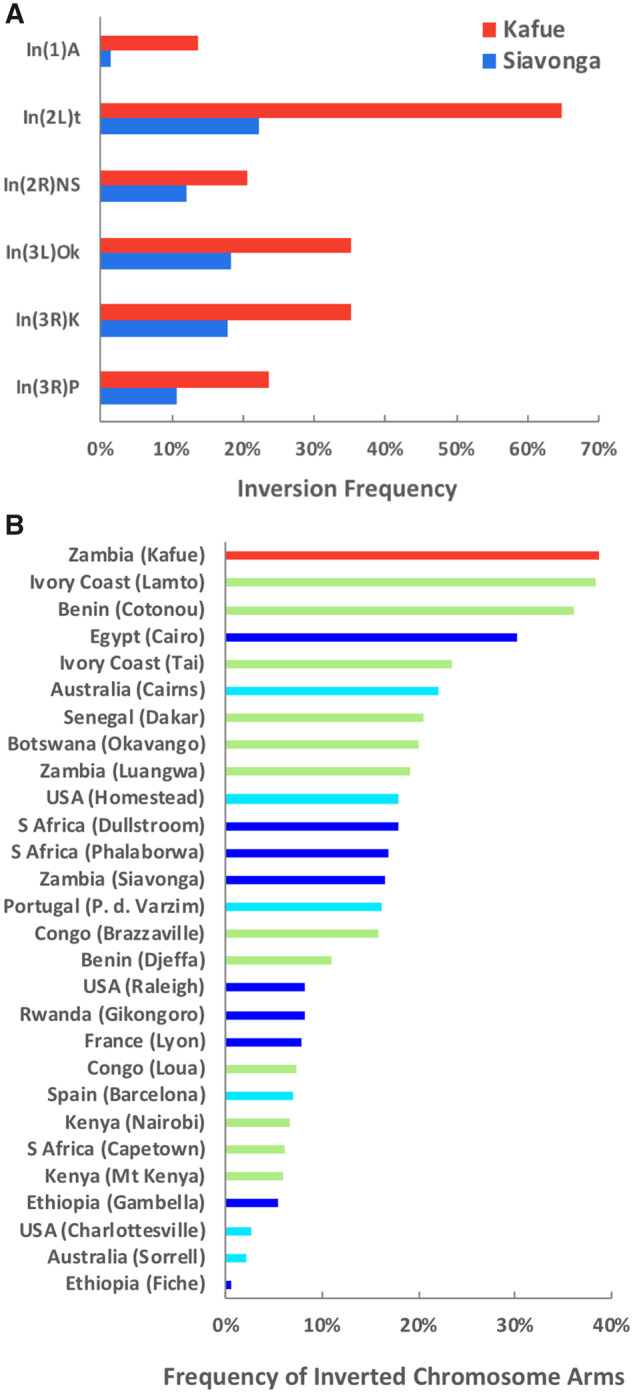
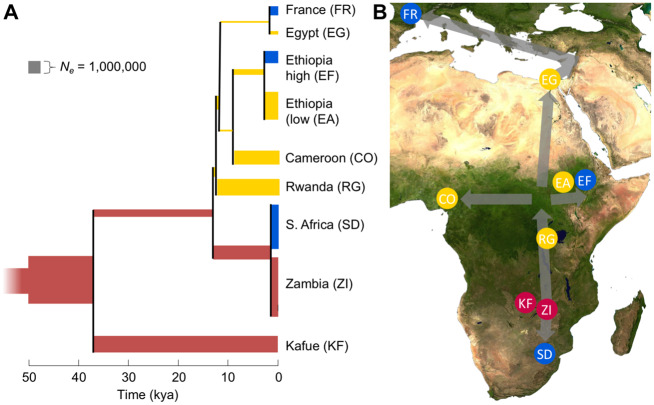
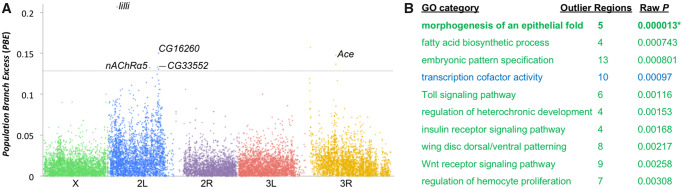
A long-standing enigma concerns the geographic and ecological origins of the intensively studied vinegar fly, Drosophila melanogaster. This globally distributed human commensal is thought to originate from sub-Saharan Africa, yet until recently, it had never been reported from undisturbed wilderness environments that could reflect its precommensal niche. Here, we document the collection of 288 D. melanogaster individuals from multiple African wilderness areas in Zambia, Zimbabwe, and Namibia. The presence of D. melanogaster in these remote woodland environments is consistent with an ancestral range in southern-central Africa, as opposed to equatorial regions. After sequencing the genomes of 17 wilderness-collected flies collected from Kafue National Park in Zambia, we found reduced genetic diversity relative to town populations, elevated chromosomal inversion frequencies, and strong differences at specific genes including known insecticide targets. Combining these genomes with existing data, we probed the history of this species' geographic expansion. Demographic estimates indicated that expansion from southern-central Africa began ∼10,000 years ago, with a Saharan crossing soon after, but expansion from the Middle East into Europe did not begin until roughly 1,400 years ago. This improved model of demographic history will provide an important resource for future evolutionary and genomic studies of this key model organism. Our findings add context to the history of D. melanogaster, while opening the door for future studies on the biological basis of adaptation to human environments.
Keywords: Drosophila; Africa; commensal evolution; demographic history; population genomics; wilderness collection.
© The Author(s) 2019. Published by Oxford University Press on behalf of the Society for Molecular Biology and Evolution.
Figures
References
-
- Aulard S, David JR, Lemeunier F.. 2002. Chromosomal inversion polymorphism in Afrotropical populations of Drosophila melanogaster. Genet Res. 79(1):49–63. - PubMed
-
- Begun DJ, Aquadro CF.. 1993. African and North American populations of Drosophila melanogaster are very different at the DNA level. Nature 365(6446):548–550. - PubMed
-
- Chevalier M, Chase BM.. 2015. Southeast African records reveal a coherent shift from high- to low-latitude forcing mechanisms along the east African margin across last glacial–interglacial transition. Quat Sci Rev. 125:117–130.
Publication types
MeSH terms
Grants and funding
LinkOut - more resources
Full Text Sources
Molecular Biology Databases
Miscellaneous
